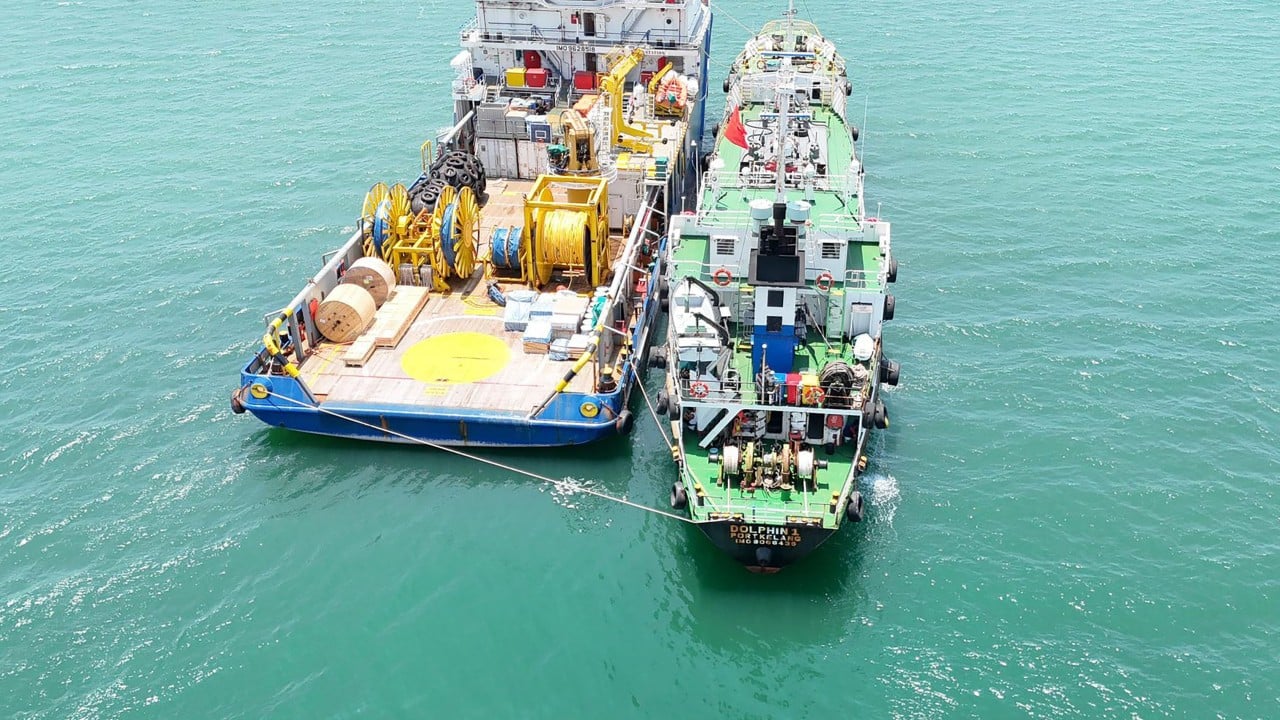
In the predawn humidity of the Malacca Strait this past January, a pair of rusted oil tankers sat tethered together, 24 nautical miles off the coast of Penang. They were not there for legitimate commerce. When the Malaysian Maritime Enforcement Agency (MMEA) boarded the vessels, they uncovered a crude oil cargo valued at nearly $130 million. On paper, these ships were ghosts. In reality, they were a tiny cog in a massive, trillion-dollar "shadow fleet" that is currently making a mockery of Western sanctions and rewriting the rules of global energy trade.
This wasn't just a random drug bust at sea. It was a rare, surgical strike against a systematic evasion network that has turned the waters of Southeast Asia into a high-stakes shell game.
The Invisible Armada
The term "shadow fleet" evokes images of pirate ships, but the modern reality is far more corporate and significantly more dangerous. We are talking about an estimated 1,400 vessels—roughly 20% of the world’s tanker capacity—that operate outside the reach of the G7 price cap and traditional maritime oversight. These ships are often aging hulks, some over 20 years old, which under normal market conditions would have been sold for scrap. Instead, they are being purchased at a premium by opaque shell companies registered in jurisdictions like the Marshall Islands, Liberia, or Panama.
They don't carry standard insurance from the International Group of P&I Clubs. They don't adhere to Western safety standards. Most importantly, they don't broadcast their true locations.
The "how" of this trade is a masterclass in technical deception. A tanker carrying sanctioned Russian or Iranian crude will engage in AIS spoofing, a tactic where the ship’s transponder broadcasts the location and identity of a completely different vessel, often one that is safely docked in a legitimate port thousands of miles away. While the digital world sees a harmless cargo ship in the Atlantic, the physical ship is actually offloading millions of barrels of "forbidden" oil into a second tanker in the South China Sea.
Why Malaysia is the Eye of the Storm
Malaysia’s geographic position makes it the perfect clearinghouse for this illicit economy. The country sits at the junction of the world’s busiest shipping lanes, and its vast Exclusive Economic Zone (EEZ) provides ample hiding spots.
The recent Penang bust highlights a disturbing trend. While the MMEA successfully detained $130 million worth of oil, the numbers suggest they are barely scratching the surface. Data from maritime intelligence firms indicates that ship-to-ship (STS) transfers in Malaysian waters have more than doubled over the last 24 months.
The incentive for local officials to look the other way is compounded by a massive statistical discrepancy. China, the primary destination for this oil, has officially reported zero imports of Iranian crude for years. Yet, China’s imports of "Malaysian" oil frequently exceed Malaysia’s entire national production capacity. This isn't a miracle of geology; it is the relabeling of sanctioned crude on the high seas. Once the oil moves from a shadow tanker to a "cleaner" vessel in Malaysian waters, it is often accompanied by forged certificates of origin, effectively laundering the energy before it reaches the refineries in Shandong.
The Collateral Damage of Cheap Oil
From a purely business perspective, the shadow fleet is a disruptor. By providing a back-door for Russian and Iranian oil, these tankers prevent the total supply collapse that would otherwise send global fuel prices to $150 a barrel. In fact, some analysts argue the shadow fleet is the only thing keeping the global economy from a catastrophic inflationary spiral.
But this stability comes with a terrifying physical price.
Because these vessels operate without proper insurance or maintenance, they are floating environmental time bombs. In 2024, the collision between the Hafnia Nile and the dark-fleet tanker Ceres I served as a grim warning. The Ceres I had a history of "going dark" and was suspected of being part of the Iranian trade. When such a ship leaks or explodes, there is no corporate entity to sue and no insurance fund to pay for the cleanup. The coastal nations—Malaysia, Indonesia, and Singapore—are left to bear the cost of an ecological disaster caused by a ship that technically doesn't exist.
The Technology Gap
Western regulators are currently losing the arms race. Sanctions are a legal tool, but the shadow fleet is a technological problem.
To track these ships, investigators are now forced to use Synthetic Aperture Radar (SAR) and multispectral satellite imagery to "see" through the clouds and identify vessels that have turned off their transponders. They look for "dark STS" events—thermal signatures of two large objects side-by-side in the open ocean for 24 to 48 hours.
However, for every ship the US Treasury adds to a sanctions list, three more are registered under a new front company in Dubai or Hong Kong. The "flag-hopping" is so rapid that a ship can change its name, its owner, and its national registry in the time it takes to sail from the Persian Gulf to the Malacca Strait.
A Broken Enforcement Model
The Penang seizure was a tactical victory, but it also exposed the limits of local enforcement. Shortly after the bust, the vessels were released on bond. In many cases, the shell companies behind these tankers simply treat the fines as a cost of doing business—or worse, they abandon the ship and the crew entirely, leaving the local government with a rusting, oil-laden liability.
The current strategy of "whack-a-mole" sanctions is failing because it targets the ships rather than the financial architecture that sustains them. Until there is a coordinated global effort to hold flag registries and shadowy ship managers accountable, the Malacca Strait will remain the world's largest unregulated gas station.
The shadow fleet has successfully decoupled global energy flows from the Western financial system. This isn't just a temporary workaround; it is the construction of a permanent, parallel economy. The tankers off the coast of Penang aren't just smuggling oil. They are demonstrating that the era of the US dollar and the "rules-based order" controlling the high seas is effectively over.
Governments must now decide if they will continue to play a losing game of cat and mouse, or if they are willing to risk the massive economic shock required to truly sink the ghost fleet.