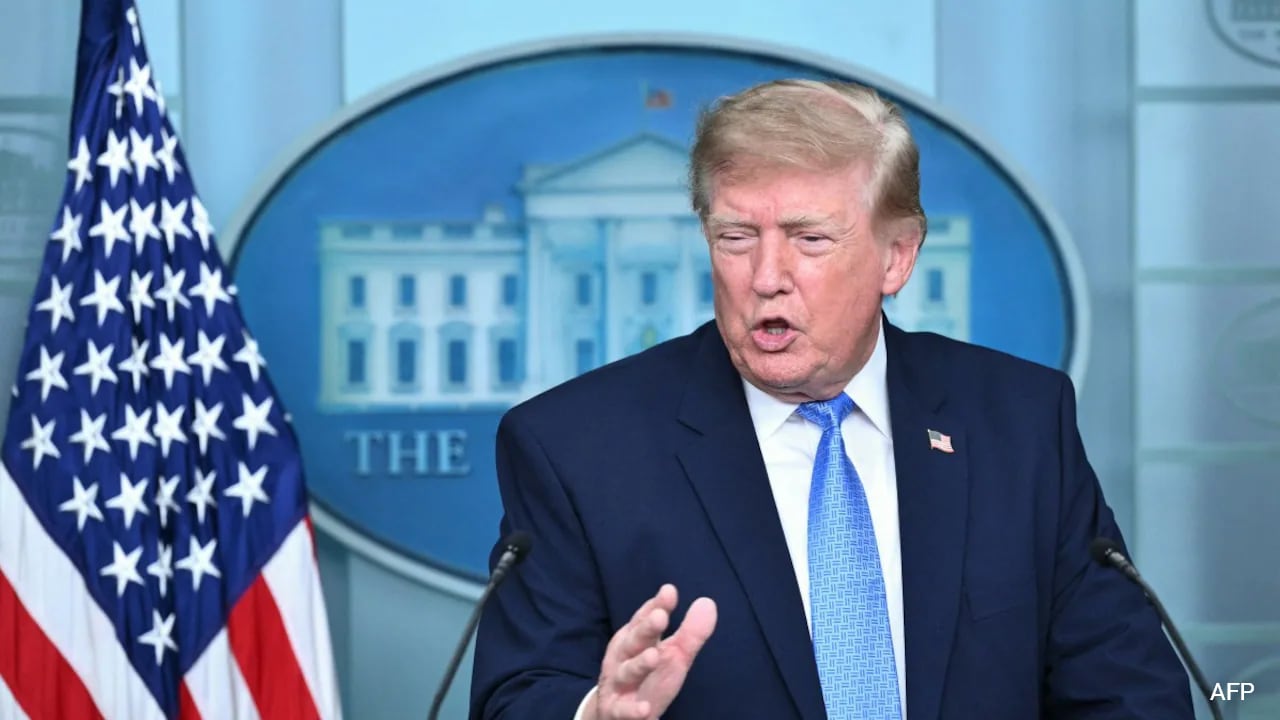
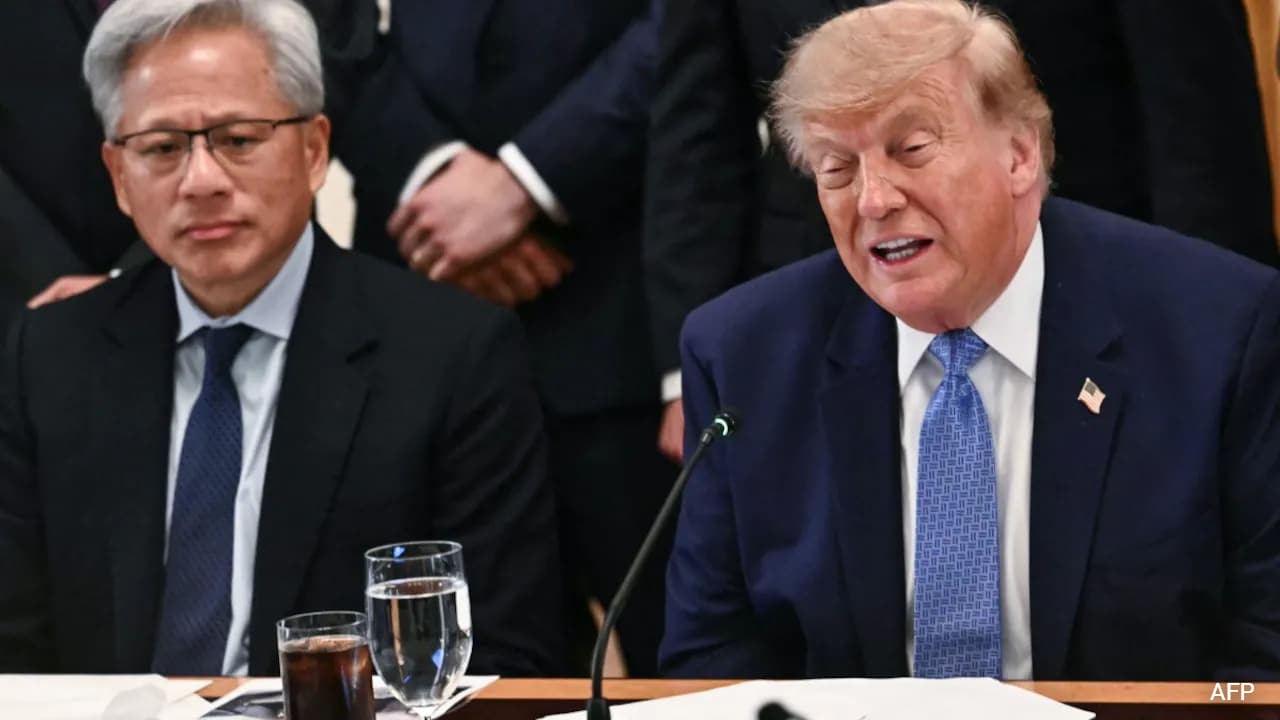
Washington is facing an acute national security dilemma as close personal and political ties between Donald Trump and Nvidia Chief Executive Jensen Huang collide with escalating foreign intelligence warnings over advanced semiconductor exports. According to intelligence assessments and national security officials cited in Washington policy debates, unrestricted access to high-end artificial intelligence accelerators poses a direct risk of accelerating foreign military modernization. At the same time, corporate leaders argue that overly broad export bans cripple American hardware dominance and hand global market share to domestic Chinese competitors.
The friction is no longer confined to quiet briefings inside the Department of Commerce. It has spilled into public view, exposing a fundamental divide between Silicon Valley's commercial ambitions and the intelligence community's mandate to protect technological supremacy.
The Architecture of Influence
Access matters in Washington. When the leader of the world's most valuable semiconductor designer builds a direct rapport with the presidency, policy outcomes inevitably come under a microscope.
For years, Nvidia operated largely outside the traditional beltway lobbying machine, focusing its capital on research, software ecosystems, and supply chain dominance in Taiwan. That posture changed once graphics processing units became the foundational currency of artificial intelligence. Suddenly, export control rules drafted by the Bureau of Industry and Security determined billions of dollars in quarterly revenue.
Huang’s strategy has relied less on conventional political action committees and more on high-level executive diplomacy. By framing Nvidia not merely as a chip vendor, but as the primary engine of American economic competitiveness, the company has sought to align its corporate survival with national pride. Critics within the national security establishment view this alignment with deep skepticism, arguing that shareholder value and intelligence protection operate on fundamentally different timelines.
Commercial Pragmatism Versus Containment
To understand why intelligence officials are sounding the alarm, one must look at how modern export controls actually function—and how easily they can be engineered around.
When Washington first imposed strict thresholds on interconnect bandwidth and processing performance to block top-tier chips from reaching restricted markets, Nvidia responded with rapid product segmentation. The company designed modified processors that fell just beneath the regulatory ceiling, allowing legal shipments to continue while maintaining massive commercial volume. When regulators tightened the rules again, another round of modified hardware followed.
From a purely business perspective, this is textbook regulatory compliance. A publicly traded company has a fiduciary obligation to maximize lawful sales within the boundaries set by the government.
Intelligence analysts see a different picture. In their assessment, the cumulative compute power of thousands of slightly throttled chips networked together can match or exceed the capabilities of restricted flagship hardware. The distinction between a commercial data center chip and a dual-use military asset dissolves once the silicon leaves port.
Why Intelligence Agencies Are Raising the Alarm
Foreign intelligence concerns surrounding advanced semiconductors rarely stem from a single, dramatic espionage event. Instead, they grow out of structural vulnerabilities in global supply chains and end-user verification.
Once high-performance accelerators enter international distribution networks, tracking their physical location becomes extraordinarily difficult. Shell companies, third-party cloud leasing arrangements, and transshipment hubs in Southeast Asia and the Middle East provide multiple avenues for restricted entities to access American compute capacity without ever taking direct delivery of a crate stamped with a U.S. corporate logo.
Furthermore, intelligence officials point to the rapid convergence of civilian and military artificial intelligence research. Algorithms trained to optimize commercial logistics, simulate fluid dynamics, or process vast amounts of unstructured text can be repurposed for autonomous weapons targeting, cyber warfare, and signals intelligence decryption.
- Compute Accumulation: Large clusters of compliant chips can be linked via high-speed networking to train frontier models that rival Western defense capabilities.
- Cloud Arbitrage: Foreign entities can rent processing time on servers hosted in third-party countries, bypassing physical border controls entirely.
- Talent and Software Lock-in: Maintaining access to Nvidia's proprietary software platform keeps foreign developers anchored to American standards, which intelligence hawks argue inadvertently subsidizes rival research ecosystems.
The Counter-Argument From Silicon Valley
Dismissing the semiconductor industry's position as mere greed misses the genuine strategic dilemma facing American policymakers. Huang and other tech executives have consistently argued that isolating U.S. chipmakers from major international markets backfires over the long term.
If American companies are barred from selling to foreign enterprises, those buyers do not simply abandon artificial intelligence. They pour capital into domestic alternatives. In China, state-backed initiatives and local conglomerates have poured tens of billions of dollars into building indigenous lithography tools, memory fabrication plants, and custom AI processors. Every dollar denied to an American chipmaker is effectively a subsidy handed to a foreign competitor striving to eliminate reliance on Western technology.
There is also the question of research and development velocity. Designing next-generation chips requires astronomical upfront capital expenditure. Nvidia funds its massive R&D budget through global scale. Shrink the addressable market, and you inevitably slow down the pace at which American firms can innovate, potentially allowing rivals to close the technological gap anyway.
The CUDA Ecosystem Factor
Hardware is only half the equation. Nvidia’s true competitive moat lies in CUDA, its proprietary parallel computing platform and programming model. Millions of developers worldwide write code specifically optimized for Nvidia architectures.
Industry analysts point out that as long as global developers rely on CUDA, the United States retains structural leverage over the foundational standards of artificial intelligence. Forcing foreign developers onto alternative, non-American software stacks risks fracturing the global tech ecosystem and permanently eroding U.S. standard-setting power.
Historical Precedents in Export Control
Washington has fought this exact battle before, though the stakes have rarely been this compressed in time.
During the Cold War, the Coordinating Committee for Multilateral Export Controls struggled to prevent dual-use electronics, machine tools, and computing equipment from reaching the Soviet bloc. Allied nations frequently clashed over where to draw the line between legitimate commercial trade and strategic leakage. European and Japanese manufacturers often argued that overly rigid American restrictions hurt their export economies while failing to stop determined adversaries from acquiring technology through intermediaries.
In the 1990s, a similar fight erupted over commercial satellite exports and high-performance encryption software. Aerospace and software executives warned that unilateral U.S. restrictions would destroy American market leadership. Congress eventually tightened oversight after allegations of unauthorized technology transfers, leading to years of depressed U.S. market share in commercial satellite manufacturing before rules were later recalibrated.
The semiconductor dispute compresses decades of Cold War trade friction into a three-year product cycle. Because AI hardware improves exponentially every eighteen months, a regulatory delay or a loophole exploited today can alter the strategic balance before a congressional oversight committee even convenes a hearing.
The Gray Areas of Executive Diplomacy
Critics of close ties between the White House and corporate leaders often demand rigid institutional firewalls. Yet history shows that presidents across party lines have relied on direct engagement with industrial titans during moments of technological upheaval.
The core tension lies in transparency and institutional process. When policy is shaped through formal interagency reviews—involving the Pentagon, the intelligence community, the State Department, and the Commerce Department—national security risks are weighed systematically against economic costs. When executive relationships bypass or override those channels, career officials inevitably worry that strategic guardrails are being traded away for short-term market gains or political goodwill.
At the same time, career bureaucrats can suffer from tunnel vision. Intelligence agencies are paid to identify worst-case scenarios and minimize risk; they are not responsible for maintaining the quarterly revenue growth that funds American technological leadership. A president must balance both imperatives, which means listening to chief executives who understand global supply chains better than any government analyst ever could.
Structural Bottlenecks Beyond the White House
Even if political leaders wanted to either completely open the floodgates or shut down all international chip sales overnight, physical and economic realities impose hard limits.
Advanced AI processors are not simple commodities. They rely on extreme ultraviolet lithography machines built in the Netherlands, specialized chemicals from Japan, memory chips from South Korea, and precision packaging facilities concentrated in Taiwan. No single executive order or presidential handshake can untangle this web of interdependence.
- Fabrication Capacity: Leading-edge foundry capacity remains tightly constrained, meaning every wafer allocated to an international customer is a wafer unavailable for domestic data centers.
- Energy Infrastructure: Deploying massive clusters of high-end accelerators requires gigawatts of reliable electrical power, creating physical bottlenecks in both the United States and abroad.
- Allied Compliance: Unilateral U.S. restrictions fail unless key allies in Europe and Asia enforce parallel controls on manufacturing equipment and component exports.
These material constraints act as a natural check on both unbridled corporate expansion and overly simplistic political promises.
Where Policy and Power Collide
The scrutiny surrounding Trump and Huang reflects a broader truth about modern statecraft. Silicon has become the new oil, and the executives who control its design and distribution wield geopolitical influence that rivals that of sovereign nations.
Intelligence officials are right to warn that high-end compute power cannot be treated like ordinary consumer electronics, and that porous export rules invite strategic exploitation. Corporate leaders are equally right to warn that starving American companies of global revenue risks ceding the future of computing to state-subsidized foreign rivals. Reconciling those two realities requires rigorous, transparent oversight rather than backchannel exceptions—because once advanced algorithms are trained on diverted hardware, no executive order can unlearn what the machines have already mastered.