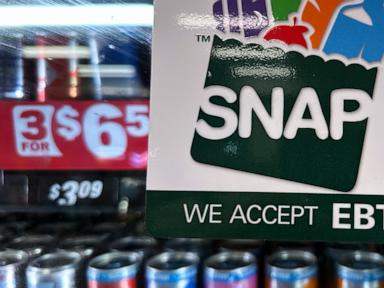
Dozens of American states are stumbling toward a multi-billion-dollar fiscal cliff after the federal government completely upended how the Supplemental Nutrition Assistance Program is funded. Under the newly enacted One Big Beautiful Bill Act, the federal government is ending its historic policy of fully funding SNAP food aid benefits, shifting massive financial penalties onto states with high payment error rates. Newly released data from the U.S. Department of Agriculture reveals a national payment error rate of 10.62%, far exceeding the federal 6% benchmark. Consequently, local governments are now on the hook for massive chunks of funding they simply do not have.
For decades, the division of labor behind food stamps was clear. Washington covered 100% of the actual benefit dollars loaded onto Electronic Benefit Transfer cards, while states and counties split the paperwork and personnel costs down the middle. This arrangement insulated state budgets from economic downturns; if local factories closed and tens of thousands applied for food aid, the federal government absorbed the surge in safety-net expenditures.
That long-standing insulation has officially evaporated.
A quiet but brutal mechanism hidden inside recent federal legislation ties a state’s fiscal liability directly to its administrative precision. The newly released figures for the 2025 fiscal year establish that only nine states managed to keep their administrative discrepancies below the statutory 6% limit. The remaining jurisdictions face a strict sliding penalty scale. If their accuracy does not dramatically improve by the next review cycle, they will be forced to cover up to 15% of their total food aid payouts beginning in October 2027.
The Mathematical Shock to Local Treasuries
The sheer scale of these penalties threatens to trigger painful choices across state capitols, forcing governors to choose between cutting infrastructure, reducing education funds, or restricting safety-net access. The sliding scale penalizes structural administrative drag rather than deliberate fraud, yet the fiscal consequences are identical to a direct budget cut.
- 6% to 8% Error Rate: States must cover 5% of total benefit costs.
- 8% to 10% Error Rate: States must cover 10% of total benefit costs.
- Over 10% Error Rate: States must cover 15% of total benefit costs.
Consider the reality facing California. The state posted an eligibility discrepancy rate of 10.93%, landing it squarely in the highest penalty bracket. Because California distributes massive quantities of aid, local officials are looking at an estimated $1.9 billion annual budget penalty starting in fiscal year 2028.
Florida tells a similar story. Despite lowering its administrative error rate to 12.97% from the previous year, the state remains well above the federal ceiling. Florida taxpayers are now facing a projected $1 billion annual matching requirement to maintain current food security operations.
Even smaller states are reeling. Missouri recorded an 8.7% discrepancy rate. If that trend holds, the state will owe 10% of its benefit total, translating to roughly $150 million. To put that figure into perspective, it is an amount larger than the entire operating budget for several of Missouri’s state correctional facilities combined.
The Mechanics of an Error
Agriculture Secretary Brooke Rollins framed the newly published data as proof that state accountability is severely lacking. However, frontline workers and state social service directors point out that the term "payment error rate" is widely misunderstood by the public, often conflated with systemic welfare fraud.
In reality, these figures measure administrative math issues, capturing both overpayments and underpayments. Suppose an eligibility worker accidentally types a single mother’s monthly childcare expense as $40 instead of $400. That is an error. If a recipient forgets to report a temporary $50 weekend bonus within the required ten-day window, that is also an error.
The underlying problem is that the federal government has simultaneously made the program far more complex to administer while cutting the funds needed to run it. Recent federal mandates expanded work and volunteer requirements for a wider bracket of adult recipients. Every new rule means more paperwork, more verification steps, and more opportunities for a stressed state workforce to make an administrative mistake.
To compound the problem, Washington is also shifting the baseline administrative costs. Historically split 50-50, states and counties must now shoulder 75% of the operational and personnel costs required to run the program. Local agencies are being asked to achieve near-perfect clerical accuracy while operating with significantly less federal administrative support.
Defunding the Back Office
When an agency is forced to process thousands of complex cases with fewer staff, quality control drops. The American Public Human Services Association recently conducted a survey of the state agencies tasked with running the program. The findings show that mistakes are roughly evenly split between applicant reporting delays and worker processing oversights.
A few states secured a temporary reprieve. The law includes a safety valve delaying penalties until 2029 for jurisdictions where operational chaos exceeded a 13.34% threshold. This clause temporarily shields Alaska, which registered a staggering 23% error rate, along with Georgia, Illinois, New Mexico, Oregon, Delaware, and the District of Columbia.
Yet a delay is not a cancellation. These states are merely spending borrowed time, trying to overhaul archaic computer systems and hire more eligibility workers before the financial hammer drops. For the states caught in the middle, the pressure to cut errors is already leading to aggressive, defensive governing.
The Invisible Casualty
The most dangerous unintended consequence of this fiscal shift is how states might choose to fix their error rates. The federal quality control system only checks active cases to see if money was misallocated. It does not penalize a state if an eligible, hungry family is wrongly denied aid or drops off the rolls due to bureaucratic delays.
If a state fears a multi-million-dollar penalty for accidentally giving someone twenty dollars too much, the structural incentive is to make the application process as difficult as possible. If a caseworker is overworked, it becomes fiscally safer for the state budget to deny an ambiguous application than to approve it and risk an audit penalty.
We are already seeing the preliminary fallout of this bureaucratic tightening. Nationwide enrollment has dropped sharply, with more than 3.5 million people losing access to food assistance as states implement aggressive verification protocols to protect their treasuries.
State legislators are running out of options. They must either allocate hundreds of millions of dollars from local tax revenues to cover federal food aid shortfalls, or watch their lowest-income residents slide deeper into food insecurity. As the October 2027 deadline approaches, the burden of funding the nation's primary hunger safety net is officially transforming from a federal guarantee into a local crisis.
For a deeper look into how these tightening requirements are directly shifting food assistance across the country, see this detailed analysis on Millions losing SNAP benefits. This broadcast breaks down the real-world impact on families as local agencies adapt to the new legislative mandates.