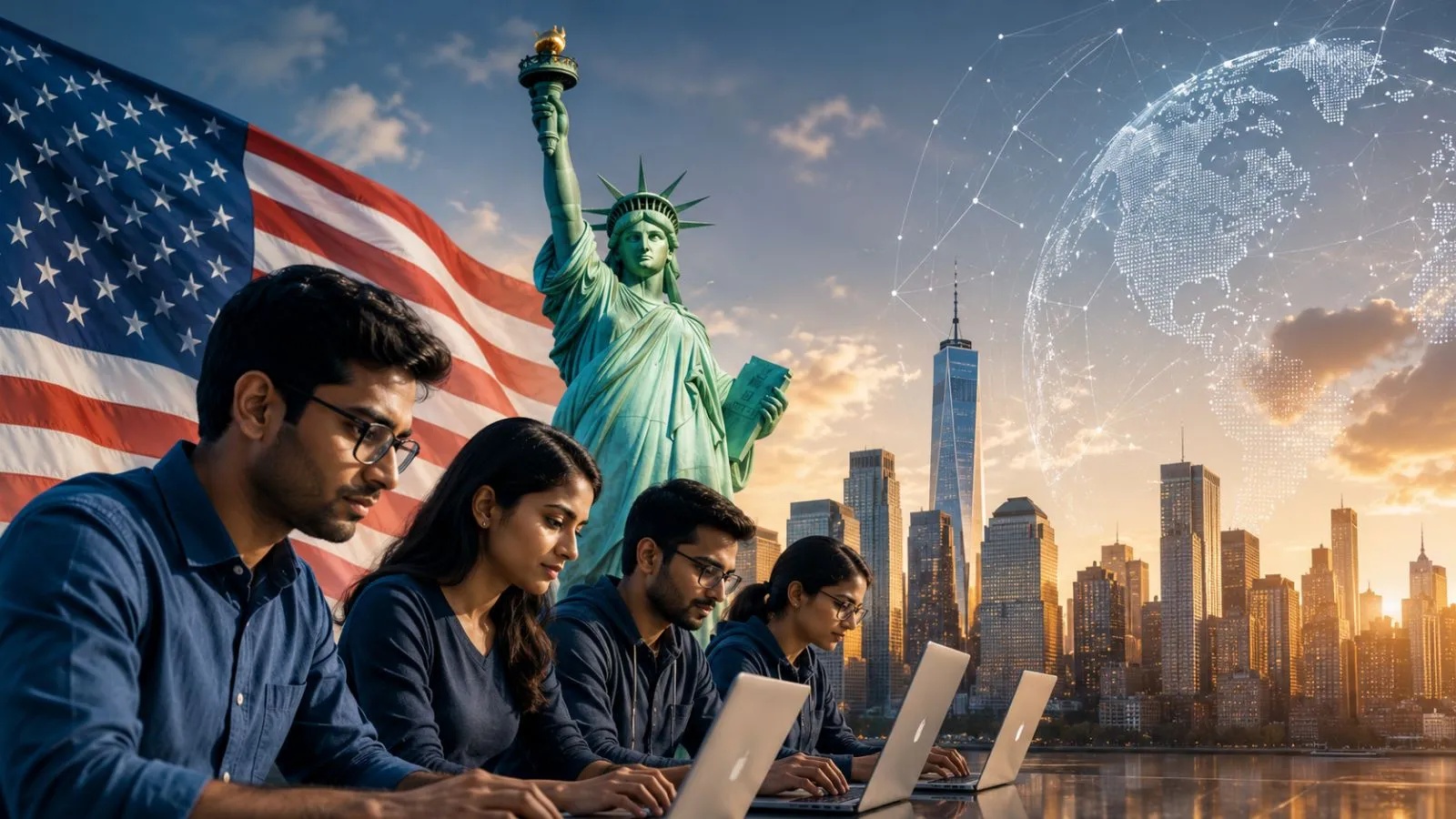
The United States State Department is moving forward with an expanded framework that requires foreign journalists applying for professional media visas to open their social media profiles to public scrutiny. According to leaked internal directives detailed by policy reports, this online presence vetting mandates that applicants adjust their digital footprint to public accessibility, directly impacting international correspondents—including thousands of reporters and media professionals across South Asia who rely on temporary U.S. assignments.
Rather than viewing this shift as an isolated bureaucratic adjustment, industry veterans recognize it as an escalation of border security theater that weaponizes personal expression against professional credentials. If you liked this article, you might want to check out: this related article.
The Mechanics of Digital Vetting
For years, the application process for an I-visa—the standard nonimmigrant classification for foreign media representatives—required administrative documentation, employer verification, and proof of active assignment. Applicants already disclosed social media handles under previous iterations of application reforms. However, forcing private individuals to flip privacy settings from locked-down to wide-open transforms standard background checks into behavioral surveillance.
Consular officers are instructed to flag language, political commentary, and historical posts that administration guidelines deem contrary to national security interests or public safety. For another look on this event, check out the recent coverage from The Guardian.
A hypothetical example illustrates the operational reality: a reporter who published an analytical critique of U.S. foreign policy five years ago on a personal platform could find their application stalled indefinitely. Without an explicit judicial definition of what constitutes a disqualifying digital footprint, the process relies heavily on the subjective interpretation of individual adjudicators sitting behind embassy counters.
Press Freedom Under the Microscope
The implications extend far beyond individual visa denials. Journalism thrives on inquiry, skepticism, and the interrogation of power structures. When state actors demand that foreign correspondents sanitize their digital lives to secure entry, a chilling effect ripples through international newsrooms.
Reporters based in dynamic hubs like New Delhi, Mumbai, and other major diplomatic centers now face a calculated professional dilemma. They must weigh the necessity of reporting from within the United States against the risk that an offhand comment, a shared article, or a critical retweet might jeopardize their career trajectory.
- Self-Censorship: Journalists begin scrubbing archives to avoid potential misinterpretation by foreign consular staff.
- Source Protection: Vetting protocols can inadvertently compromise the perceived independence of foreign press corps working on American soil.
- Chilling Effects: Editorial independence suffers when reporters operate under the looming threat of administrative expulsion or entry refusal.
The Regional Impact on Global Media Hubs
While the policy applies globally, its shockwaves hit nations with high volumes of outbound professional migration disproportionately. India, possessing one of the most active press ecosystems and a massive pool of journalists covering North American affairs, stands squarely in the path of these regulatory changes.
When combined with the Department of Homeland Security's concurrent efforts to cap temporary stays—such as restricting specific visa categories to fixed windows like 240 days with narrow extension paths—the entire structure of foreign correspondence is undergoing forced contraction. The days of long-term, deeply embedded international reporting are colliding with an era of micro-managed transience.
Transparency remains the stated goal of bureaucratic gatekeepers, yet the practical outcome is an opaque filter that rewards conformity and penalizes critical inquiry.
Consular discretion rules supreme, leaving applicants with minimal avenues for appeal or clarification when a digital artifact is flagged out of context. The policy converts personal social media timelines into official state dossiers, shifting the burden of proof onto the journalist to demonstrate ideological harmlessness.
The boundary between national security vetting and press management grows thinner by the day, reshaping how stories about America are told to the rest of the world