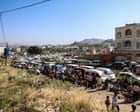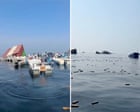
When container ships take hits in the Strait of Hormuz, the television cameras focus on warships, smoke plumes, and diplomatic threats. Down at the waterline, a very different drama unfolds as local boat owners, fishermen, and opportunistic traders scour the Strait of Hormuz for spilt cargo drifting out of damaged hulls. That informal scavenging is not mere desperation or petty theft. It is a street-level market response to war risk, maritime liability, and broken supply chains in one of the world's tightest chokepoints.
I have spent three decades watching shipping crises play out from port offices, arbitration rooms, and coastal jetties. Crises rarely look neat on a map. When a container ship gets struck or forced to abandon load, gravity and currents take over long before admirals or insurers finish arguing over jurisdiction. Boxes split open in choppy swells. Waterproof seals fail under impact. Consumer goods, industrial components, plastics, and food staples wash toward shallow shoals and fishing grounds where small craft can operate safely out of sight of heavy naval patrols.
Why Spilt Cargo Appears After Container Ship Attacks
Modern container ships are built for scale, not survival in a combat zone. A vessel carrying ten thousand or fifteen thousand TEUs relies on stacked steel boxes secured by twistlocks and lashing rods on open decks, alongside deep bays below. A missile strike, drone impact, limpet mine, or collision during evasive maneuvering can buckle hull plating, snap lashing gear, or send stacks toppling into the sea.
Once a container hits the water, survival depends on what is inside. Empty boxes float high and drift fast on surface winds. Boxes packed with dense machinery, copper wire, or tiles sink quickly and vanish into silted depths. Boxes filled with lighter consumer items, packaged dry goods, polymers, or boxed electronics often bob just below or at the surface, waterlogged on the outside and intact within, until waves tear the corrugated steel apart.
Tides and prevailing currents in the Strait of Hormuz complicate recovery for professional operators. The waterway narrows to roughly twenty-one miles of navigable width at its tightest pinch, carrying massive volumes of oil, gas, and manufactured trade between the Persian Gulf and the Gulf of Oman. Strong tidal streams push floating debris back and forth across shipping lanes, shoals, and coastal coves. What washes ashore near one fishing village today may drift toward an opposite shoreline tomorrow.
The Shadow Salvage Economy Along the Coast
Formal maritime salvage is slow, expensive, and heavily lawyered. A commercial salvor needs specialized tugs, barges, crane capacity, crew war-risk coverage, and a negotiated contract—often under Lloyd's Open Form—before touching a stricken vessel or its cargo. None of that moves fast when missiles are flying or insurers are freezing coverage.
Small local vessels move fast. Skiffs, dhows, and modified workboats already know every eddy, sandbar, and cove along the coast. When word spreads over VHF radio or local chats that a damaged container ship is leaking boxes, small operators head out at dawn or dusk. They do not need a multi-million-dollar salvage rig to haul floating pallets, sealed cartons, or bobbing containers toward shallow water.
Consider a hypothetical example to see how the math works on the water. Suppose a damaged feeder ship drops forty containers of packaged household goods and industrial resin bags into moderate seas. A professional salvage firm might spend days mobilizing equipment and clearing security hurdles before recovering a fraction of the load. Meanwhile, two dozen small boats working independently over forty-eight hours can tow in dozens of floating units or scoop up hundreds of intact cases, turning immediate physical access into quick cash at local markets.
In maritime trade, possession near the shoreline often moves faster than title on a bill of lading.
Once spilt cargo reaches land or quiet anchorages, a quiet resale chain takes shape. Some goods go straight into local households or neighborhood shops at steep discounts. Other items—raw polymers, packaging materials, vehicle parts, or bulk commodities—get sorted by small brokers who know which workshops or regional buyers will pay cash without asking for customs paperwork or serial numbers.
Maritime Law, Insurance, and Ownership Gray Areas
From a legal standpoint, spilt cargo is rarely free for the taking, even when it looks abandoned. Under established maritime principles, cargo lost at sea does not automatically cease to belong to the cargo owner or marine insurer simply because it drifted away from the ship. General average, marine cargo insurance, and salvage law all draw sharp lines between abandoned property, flotsam, jetsam, and straight theft.
In practice, enforcing ownership over scattered goods after Iran attacks container ships is a logistical nightmare. A single container can hold dozens of shipments belonging to different exporters and importers, each insured through separate syndicates in London, Tokyo, Singapore, or regional hubs. When a box breaks open at sea, nobody has a neat inventory of which carton washed onto which beach.
Marine insurers face a hard choice when spilt cargo starts surfacing locally. Sending investigators or recovery teams into an active conflict zone can cost more than the damaged goods are worth. Often, insurers treat scattered, water-damaged, or unverified recovery lots as a practical write-off rather than chase pennies across contested waters, while still fighting fiercely over high-value intact containers still aboard a grounded or towed vessel.
Hidden Hazards Inside Floating Containers
Scouring the Strait of Hormuz for spilt cargo carries severe physical risks that rarely make headlines. A container that took a strike or heat exposure may carry hazardous materials, leaking chemicals, damaged lithium batteries, corrosive liquids, or pressurized cylinders mixed in with ordinary commercial freight. Container manifests are notorious for misdeclared or poorly described cargo even in peacetime; in a wartime disruption, nobody on a small skiff knows what is behind a dented door.
Heat and seawater create nasty chemical reactions. Lithium-ion batteries breached by saltwater or impact can re-ignite hours or days later, sparking fires inside enclosed spaces or on wooden and fiberglass boats far from firefighting support. Industrial powders and solvents can irritate skin and lungs or contaminate fishing gear and coastal water if split open carelessly.
Navigation hazards add another layer of danger. Half-submerged containers act like stealth mines for small craft running without radar or strong searchlights. A steel box sitting a foot below the surface can rip the bottom out of a wooden hull or foul a propeller in seconds, leaving a salvage crew stranded right where naval patrols and military drones operate.
Geopolitics and the Reality on the Water
When Iran attacks container ships, state actors focus on deterrence, signaling, and economic pressure. Tehran and its forces have long treated the Strait of Hormuz as a lever of asymmetric leverage, while Western and regional navies patrol to keep commercial lanes open and reassure markets. Neither side designs naval strategy around small boats picking up floating cartons.
That gap between high-level geopolitics and coastal survival explains why scavenging persists even under heavy military scrutiny. Coastal communities live with the immediate economic shock of disrupted trade, higher fuel and food prices, and halted fishing grounds. When a floating windfall drifts past their boats, waiting for diplomatic statements does not put food on the table.
There is also a counter-argument worth taking seriously: local recovery is not always pure predation. In some cases, small vessels pulling floating debris out of main shipping channels actually reduce collision risks for passing ships, or rescue intact goods that would otherwise rot, rust, or sink into unusable sludge. Calling every boat operator a pirate misses the messy reality of coastal economies caught in the crossfire of state conflict.
What Supply Chains Miss When Focusing Only on Chokepoints
Supply chain analysts love talking about transit times, rerouting, and war-risk premiums in the Strait of Hormuz. Those metrics matter on quarterly earnings calls, yet they miss how spilt cargo ripples outward into real buyers. A manufacturer waiting on a specific grade of plastic resin, electrical fitting, or textile roll does not care whether its container sank, burned, or ended up half-wet in an informal coastal yard—the production line still stops.
Even when goods are recovered locally, quality and reliability become major hurdles. Moisture ruins electronics, warps packaging, corrodes bearings, and degrades food safety. Buyers who pick up cheap salvaged stock without testing or verification often inherit hidden defects, warranty claims, or regulatory headaches later on.
For shippers, insurers, and port authorities, the lesson is straightforward and uncomfortable. You cannot police every mile of shoreline or every floating box after a strike at sea. Better cargo stowage, clearer hazardous-cargo declarations, faster crisis communication with coastal authorities, and realistic risk pricing do far more to limit losses than wishful thinking about total control over a war-torn waterway. Watch the boats working the shallows after the next incident—they show the true cost of maritime conflict long before the final claims are settled.