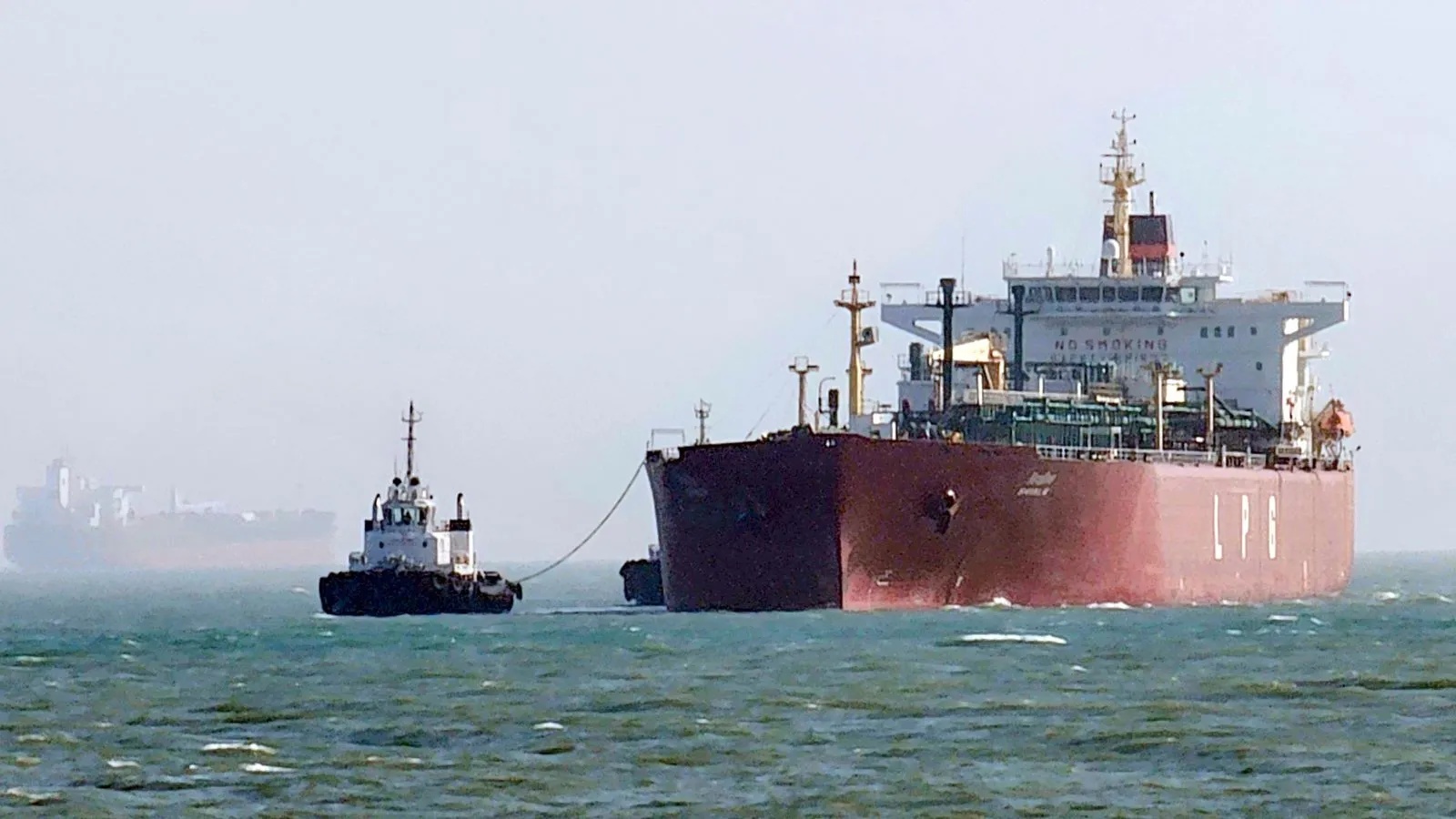
A Kuwait-flagged tanker carrying 21 Indian seafarers was struck near the Strait of Hormuz, leaving the vessel damaged while all 21 crew members escaped physical harm. Initial reports confirm the crew is safe, yet the incident exposes deeper structural vulnerabilities in Persian Gulf shipping that routine headline summaries routinely gloss over. When a commercial hull takes a hit in one of the world's tightest maritime chokepoints, the immediate relief of a surviving crew often masks a far messier reality of insurance friction, crew repatriation hurdles, and silent geopolitical signaling.
Decades covering maritime security and energy logistics teach a simple rule. A headline about a "safe crew" rarely tells you what happens twelve hours after the distress beacon pings. Seafarers do not simply step off a stricken tanker into a quiet life; they enter a grinding maze of flag-state protocols, port-state inspections, medical evaluations, wage guarantees, and diplomatic clearances. For 21 Indian seafarers aboard a Kuwait-flagged tanker, nationality adds an extra layer of operational weight because India remains one of the primary global suppliers of commercial deck and engine officers, making any Gulf incident an immediate domestic labor and consular concern for New Delhi.
Why the Strait of Hormuz Keeps Punishing Commercial Shipping
Geography does all the heavy lifting in the Strait of Hormuz. At its narrowest navigable lanes, inbound and outbound traffic is funneled through tight corridors bordered by volatile regional dynamics, shallow coastal shelves, and dense commercial vessel traffic. A single tanker moving at twelve to fourteen knots has the stopping distance of a small city block and the turning radius of an apartment tower. When threats materialize—whether from floating hazards, drone activity, electronic interference, or erratic regional escalations—commercial crews have almost no room to maneuver away from danger.
Consider a hypothetical example to see how quickly a routine transit shifts from predictable to perilous. Suppose a product or crude tanker enters the inbound traffic separation scheme at dusk with twenty-one mariners on watch and rest rotation. A sudden impact strikes above or near the waterline, sparking alarms on the bridge and engine control room while automatic identification system (AIS) transponders either broadcast frantic updates or go dark for tactical reasons. Even if structural integrity holds and no oil spills into the Gulf, the master and chief engineer must immediately assess ballast stability, fire suppression readiness, and propulsion reliability while regional naval assets and commercial salvage operators sort out who has jurisdiction.
Chokepoints do not forgive complacency, and modern commercial vessels were never engineered to absorb kinetic or asymmetric blows without triggering cascading operational headaches.
In maritime trade, flag state and beneficial ownership are two different things. A Kuwait-flagged tanker operates under Kuwaiti registry rules and maritime law, which shapes inspection regimes, certification standards, and diplomatic channels. Yet commercial shipping thrives on layered corporate structures—charterers, technical managers, crewing agencies, and hull-and-machinery underwriters spread across multiple jurisdictions. When a ship is hit near the Strait of Hormuz, figuring out who pays for tugs, surveys, and crew transfer can take longer than putting out a localized fire.
What "Crew Safe" Actually Means on the Water
"Crew safe" is the phrase every shipping desk prays to read first. It means no fatalities, no severe blast trauma reported at initial muster, and a shipboard team that held together under stress. Still, physical survival is only step one of a grueling sequence.
Mariners who endure an attack or strike near a conflict-prone waterway face acute psychological shock. Even seasoned officers who have sailed the Persian Gulf for fifteen years experience adrenaline crashes once the immediate emergency stabilizes. They still have to stand watches in darkened or damaged compartments, monitor hull stress, and communicate with anxious families thousands of miles away who are seeing fragmented, sometimes sensationalized social media clips.
The Hidden Bureaucracy of Crew Welfare and Repatriation
Getting 21 Indian seafarers safely off a damaged vessel and back home involves more moving parts than most land-based readers imagine. First, a safe transfer point must be established. Transferring personnel at sea via launch boat or helicopter depends heavily on sea state, wind, proximity to safe waters, and coastal state permission.
Once ashore or aboard a support vessel, crew welfare obligations kick in under international maritime conventions, including the Maritime Labour Convention (MLC). Shipowners and managers must arrange:
- Medical screening and trauma care, even for crew members without visible wounds, to catch concussive effects, smoke inhalation, or acute stress reactions.
- Travel logistics and visas, which get complicated fast if passports or seafarer discharge books were left behind during an urgent evacuation or remain locked in a ship's safe during salvage operations.
- Continued wages and contractual protections, ensuring mariners are not stranded in foreign ports or left in limbo while commercial disputes unfold over the vessel.
- Consular coordination, particularly when Indian nationals are involved and diplomatic missions monitor welfare, legal rights, and timely return flights.
A common misconception is that once a crew reaches a nearby port or hotel, the ordeal is over. In reality, witnesses and key crew members—especially the master, chief officer, and chief engineer—are often needed for incident reporting, class society surveys, and insurer investigations. Balancing a seafarer's right to prompt repatriation against an operator's need for factual operational reporting is one of the thorniest gray areas in modern maritime law.
War Risk Insurance and the Quiet Price Tag
Long before a single shot or strike makes evening news, commercial risk markets price tension into every transit through the Strait of Hormuz. Hull and machinery coverage, protection and indemnity (P&I) clubs, and war risk underwriters watch regional incidents with cold, unblinking math. When a tanker gets hit, premiums and additional war risk call-out areas can tighten almost overnight.
For shipowners and charterers, the financial fallout extends far beyond physical hull repairs. A damaged tanker off-hire for inspection or dry-docking loses daily earnings while still burning fixed costs. Meanwhile, charterers face supply chain delays, rerouting friction, or costly demurrage disputes. Even when the crew is safe and no cargo is lost, the commercial ripple travels straight into freight rates and energy risk calculations.
| Risk Dimension | Immediate Impact After Strike | Medium-Term Industry Consequence |
|---|---|---|
| Crew & Human Factor | Muster, fire/damage control, stress response | Repatriation logistics, rotation delays, retention strain |
| Vessel & Cargo | Stability checks, propulsion/hull assessment | Off-hire losses, class surveys, dry-dock bottlenecks |
| Insurance & Legal | Incident notification, salvage readiness | Higher war risk premiums, stricter transit terms |
| Regional Trade | Tactical delays, heightened watch posture | Freight rate volatility, tighter security protocols |
Why Indian Seafarers Sit at the Center of Gulf Maritime Risk
India's role in global shipping is foundational. Indian officers and ratings crew a massive share of the world's tanker and bulk fleets, prized for technical competence, English proficiency, and deep familiarity with complex vessel systems. Whenever a Kuwait-flagged tanker with 21 Indian seafarers is caught in an incident near the Strait of Hormuz, maritime unions, crewing agents, and policy watchers pay close attention.
There is a sharp tension here that rarely gets candidly discussed. Seafarers want steady employment and competitive wages, which often means sailing through high-risk or high-alert waters where hazard pay or war-risk bonuses may apply. At the same time, families and labor advocates rightly ask whether commercial operators are doing enough to minimize exposure, maintain modern bridge and defensive equipment, and guarantee rapid, dignified extraction when things go sideways.
Commercial shipping runs on thin margins and tight schedules, yet human lives are the one asset no charter party can afford to treat as routine.
No single measure eliminates risk in a narrow waterway surrounded by competing regional interests. Naval escorts help deter or respond to certain threats, but they cannot cover every merchant hull across every mile of the Persian Gulf around the clock. Electronic navigation safeguards help, yet spoofing and signal disruption remain persistent headaches. Honest industry analysis admits that risk reduction in the Strait of Hormuz is an exercise in layered mitigation rather than absolute safety.
What Separating Signal From Noise Requires Next
When another tanker headline crosses the wire, readers and industry participants alike benefit from looking past the first urgent bulletin. Checking whether the crew is safe should always come first, followed closely by harder questions about vessel type, exact location relative to traffic lanes, environmental containment, and how quickly operators move to care for the mariners on board.
For shipping companies, crewing managers, and policymakers watching the Strait of Hormuz, the real test begins after the initial alert fades—auditing emergency evacuation drills, streamlining crew repatriation corridors, and keeping transparent communication open with seafarers' families until every single crew member is firmly back on solid ground.



