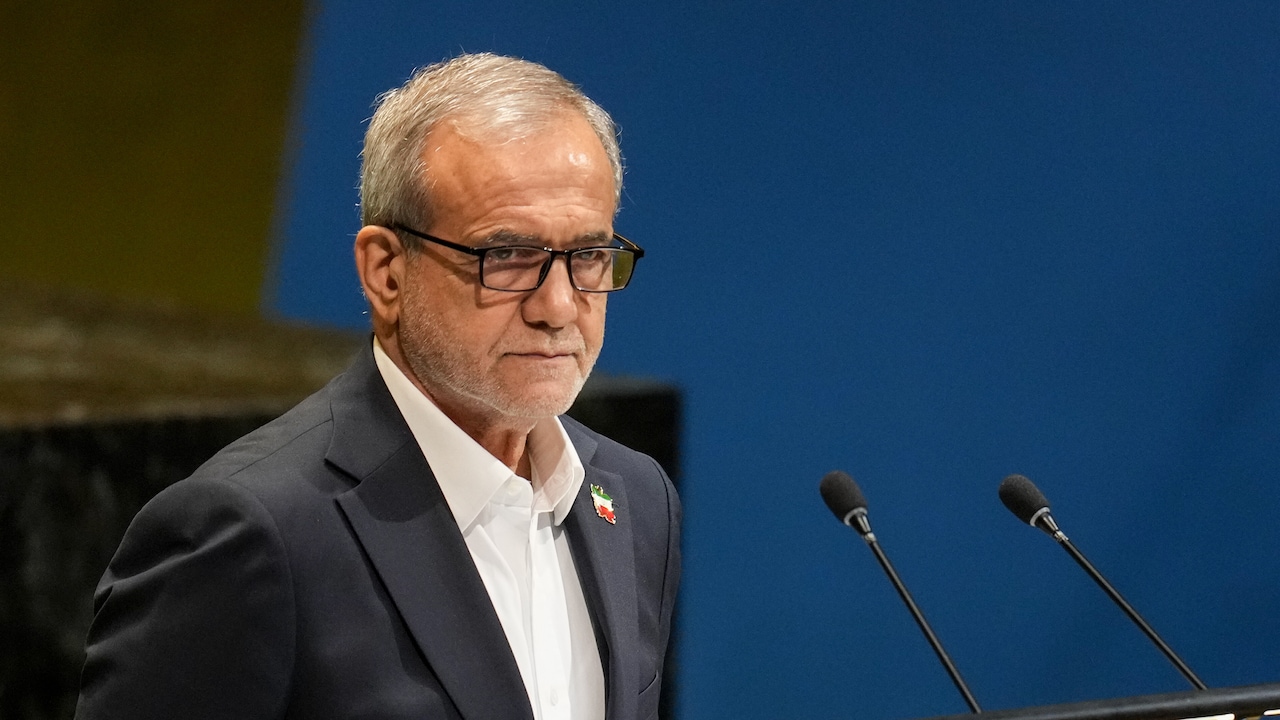
Iranian President Masoud Pezeshkian's public insistence that Tehran will immediately honor the collapsed June memorandum if Washington returns to the text reveals more about diplomatic desperation than it does about genuine peace. Beneath the superficial olive branches lies a grinding standoff over the Strait of Hormuz, frozen financial reserves, and a US political landscape reeling from the economic fallout of prolonged conflict.
The June framework—formulated after months of high-stakes indirect talks mediated through regional capitals—was meant to halt hostilities, reopen vital maritime energy choke points, and begin the arduous process of winding down a military confrontation that started with US-Israeli strikes in early 2026. Instead, the agreement disintegrated amidst mutual accusations of bad faith, leaving crude markets exposed to severe shocks and regional actors scrambling to hedge their bets.
Why did the accord unravel so quickly? The answer lies in the fundamental mismatch between Washington's demands for absolute nuclear disarmament and Tehran's red lines regarding domestic sovereignty and regional posture. Iranian officials have repeatedly signaled that they will not unilaterally dismantle their remaining nuclear infrastructure or surrender enriched material under extreme economic coercion. When domestic electoral pressures in the United States shifted following midterms heavily influenced by surging fuel costs, the White House adopted an erratic posture—oscillating between declarations that the military mission was complete and assertions that no formal deal was necessary at all.
Pezeshkian's recent statements at international summits, echoed by Foreign Minister Abbas Araghchi, are designed to shift the blame onto Washington, framing the United States as the party that abandoned its signature. By demanding that the US reinstate its commitments under the June memorandum first, Tehran attempts to position itself as reasonable while maintaining the closure of the strategic waterway. This maritime chokehold remains Iran's primary point of geopolitical leverage, forcing global powers to weigh the cost of continued disruption against the price of diplomatic concessions.
The geopolitical calculus is further complicated by external actors. Moscow and Beijing continue to offer diplomatic lifelines, encouraging Tehran to hold firm against maximum pressure campaigns while courting alternative trade networks. When Iranian leadership confers with Russian counterparts, the message conveyed is one of calculated resilience rather than capitulation.
Meanwhile, back-channel discussions led by figures like Vice President JD Vance have occasionally hinted at a willingness to reopen dialogue, yet these efforts are consistently undermined by contradictory public declarations from the Oval Office. This erratic signaling creates a vacuum where trust cannot survive. Without a verifiable mechanism to ensure that both sides honor incremental rollbacks of sanctions and maritime restrictions simultaneously, any revival of the June framework remains structurally fragile.
The economic reality on the ground dictates that neither side can afford an indefinite state of economic strangulation, yet political survival in both capitals continues to reward intransigence. As long as Washington insists on unconditional surrender of enrichment capabilities and Tehran refuses to relinquish its maritime leverage in the Gulf, the rhetoric surrounding the June memorandum will remain just that—rhetoric.
The tankers remain bottlenecked, the regional threat matrices remain elevated, and the window for a durable diplomatic off-ramp continues to narrow as domestic political cycles dictate an increasingly volatile foreign policy.
This video provides the original broadcast news coverage detailing Iranian President Masoud Pezeshkian's public statements regarding the June diplomatic agreement.


