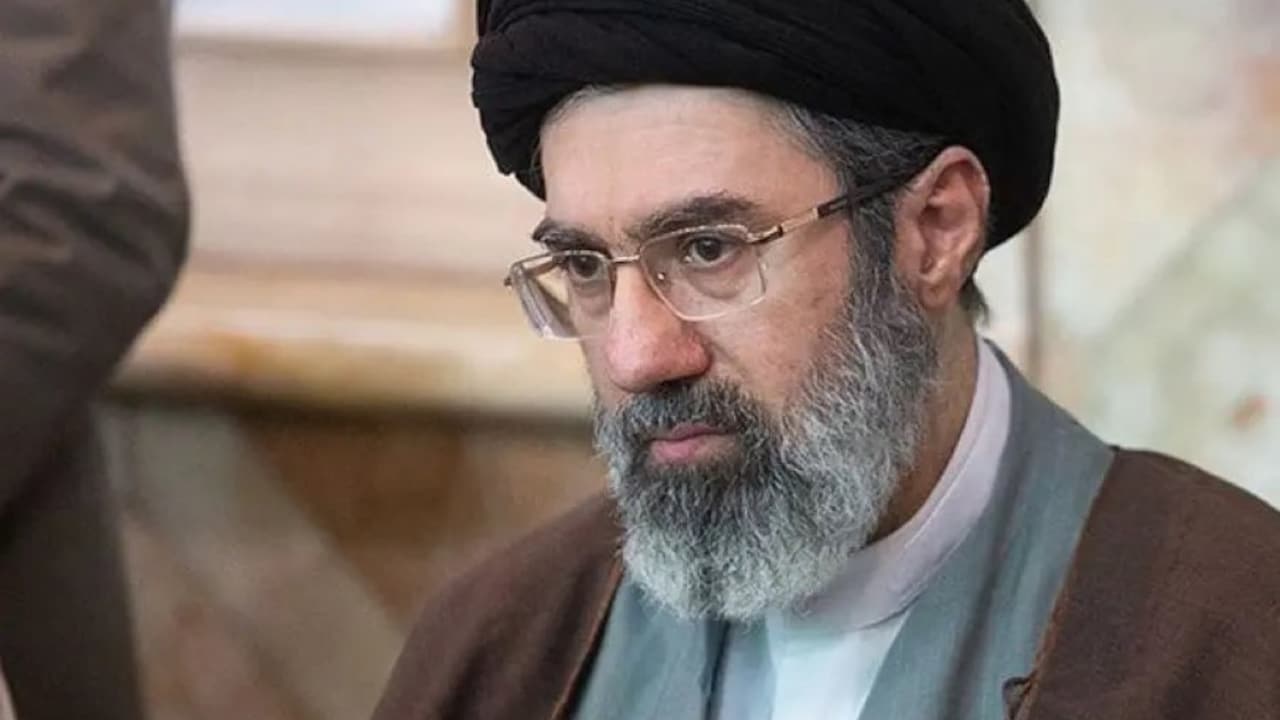
The fragile architecture of Iran's executive branch is currently buckling under internal pressure following widespread reports that Supreme Leader Mojtaba Khamenei has delivered a strict warning to President Masoud Pezeshkian regarding future threats of resignation. Behind closed doors in Tehran, a high-stakes standoff has exposed the severe friction between the elected civilian administration and the dominant military factions of the Islamic Revolutionary Guard Corps.
Reports originating from foreign intelligence assessments and regional media outlets indicate that Pezeshkian had previously attempted to step down from office, arguing that his cabinet had been systematically sidelined from national security and foreign policy formulation. By reportedly warning that any subsequent resignation would be immediately accepted, the Supreme Leader has effectively stripped the executive office of its primary internal leverage. This dynamic reveals a deeply compromised presidential office struggling to retain relevance while hardline military commanders consolidate authority over the Islamic Republic's core strategic vectors.
The Structural Trap of the Iranian Presidency
To understand why Pezeshkian finds himself cornered, one must examine the structural limitations built into the Iranian political system. The presidency is designed to manage domestic administration, economic policy, and routine bureaucratic functions, but it remains structurally subordinate to the office of the Supreme Leader and the security apparatus.
When a reformist-leaning or moderate figure wins the presidency, they inherit an economic crisis compounded by international sanctions, institutional corruption, and systemic resistance from entrenched hardliners. Pezeshkian campaigned on promises of constructive engagement with the international community and economic rationalization. Yet, every attempt to execute these policies collides with the institutional vetoes held by the security state.
Threatening resignation has historically been used by Iranian executives as a desperate procedural weapon to signal extreme policy paralysis. When a president hints at walking away, it creates a crisis of legitimacy for the ruling establishment, which prefers to project absolute internal unity. By calling this bluff, the centralized power structure has signaled that the executive branch is entirely dispensable.
The Ascent of Hardline Military Dominance
The shifting balance of power in Tehran is not merely an institutional dispute; it reflects a hard pivot toward military primacy. Observers tracking the inner workings of the regime note that the influence of the Islamic Revolutionary Guard Corps over foreign policy and regional strategy has reached unprecedented levels.
With the alignment between the Supreme Leader's office and top military commanders solidifying, civilian oversight has been reduced to near-zero. Key decisions regarding relations with Western powers, regional deterrence, and nuclear file management are now formulated almost exclusively within security councils where elected officials hold little to no sway.
This consolidation leaves the civilian administration in an unenviable position. Ministers are tasked with implementing economic stabilization plans while being denied control over the nation's primary revenue-generating assets and geopolitical expenditures. Inflation runs high, the national currency remains under severe pressure, and ordinary citizens bear the brunt of a system prioritizing regional confrontation over domestic welfare.
The Regional and International Calculus
This domestic political friction unfolds against a backdrop of volatile foreign relations. Tehran's current strategic doctrine assumes that external adversaries are unlikely to shift course abruptly, prompting the ruling establishment to double down on maximum leverage.
Indirect diplomatic channels persist through regional intermediaries in the Persian Gulf, yet these talks operate under strict parameters defined by military hardliners rather than the Ministry of Foreign Affairs. Whenever the civilian apparatus attempts to carve out space for diplomatic flexibility, it faces immediate pushback from security factions that view compromise as an existential vulnerability.
The denial of the resignation ultimatum by presidential spokespersons underscores the regime's desperate need to project stability to the outside world. Officials in Tehran routinely dismiss foreign reports of internal fractures as hostile propaganda designed to undermine national cohesion. However, the very frequency of these denials points to an underlying anxiety within the ruling elite.
As the Islamic Republic navigates an unforgiving geopolitical landscape, the marginalization of the presidency highlights a system closing ranks around its core ideology. President Pezeshkian remains trapped between the impossible expectations of an electorate demanding change and an absolute authority structure determined to maintain course, leaving the executive branch hollowed out and entirely subservient to the military-security complex.