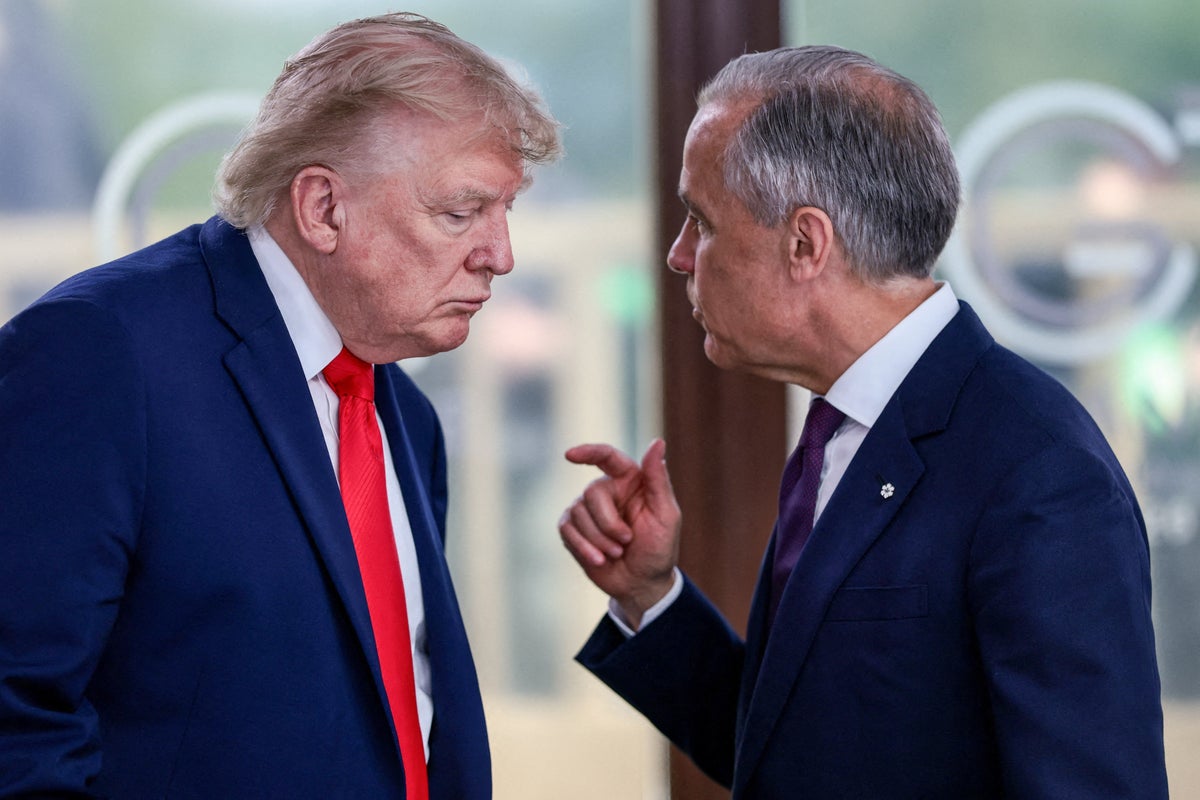
The border dividing the United States and Canada is no longer just a line on a map; it is an active economic fault line. When the White House triggered Section 338 of the Tariff Act of 1930—a Depression-era mechanism designed for absolute trade retaliation—it slapped a punitive 50% duty on roughly $20 billion worth of Canadian goods. Ottawa did not blink. Prime Minister Mark Carney suspended negotiations, recalled his diplomatic trade team, and promised an immediate, dollar-for-dollar matching retaliation.
This is not a routine diplomatic squabble over softwood lumber or dairy quotas. This is an institutional rupture. For decades, the premise of North American commerce relied on predictable, frictionless integration under frameworks like the USMCA. That architecture is fracturing under the weight of executive mandates, national security rhetoric, and a fundamental breakdown in trust.
The Mechanics of the Breakdown
To understand how a bilateral trade relationship worth $880 billion annually reached this breaking point, look past the public posturing and examine the mechanics of the failed Washington talks. The Trump administration entered the final stretch demanding concessions on provincial alcohol distribution bans, auto tariffs, and protected dairy access.
Washington offered what it termed a preferential pathway—reducing auto tariffs from 25% down to 15% and halving aluminum and steel duties from 50% to 25%. To the U.S. Trade Representative, this was a generous off-ramp. To Ottawa, it was a moving target.
Canadian negotiators walked away because the terms shifted at the eleventh hour. When the U.S. side introduced last-minute modifications, Canadian leadership deemed the revised framework economically unviable and politically radioactive. No sovereign government can absorb repeated alterations to a text without looking entirely subjugated. Carney chose the rupture over capitulation, recognizing that a bad deal signed under duress only invites further coercion.
The Historical Weaponization of Trade
The tool chosen by Washington reveals the depth of the escalation. Section 338 is an antique statute. It bypasses the traditional investigative hurdles of Section 301, granting the executive branch unilateral power to impose up to 50% import penalties against nations deemed discriminatory toward American commerce.
Historically, this provision sat gathering dust because successive administrations understood a basic macroeconomic truth. Importers pay tariffs, not exporting countries. When a 50% levy hits hockey sticks, industrial components, and specialized manufactured goods, the cost transfers directly to American businesses and consumers.
Take a hypothetical manufacturing plant in the Midwest that relies on specialized Canadian steel inputs. Under the new tariff structure, that plant faces an immediate cost spike of 25% to 50%. They cannot simply pivot to a domestic supplier overnight; industrial supply chains take years to construct and optimize. The result is margin compression, delayed capital expenditures, or passed-along price increases to retail buyers already fatigued by high living costs.
The Political Calculus and Public Backlash
Public sentiment north of the border has shifted from bewilderment to profound resentment. Constant rhetoric from Washington regarding territorial absorption and economic dominance has transformed a trade dispute into a national unity crisis. Petitions demanding the expulsion of diplomatic personnel have drawn hundreds of thousands of signatures.
Carney’s political survival depends on projecting strength. If Ottawa had accepted the American terms without substantial, binding guarantees, domestic opponents would have framed the administration as weak. By promising to match the duties dollar for dollar, the Canadian government is signaling that economic integration cannot be used as a blunt instrument of political compliance.
Yet, matching a superpower dollar for dollar carries severe asymmetric risks. Canada sends roughly 70% of its total exports across the southern border. A protracted trade war threatens to induce stagnation in export-driven sectors, forcing Ottawa to accelerate its multi-billion-dollar infrastructure pivots toward alternative global markets.
The Permanent Shift in North American Commerce
The fracture goes beyond the current administration or any single executive order. Ties between the two economies have undergone a structural change. Corporate boardrooms in Toronto, Calgary, and Vancouver are rewriting long-term strategic plans under the assumption that the border is permanently volatile.
When trusted allies treat trade agreements as temporary truces rather than binding law, capital flees uncertainty. Supply chains are decentralizing, inventory buffers are expanding, and institutional faith is evaporating. The 50% tariff wall is now a reality, and the administrative machinery required to dismantle it has stalled completely.
No further discussions are scheduled. The trucks continue to roll across the world's longest undefended border, but every single container now carries the heavy tax of a broken alliance.


.jpeg)