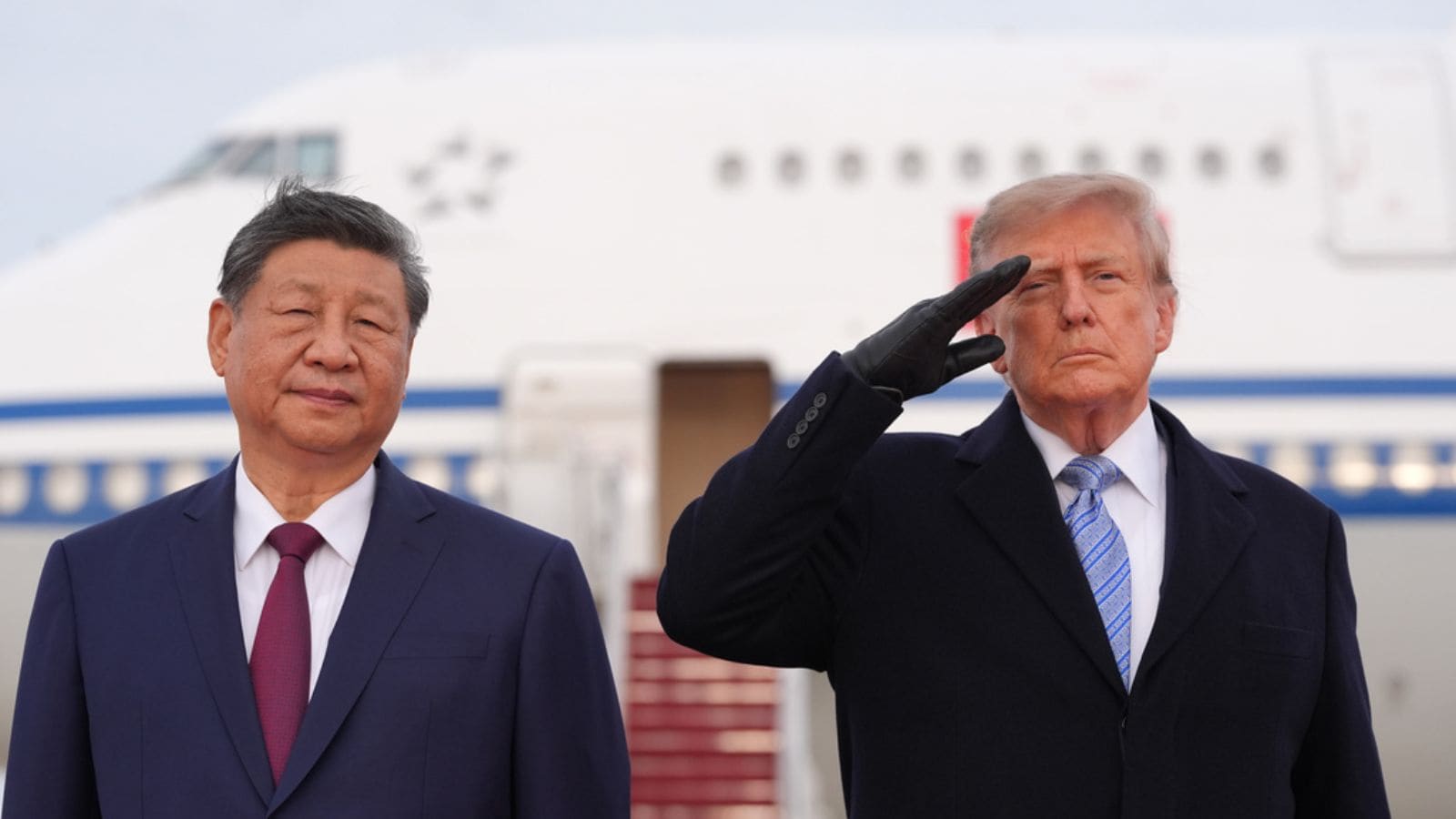
The grand theater of diplomacy often substitutes ceremony for solution. When Donald Trump welcomed Chinese leader Xi Jinping to Washington for a high-stakes summit, the choreography was heavy on red carpets, state dinners, and carefully managed optics. Yet beneath the surface pageantry, the fundamental structural fractures governing U.S.-China relations—spanning advanced artificial intelligence governance, trade imbalances, and the geopolitical fault line of Taiwan—remained entirely unhealed.
The primary takeaway from the meetings was not a historic realignment, but a familiar exercise in diplomatic kicking-the-can. Treasury Secretary Scott Bessent announced a brief two-month extension of the existing trade truce, staving off an immediate return to punishing tariffs. But this temporary reprieve obscures a deeper malaise. Beijing has continuously lagged behind on its broader agricultural purchasing commitments, while Washington continues to grapple with the unchecked surge of manufacturing exports. A temporary administrative Band-Aid does nothing to resolve the core structural distortions in bilateral commerce. It merely buys time for political expediency while industries on both sides remain trapped in structural limbo.
Nowhere was the divergence more apparent than in the discussions surrounding artificial intelligence. Trump leaned into a deregulatory posture, signaling a preference to keep state guardrails minimal to ensure rapid domestic development. In stark contrast, Xi pressed the necessity of keeping algorithmic advancement strictly under human control and international management. This is not merely a philosophical disagreement over software development. It reflects an ideological race for planetary techno-hegemony. Calling advanced systems "super intelligence" or establishing a formal dialogue channel does nothing to bridge the gap over rare-earth mineral dependencies, advanced semiconductor bans, and the race for computing infrastructure supremacy.
Meanwhile, Taiwan remained the unmovable object in the room. According to official readouts, Xi urged Washington to handle the Taiwan question with absolute caution and explicitly pressed for the U.S. to oppose formal independence. The White House maintained its traditional, calculated ambiguity, offering no public concession or policy shift. The friction is exacerbated by stalled security assistance packages and legislative battles in Washington, turning a democratic island of strategic importance into an ongoing high-stakes poker chip.
Diplomatic summits are routinely judged by their cosmetic output. Handshakes on the South Lawn and toasts celebrating wartime alliances provide good television, but they do not alter the arithmetic of great power competition. When the cameras turn off and the red carpets are rolled away, Washington and Beijing are left staring across the exact same chasm they faced before the plane touched down.
Trade truce extended as Taiwan and AI tensions remain unresolved
This video explores how the temporary trade truce and high-level talks failed to resolve deep-seated disputes over artificial intelligence and regional security.


