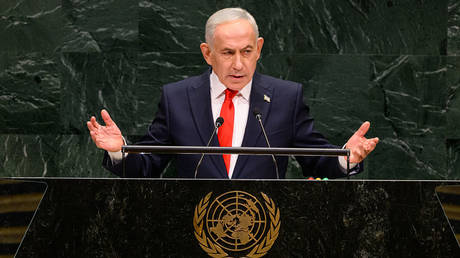
The United Nations is not collapsing because it lacks relevance; it is hollowing out because its operating system was built for a geopolitical map that no longer exists. Across East River corridors, diplomatic lounges, and field missions from West Africa to the Levant, the organization faces a compounding liquidity crunch, a veto gridlock, and a quiet erosion of legitimacy. Yet every genuine crisis in multilateralism carries a hard-edged opportunity: forcing member states to strip away performative diplomacy and rebuild practical tools for conflict de-escalation, climate finance, and global public health that work even when major powers are at each other's throats.
Having covered multilateral diplomacy and international institutions for more than two decades, I have watched plenty of obituaries written for the UN. Most of them miss the point. The organization rarely dies dramatically in a single vote or walkout. Instead, it bleeds out through arrears, earmarked funding, mandate bloat, and bureaucratic caution, leaving field staff to carry impossible expectations on shrinking budgets.
Why the UN Keeps Running Out of Money
Walk past the glass facades of New York or Geneva during a budget review and you will see a paradox that baffles outsiders. Member states keep voting for ambitious new mandates—peacekeeping operations, humanitarian appeals, digital governance panels, climate adaptation funds—while starving the regular budget of cash.
Cash flow at the UN operates on a structural flaw that rewards fiscal brinkmanship. Assessed contributions to the regular budget are mandatory under the Charter, yet collection timing depends on national budget cycles and political will. When one or more large contributors withhold payments, delay transfers until late in the calendar year, or dispute specific program lines, the Secretariat faces immediate cash-flow shortfalls.
Leaders respond with emergency measures. Hiring freezes stall recruitment. Travel gets restricted. Conference services and routine maintenance slip. Nothing shuts down completely overnight, so the outside world assumes the lights are still on. Inside, however, institutional energy shifts from long-term planning to short-term survival.
The deeper distortion comes from voluntary versus assessed funding. Over time, a growing share of UN activity has shifted toward voluntary contributions—often tightly earmarked by donor governments for specific countries, themes, or agencies. That gives donors control and visibility. It also fragments coordination and turns agencies into competitors chasing the same donor priorities, leaving underfunded emergencies out of the spotlight.
To see how earmarked money shapes incentives, consider a hypothetical example. Suppose a regional humanitarian crisis erupts alongside a high-profile geopolitical flashpoint. Donor capitals pour hundreds of millions of dollars into the flashpoint response because domestic audiences and media coverage are focused there, while a chronic food-security emergency in a neighboring territory receives a fraction of what agencies estimate is needed. Field coordinators end up with well-funded logistics in one place and rationing basics in another, even though regional stability links both.
That dynamic is not an accident. It is a rational response by national ministries accountable to domestic voters. Pretending otherwise only delays practical fixes like multi-year flexible funding, stricter prioritization of mandates, and honest sunset clauses on programs that have outlived their purpose.
The Security Council Bottleneck and Workarounds That Actually Matter
Ask any seasoned diplomat what ails the UN most visibly and the answer usually starts with the Security Council. Five permanent members hold the veto, and when two or more of them sit on opposite sides of a major conflict, council action on core security crises can freeze completely.
Veto paralysis is infuriating for families living under bombardment or displacement. Still, blaming the veto alone oversimplifies how international power works. The Security Council was designed to reflect great-power realities at the end of World War II so major powers would stay inside the room rather than walk out and fight each other directly. Changing the council's composition or voting rules requires amendments ratified by two-thirds of member states, including all five permanent members. Anyone banking on a sudden, sweeping Charter overhaul is selling illusions.
The real story is what happens around the bottleneck. Diplomats and practitioners have spent years building institutional workarounds that keep essential cooperation moving when the Security Council is deadlocked.
- General Assembly referrals and debates give smaller and middle powers a louder platform to register global norms, debate resolutions, and apply political pressure without a veto blocking the floor.
- Regional organizations—such as the African Union, ASEAN, and the European Union—increasingly handle first-line mediation, stabilization, or sanctions coordination closer to the ground.
- Technical and specialized agencies continue operating on day-to-day standards—aviation safety, maritime rules, telecommunications, disease surveillance, and nuclear safeguards—because even rival capitals need predictable rules to function safely.
- Coalitions of the willing form around specific crises, using UN convening power or legal frameworks as a backstop while executing operations through national or regional contingents.
None of these workarounds replaces decisive collective security enforcement. A fractured council still leaves civilians exposed and emboldens actors who calculate that major-power division shields them from consequences. Acknowledging that limitation is essential to trustworthiness: workarounds soften the blow of gridlock, but they do not make gridlock harmless.
Mandate Bloat Inside the Secretariat
Outside observers tend to blame member states for everything that goes wrong at the UN. Member states carry heavy responsibility, yet internal mandate bloat inside the system compounds the strain.
Every year, committees pass hundreds of resolutions requesting reports, summits, working groups, and evaluations. Many of those requests overlap. Some repeat language from prior years with minor tweaks. Once a mandate is on the books, bureaucracies rarely volunteer to retire it.
Over decades, layers of reporting lines and specialized bodies have accumulated. A senior official managing a complex crisis can spend as much time preparing briefings, clearing talking points, and managing overlapping coordination mechanisms as tracking conditions on the ground.
Why Reform Efforts Stall So Often
Every incoming leadership team or reform commission promises a leaner, more agile organization. Most achieve incremental tweaks rather than deep surgery. Why?
First, every unit, committee, and program has a constituency among member states that values a seat at the table or a specific policy hook. Cutting a program often triggers pushback from governments that sponsored it.
Second, risk aversion runs deep in large multilateral bureaucracies. Making a bold operational call in a contested political environment carries career and institutional risk if things go wrong, whereas issuing another cautious report rarely gets anyone fired.
Third, accountability is diffused across capitals, executive boards, and Secretariat divisions. When everyone shares responsibility for a decision, nobody owns the outcome when implementation falters.
Turning Pressure Into Concrete Reform
Calling the UN a crisis zone is easy. Turning pressure into usable reform requires targeting places where incentives can actually shift.
Start with mandate discipline. Member states should require clear objectives, measurable milestones, and automatic expiration dates for new resolutions and bodies unless explicitly renewed after a frank review of impact. If a working group or reporting requirement has not produced actionable value after a set period, let it lapse.
Next, fix financing mechanics at the margins where practical leverage exists. Encouraging predictable, multi-year flexible contributions for core humanitarian and development functions helps agencies pre-position supplies, retain experienced staff, and respond faster instead of scrambling pass-the-hat after headlines peak.
Third, lean harder into decentralization and regional partnerships. Decisions made closer to affected communities—paired with clear guardrails on procurement, human rights compliance, and financial auditing—often move faster than headquarters-heavy approvals. Where regional bodies have local legitimacy and operational reach, backing them with logistics, training, and diplomatic coordination beats trying to run every response from a distant hub.
Fourth, modernize information and verification. Crises today move at the speed of synthetic media, contested narratives, and rapid supply-chain shifts. Investing in credible, transparent data verification, independent monitoring, and plainspoken public reporting helps counter disinformation and gives governments a shared factual baseline even when they disagree on politics.
What Middle Powers and Civil Society Can Do Now
Major powers dominate headlines, yet middle powers and non-state actors often hold the most practical leverage to keep multilateral machinery honest and functional. Countries that are neither global hegemons nor fragile states frequently bridge divides because they depend heavily on stable trade, international law, and predictable diplomacy.
Middle powers can pool diplomatic weight to push for budget transparency, back independent oversight offices, and keep neglected crises on the agenda when great powers obsess over bilateral rivalries. Civil society groups, local responders, and technical experts add something governments cannot easily manufacture: unfiltered ground truth and institutional memory.
None of this turns the UN into a world government or magically erases geopolitical rivalry. It never was a world government, and pretending it could override sovereign power has always set it up for disappointment. The real opportunity right now is tougher and more realistic: strip away diplomatic theater, fund what actually works, defend basic international norms where they still hold, and build resilient cooperation that survives sharp disagreement among the biggest players.
In multilateralism, illusions are expensive. Cold-eyed realism is the only foundation strong enough to build on.