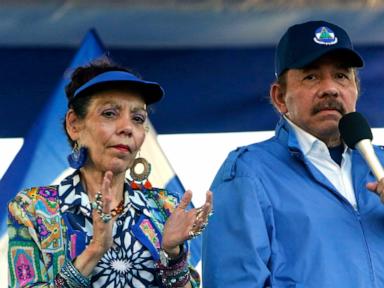
United Nations human rights investigators have formally accused Nicaraguan President Daniel Ortega, Vice President Rosario Murillo, and top state officials of committing crimes against humanity against their own citizens. The findings, delivered by the UN Group of Human Rights Experts on Nicaragua (GHREN), conclude that the government orchestrated a systematic campaign of state-sponsored terror starting in April 2018. Rather than isolated acts of police brutality, the experts documented a coordinated machinery involving extrajudicial executions, arbitrary detentions, torture, sexual violence, and the mass stripping of citizenship designed to permanently eliminate political opposition.
Standard wire coverage treats this report as just another diplomatic condemnation. It is not. Having spent decades tracking authoritarian consolidation across Latin America, what stands out in the UN dossier is not merely the brutality of the crackdown, but the meticulous bureaucratic architecture used to sanitize it. You might also find this connected coverage useful: The Operational Anatomy of Federal Municipal Golf Course Reclamations.
How the State Apparatus Became a Weapon
Most autocracies rely on messy, extrajudicial violence that leaves obvious fingerprints. Managua chose a different path. After security forces and state-backed paramilitaries crushed street protests in 2018—killing more than 300 people—the Ortega-Murillo administration turned the entire legal system into an instrument of persecution.
The UN experts mapped a direct chain of command running from the executive branch down through the National Police, the judiciary, and the National Assembly. Judges did not simply look the other way. Prosecutors fabricated charges of terrorism, money laundering, and treason against journalists, clergy members, student leaders, and business executives. Defense attorneys were barred from viewing evidence, trials were held behind closed doors in notorious facilities like the El Chipote interrogation center, and convictions were predetermined before a single witness spoke. As reported in recent coverage by NPR, the effects are worth noting.
This legalistic veneer serves a specific purpose. By wrapping political repression in the language of sovereign law enforcement, the regime attempts to insulate itself from international intervention while exhausting the financial and psychological resources of dissidents. When a family spends years navigating sham appeals to free a relative, they are no longer organizing in the streets.
The Mechanics of Civil Death
In February 2023, the Nicaraguan government introduced a tactic rarely seen in modern Western Hemisphere politics. Authorities loaded 222 political prisoners onto a charter flight to the United States and stripped them of their Nicaraguan nationality. Days later, another 94 exiled critics—including prominent writers Sergio Ramírez and Gioconda Belli, alongside Catholic Bishop Silvio Báez—suffered the exact same fate.
International legal scholars refer to this practice as civil death.
Under the Universal Declaration of Human Rights and the 1961 Convention on the Reduction of Statelessness, arbitrarily depriving individuals of their nationality is strictly prohibited. Yet Managua pushed through rapid constitutional reforms to rubber-stamp the measure. The consequences extend far beyond passport revocation:
- Erased Legal Identity: Birth certificates, university degrees, and civil registries were systematically wiped from national databases, making it nearly impossible for victims to prove their identity or professional credentials abroad.
- Asset Confiscation: Stripping citizenship allowed the state to declare exiles "traitors to the homeland" and seize their homes, bank accounts, and businesses without compensation.
- Pension Theft: Elderly dissidents who spent decades contributing to the national social security system saw their retirement payments terminated overnight, leaving many destitute in exile.
The UN investigators explicitly classified this weaponization of statelessness as persecution on political grounds—a textbook criterion for crimes against humanity under the Rome Statute of the International Criminal Court.
War Against the Pulpit and the Press
Authoritarian consolidation requires destroying independent centers of moral authority. In Nicaragua, that meant dismantling the Catholic Church and driving independent media entirely underground.
For decades, the Catholic Church acted as a mediator during Nicaraguan political crises, including the 2018 demonstrations where parishes sheltered wounded protesters. That neutrality became intolerable to the presidential palace. Over the past several years, the government has expelled the Vatican's diplomatic representative, outlawed Catholic charities, banned traditional Holy Week processions, and imprisoned dozens of priests. Bishop Rolando Álvarez, one of the regime's most vocal critics, was sentenced to 26 years in prison after refusing to board the deportation flight to Washington, before eventually being exiled to the Vatican in early 2024.
Simultaneously, independent journalism inside the country ceased to exist. Newsrooms like La Prensa and Confidencial were raided, their equipment confiscated, and their buildings repurposed into state facilities. Today, every major Nicaraguan news outlet operates from exile in Costa Rica, Spain, or the United States. Reporting inside the country relies on encrypted channels and anonymous citizen sources who risk decades in prison if caught sending a single photograph to a foreign editor.
The Accountability Paradox
Finding evidence of crimes against humanity is one thing. Putting Daniel Ortega or Rosario Murillo in a courtroom dock is another entirely.
Here is the uncomfortable reality that human rights advocates often downplay. Nicaragua is not a party to the Rome Statute, meaning the International Criminal Court (ICC) lacks automatic territorial jurisdiction over crimes committed inside the country. While the UN Security Council holds the theoretical power to refer the situation in Nicaragua to the ICC, any such resolution would face a guaranteed veto from Russia or China, both of whom maintain warm diplomatic and security ties with Managua.
Does that render the UN report toothless? Not necessarily, though the path to justice relies on indirect legal mechanisms rather than a dramatic arrest in Managua.
Universal Jurisdiction
The UN experts urged member states to initiate criminal proceedings using the principle of universal jurisdiction. This legal doctrine allows national courts in third-party countries to prosecute individuals for severe international crimes—such as torture or crimes against humanity—regardless of where the offenses occurred or the nationality of the perpetrators.
Several European nations, including Spain, Germany, and France, maintain active universal jurisdiction statutes. Argentina has already demonstrated how this works in the region, opening formal investigations into Venezuelan officials for human rights abuses. If Nicaraguan military commanders, police chiefs, or judges travel abroad for medical treatment, vacations, or diplomatic summits, they risk immediate detention under sealed arrest warrants.
Financial Strangulation vs. Humanitarian Reality
The United States, the European Union, and Canada have already imposed sweeping targeted sanctions on dozens of Nicaraguan officials, including Rosario Murillo, their children, and state-owned gold mining enterprises. The UN report adds immense legal weight to calls for broader economic measures, particularly scrutinizing loans from multilateral institutions like the Central American Bank for Economic Integration (CABEI).
Yet sanctions carry a stubborn gray area. Broad economic penalties risk accelerating the exact humanitarian crisis driving hundreds of thousands of Nicaraguans toward the U.S. southern border. Policymakers in Washington and Brussels face a delicate balancing act: cutting off the hard currency that funds the National Police while avoiding measures that collapse basic public services for ordinary citizens trapped inside the country.
Why Managua Remains Defiant
To understand why Ortega and Murillo ignore international condemnation, you have to look at their domestic survival calculus. Having fought a guerrilla war against the Somoza dictatorship in the 1970s, Ortega views politics strictly through the lens of existential survival. Concessions are seen not as diplomatic compromises, but as fatal signs of weakness.
Furthermore, the regime has successfully insulated its inner circle. Loyalty among top police and military brass is maintained through a combination of lucrative state contracts, control over key economic sectors, and shared complicity. Because senior commanders know their names appear alongside Ortega's in UN investigative files, defecting carries the risk of international prosecution, while staying loyal guarantees wealth and protection at home.
The UN dossier permanently alters the historical and legal record. Even if the gates of El Chipote remain locked and the presidential palace in Managua stays firmly under family control, the architects of Nicaragua's crackdown are now officially cataloged alongside the world's worst human rights violators—trapped inside the borders of the very country they turned into a prison.