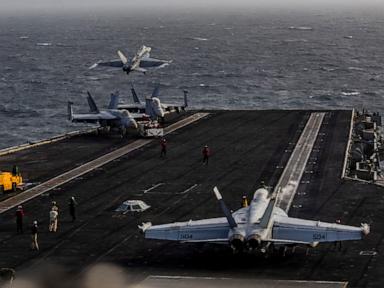
The modern supercarrier is often marketed as an unassailable floating fortress, an autonomous city capable of projecting absolute power anywhere across the globe. But beneath the gray steel hulls and the polished flight decks lies a fragile ecosystem bound entirely to human endurance. When political miscalculation collides with operational neglect, that ecosystem shatters. Senator Ruben Gallego recently spotlighted the grim reality aboard the USS Abraham Lincoln, pointing directly at the White House and the Pentagon for plunging thousands of sailors into an unprecedented deployment crisis.
For over 260 consecutive days at sea, the crew of the Lincoln has endured a deployment stretching past nine months, operating without a single port call for more than 200 days. Reports from independent military publications like the Navy Times have detailed sailors facing extreme physical and psychological stress, including multiple desperate attempts to jump overboard.
While administration officials rush to downplay the severity of these conditions, seasoned analysts recognize this crisis as the predictable outcome of strategic improvisation. The underlying failure is not merely a logistical hiccup. It is a fundamental collapse in long-term military planning born from an escalation in the Middle East that lacked clear objectives, exit strategies, or operational boundaries.
The Anatomy of a Logistics Breakdown
To understand why a nuclear-powered aircraft carrier can spend more than two thirds of a year trapped at sea without relief, one must examine the fracturing of regional supply lines. The carrier group has been heavily engaged in supporting operations tied to the ongoing conflict with Iran. Yet, strategic miscalculations early in the campaign severely compromised the Navy's primary regional logistical hubs, most notably facilities in Bahrain.
When primary resupply infrastructure is compromised or placed under persistent threat, the downstream effects ripple directly to the enlisted personnel. Fresh provisions, mail delivery, and routine maintenance cycles are the first casualties of a disrupted supply chain. Sailors aboard the Lincoln have been forced to navigate severe rationing, including restricted soap and water supplies, failing sanitation systems, and deteriorating food quality.
In a hypothetical operational environment where a naval group can freely rotate personnel and conduct standard port visits, morale remains manageable. Without those pressure valves, a warship transforms into an isolated pressure cooker. The human cost of extending deployments to mask strategic shortcomings in Washington is paid entirely in chronic sleep deprivation, broken bodies, and frayed psychological states. Enlisted sailors routinely pull twelve- to sixteen-hour shifts with zero days off, operating high-risk machinery while dealing with mounting exhaustion.
Institutional Denial and the Leadership Vacuum
The response from the civilian leadership layer has revealed a troubling disconnect between political talking points and the brutal reality of naval service. Defense Secretary Pete Hegseth and other top officials have publicly dismissed reports of appalling conditions as overblown or completely misrepresented. Meanwhile, President Donald Trump minimized the duration of the mission, framing the continuous months at sea as a minor inconvenience before the vessel is eventually swapped out.
This dismissive posture strikes a raw nerve across the armed forces. Veterans and military families note that when civilian leaders who have never worn the uniform attempt to wave away systemic suffering, trust evaporates. Senator Gallego, drawing directly on his own combat experience as a Marine Corps veteran in Iraq, argued that treating service members as disposable assets is not just demoralizing; it actively threatens long-term military retention.
When sailors feel entirely abandoned by the chain of command, the psychological toll deepens. The fact that desperate crew members reached a point of attempting to jump into the ocean is not an isolated disciplinary infraction. It is a blaring Klaxon indicating that institutional safety nets have completely failed.
The Broader Fallout for Military Readiness
The crisis aboard the Lincoln exposes a dangerous vulnerability in how modern American military power is utilized. Political leaders frequently turn to carrier strike groups as flexible diplomatic and military instruments, deploying them indefinitely to signal resolve without calculating the immense toll on fleet mechanics and human capital. Ships require scheduled maintenance, and crews require decompression. Pushing hardware and personnel past their absolute breaking points eventually degrades the very combat readiness the administration seeks to project.
Congressional oversight has historically served as a critical check against this kind of operational drift. Lawmakers pushing for formal bipartisan delegations to board the vessel and inspect conditions firsthand are attempting to pierce the veil of institutional denial constructed by the Pentagon. Yet, oversight alone cannot reverse the damage already inflicted on the trust between the rank-and-file and their civilian superiors.
As the Lincoln finally prepares to navigate toward home under the watchful eye of public scrutiny, the fallout from this deployment will linger. The questions raised by military families, veterans, and lawmakers go beyond the immediate sanitation and food shortages on a single carrier deck. They strike at the heart of how national security decisions are made, executed, and defended when the human price becomes impossible to hide.


