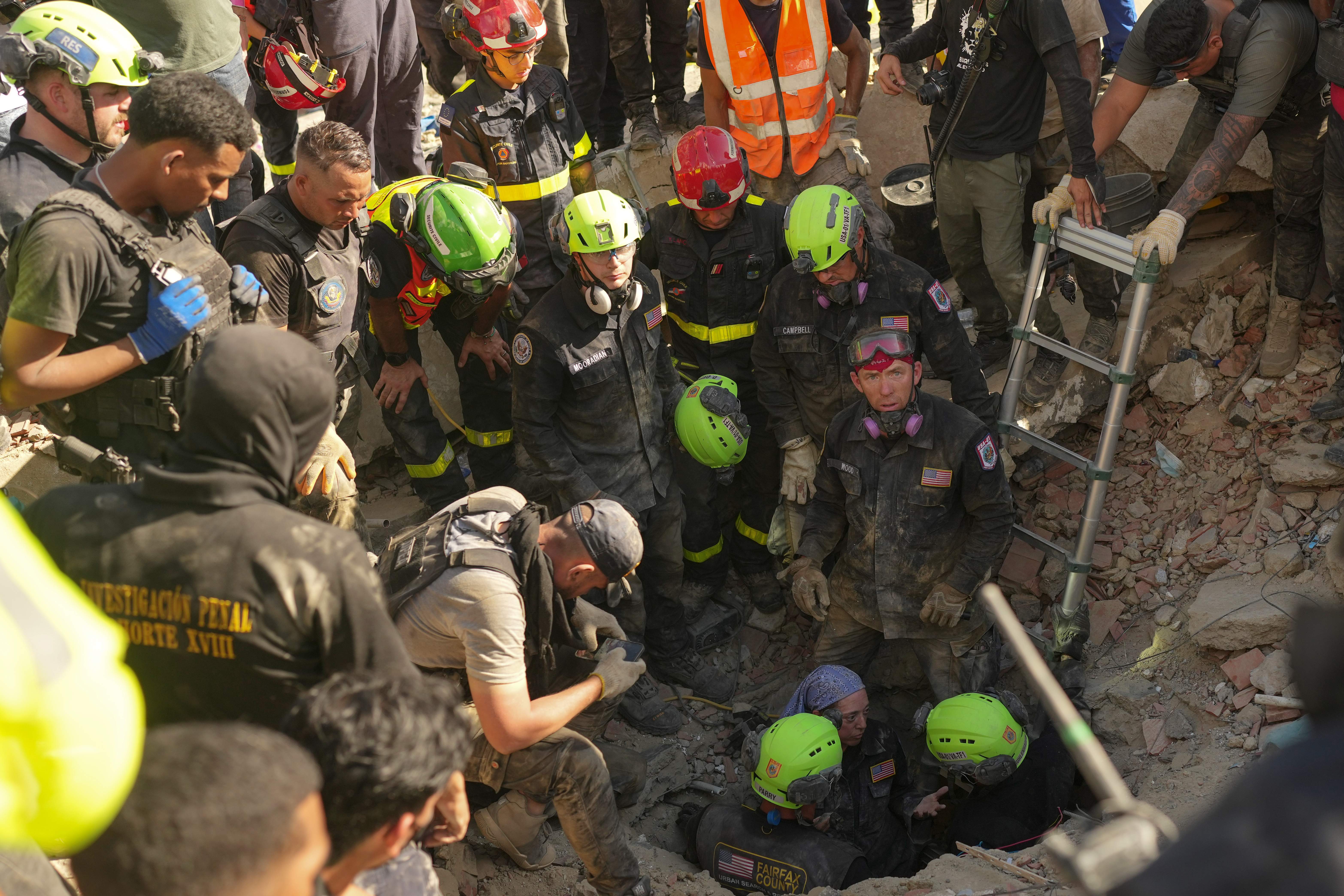
The race against time in Venezuela is not just a battle against shifting concrete and failing oxygen supplies. It is a direct clash with a broken infrastructure that was collapsing long before the tectonic plates moved. As rescue teams scramble through the rubble of the recent earthquake to locate survivors, the primary obstacle isn't the geology. It is the systemic neglect of emergency logistics, communication networks, and structural enforcement that turns a natural hazard into a human catastrophe. While early reports focus heavily on the dramatic ticking-clock narrative of search and rescue, the harsh reality on the ground is that the state's hollowed-out public services have paralyzed the response effort from hour one.
Earthquakes are predictable in their unpredictability, but the vulnerability of a city is entirely manufactured. When a major fault line slips, the immediate aftermath demands a highly synchronized deployment of heavy machinery, specialized canine units, and structural engineers. In Venezuela, this machinery is largely grounded due to fuel shortages and a lack of spare parts. The frantic search for survivors is being carried out not with advanced acoustic sensors, but with shovels, crowbars, and bare hands.
The Myth of the Sudden Disaster
Disasters are rarely as sudden as they appear on the evening news. The collapse of multi-story residential buildings in urban centers is the predictable outcome of decades of ignored building codes and unregulated informal construction. In cities where economic survival has forced millions to construct housing out of substandard materials on unstable hillsides, a moderate tremor achieves the destructive power of a mega-quake.
The structural integrity of a building relies on a strict ratio of steel rebar to concrete. When inflation skyrockets and supply chains dry up, builders cut corners. They use less steel. They mix concrete with unwashed beach sand, which slowly corrodes the internal metal reinforcement over time. When the ground shakes, these buildings do not just crack; they pancaking—collapsing flatly layer upon layer, leaving virtually no void spaces for survivors to breathe.
Rescue operations under these conditions require extreme precision. Lifting a single collapsed slab without reinforcing the surrounding debris can trigger a secondary collapse, instantly killing anyone trapped below and the first responders trying to reach them. The lack of shoring equipment—heavy timber and hydraulic jacks used to stabilize unstable ruins—means teams must choose between reckless speed and agonizingly slow progress.
The Broken Logistics Pipeline
Time is measured in hours, not days, when dealing with crush injuries and dehydration. Yet, the logistical pipeline required to move international aid from ports of entry to the epicenter is fundamentally fractured.
- Fuel Scarcity: Heavy rescue vehicles and excavators require diesel. Even in an oil-rich nation, localized fuel shortages mean that emergency vehicles must wait in the same lines as civilian traffic or rely on rationed government reserves that take days to authorize.
- Communication Blackouts: The earthquake instantly knocked out cellular towers that were already operating on degraded backup batteries. Without centralized satellite communication, separate rescue sectors cannot coordinate, leading to a duplication of efforts in some neighborhoods while others are left entirely abandoned.
- Grid Failure: Hospitals in the affected zones are running on aging generators. These systems are prone to overheating, forcing surgeons to operate under flashlights and limiting the use of life-saving ventilators for pulled survivors.
Consider the reality of a standard urban search and rescue team. To be effective, a heavy team needs to move roughly 18 tons of equipment, including concrete breakers, thermal imaging cameras, and medical supplies. When roads are choked by landslides and regional airports lack the functional radar or ground-handling equipment to accept cargo planes, that gear sits hundreds of miles away. It becomes useless inventory while the golden hours of survival tick away.
The Geopolitical Standoff Over Aid
International assistance exists, but it cannot simply materialize on the streets. It must pass through a bureaucratic and geopolitical gauntlet. Nations and non-governmental organizations with deep experience in seismic disasters face visa delays, customs bottlenecks, and political vetting before their personnel can touch the ground.
Accepting foreign aid is often viewed through a lens of political pride rather than humanitarian necessity. When governments delay disaster declarations to project an image of self-sufficiency, they sign death warrants for those trapped under masonry. By the time international heavy rescue teams receive formal clearance, the mission inevitably shifts from a rescue operation to a grim recovery exercise.
Even when aid enters the country, distribution networks are highly politicized. Resources frequently flow toward high-profile urban areas where media coverage is concentrated, leaving rural and lower-income communities to fend for themselves. This uneven distribution exacerbates the chaos, driving displaced populations to migrate toward already overwhelmed city centers in search of basic clean water and medical attention.
The Human Cost of Secondary Hazards
The initial shock wave is only the first wave of destruction. The true civilian toll often doubles in the weeks following the event due to predictable secondary hazards that a functional state would be prepared to mitigate.
Contaminated water tables are the most immediate threat. When sewer lines rupture alongside water mains, the local supply becomes a vector for waterborne pathogens. Without massive shipments of water purification tablets and mobile filtration plants, survivors face outbreaks of cholera and dysentery that can easily outpace the death toll of the initial structural collapses.
Furthermore, the rainy season converts earthquake-loosened hillsides into active mudslide zones. A hillside that survived the shaking with minor cracks can completely liquefy during a subsequent downpour, burying entire communities that were already weakened by the tremor.
Local volunteer networks have become the actual frontline of defense, filling the massive vacuum left by official agencies. Neighborhood committees, informal motorcycle clubs, and local doctors are organizing makeshift triage centers in parks and parking lots. They are using social media apps, when a fleeting signal allows, to crowd-source lists of missing persons and coordinate the distribution of donated food and bandages. It is a testament to human resilience, but it is a profoundly inefficient way to manage a national emergency.
The Cost of Short-Term Memory
When the dust settles and the cameras leave, the underlying vulnerabilities remain untouched. The international community historically responds to pictures of rubble with short-term financial pledges, but rarely stays to fund the unglamorous work of structural retrofitting, seismic monitoring, and institutional training.
A city rebuilt under the same corrupt practices and economic constraints is simply a city waiting for its next date with the fault line. True disaster mitigation happens years before the ground moves, found in the strict enforcement of engineering standards, the decentralization of emergency stockpiles, and the absolute insulation of humanitarian agencies from political theater. Until those systemic fractures are addressed with the same urgency currently applied to digging through the concrete, the clock will keep ticking down to the next preventable catastrophe. Stop looking at the rubble as an act of God, and start looking at it as a failure of governance.