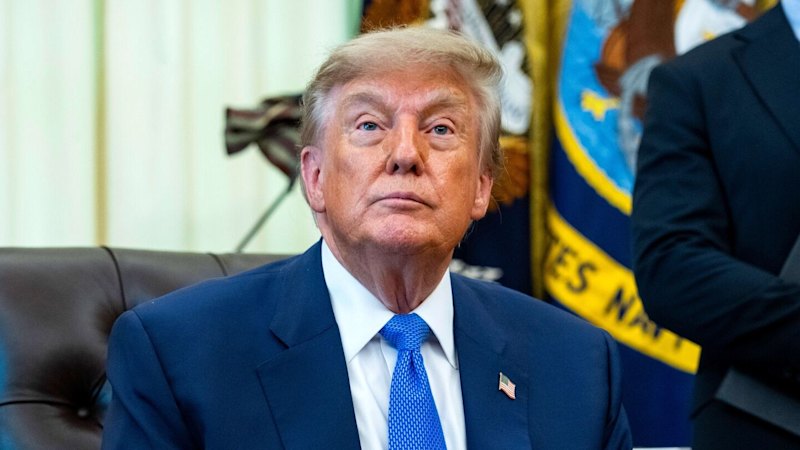
The mechanics of American power rarely shift through quiet consensus. They move through calculated ambiguity, pushed forward by trial balloon strategies designed to test the limits of public endurance and constitutional architecture. When President Donald Trump was recently asked whether he would declare a national security emergency to exert direct administrative control over the upcoming midterm elections, his response was characteristically evasive. "Stranger things have happened," he remarked during a post-midnight media appearance, before cutting off further line-of-sight analysis with a curt dismissal.
That single phrase was not an off-the-cuff gaffe. It was a calculated signal to a network of outside legal architects and far-right activists who have spent the better part of a year drafting an unprecedented executive blueprint. This draft document, which has circulated quietly among loyalist circles, attempts to bypass the legislative branch entirely by weaponizing emergency powers. The primary objective is clear: circumvent a divided Congress that lacks the votes to pass restrictive federal voting legislation like the SAVE America Act, and instead impose sweeping voting mandates from the Resolute Desk.
The Anatomy of an Engineered Crisis
To understand how an administration plans to execute a federal takeover of state-administered ballots, one must examine the legal fiction required to build it. The United States Constitution explicitly assigns the administration of elections to the individual states under Article I, Section 4—often referred to as the Elections Clause. Congress holds a backstop role, but the executive branch possesses zero constitutional or statutory authority to dictate how a state registers voters, collects ballots, or certifies winners.
Yet, the architects of this executive strategy are attempting to construct a legal workaround using the National Emergencies Act and alleged foreign interference as a crowbar. By framing routine cybersecurity concerns and geopolitical posturing as an imminent national security collapse, proponents argue that executive authority expands to encompass domestic voting infrastructure.
History demonstrates that true national emergencies are unforeseeable, acute shocks requiring immediate mitigation. Conversely, a policy blueprint that has been quietly coordinated with outside legal advisers for nearly twelve months bears none of those characteristics. It is an engineered justification designed to achieve a predetermined political outcome under the cover of crisis management.
Dismantling the Blueprint
A close look at the leaked text of the prospective executive order reveals an aggressive attempt to rewrite the rules of American democracy overnight. The draft provisions aim to systematically dismantle decentralized voting administration by enacting sweeping national restrictions:
- Ban on Mail-In Ballots: Heavily curtailing or outright prohibiting the use of absentee and mail-in voting channels for millions of citizens.
- Forced Re-Registration: Mandating that tens of millions of active, legally registered voters re-register in person using restricted forms of documentation.
- Machine Restrictions: Restricting or banning standard electronic tabulators in favor of mandated manual hand-counts under federal supervision.
None of the statutes cited within the draft—ranging from the Defense Production Act to various cybersecurity information acts—delegate authority to alter federal or state election qualifications. The maneuver relies entirely on a maximalist interpretation of Article II executive powers, banking on the assumption that even if federal courts ultimately strike down the order, the chaotic interim period will disrupt the electoral landscape enough to alter legislative outcomes.
The Institutional Collision Course
If this strategy transitions from draft status to an official executive order, it will trigger an immediate constitutional crisis. State attorneys general, bipartisan election officials, and civil rights organizations are already preparing expedited legal challenges. The judiciary has previously rejected broad executive overreaches concerning local voting procedures, signaling that any attempt to unilaterally federalize the midterms faces a steep and hostile judicial barrier.
The gamble, however, may not require a permanent legal victory to achieve its core utility. Simply introducing profound uncertainty into election administration forces local election boards into a state of administrative paralysis. When voters face sudden, shifting requirements weeks before casting their ballots, confidence erodes, participation drops, and the legitimacy of the resulting tally becomes a permanent battleground.
Trump remains coy because ambiguity serves his immediate political calculus. It keeps institutional adversaries guessing, feeds media cycles, and normalizes the concept of executive intervention in spaces historically protected by constitutional firewalls. As the midterm cycle accelerates, the question is no longer whether outside advisors are pushing for extraordinary executive action, but whether the structural defenses of American federalism can withstand a sustained assault from within the executive branch itself.