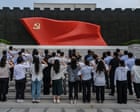
When the Chinese Communist Party convened its Fifth Plenum in Beijing in late October 2026, the sharpest political signal was not delivered from a podium. It was visible in the seating chart. Only 279 of the 376 full and alternate members originally named to the 20th Central Committee in 2022 showed up. More than a quarter of the ruling cohort had vanished, leaving the highest number of empty chairs at a plenary session in modern Chinese history. Behind those missing faces sits a grim reality: Xi Jinping’s corruption crackdown has evolved from a campaign against bribery into a permanent instrument of political terror, gutting China’s military command and paralyzing the bureaucracy meant to rescue a slowing economy.
The communiqué released at the close of the four-day conclave confirmed the formal expulsion of 33 Central Committee members and alternates—the largest single purge of its kind. Among the fallen were former Politburo members Zhang Youxia, once Xi’s top uniformed deputy in the military, and Ma Xingrui, the former party boss of Xinjiang. Sixteen of the 33 expelled officials wore military uniforms. After 14 years in power, 8.1 million disciplinary cases opened, and 7.9 million people punished, the question facing China watchers is no longer whether Xi will catch the corrupt. The real question is why a leader with total institutional control keeps devouring the very loyalists he hand-picked to run the state.
The Anatomy of a Self-Consuming Purge
Western coverage often frames Xi’s anti-corruption campaign through the lens of traditional factional warfare—a strongman clearing out rivals left over from previous administrations. That explanation expired years ago. During Xi’s second term between 2017 and 2022, the 35 Central Committee members purged were largely holdovers promoted under his predecessor, Hu Jintao. In his third term, the pattern flipped. By the end of the October 2026 plenum, 51 Central Committee members had been purged since 2022, and almost every single one of them was vetted, elevated, and trusted by Xi himself.
This is not a sign that Xi is losing his grip on power. Rather, it exposes the operating logic of personalized authoritarian rule. When one man eliminates institutional checks, independent courts, and collective leadership norms, he creates an acute information problem. Subordinates stop telling the truth because bad news carries career-ending risk. In response, the top leader relies on permanent suspicion to keep elites off balance.
"Only by constantly seeking enemies can Xi instill fear and obedience in more cadres," political analysts observing the Fifth Plenum noted. It is a system of governance by perpetual dread, where ideological purity is tested not by past service, but by constant vulnerability.
The mechanics of this system rely on the Central Commission for Discipline Inspection (CCDI), an extrajudicial party watchdog that operates outside China’s formal legal code. Under Xi’s expanded rules, retirement no longer provides a safe harbor, and competence no longer buys immunity. As Zhang Fuhai, deputy director of the CCDI, admitted at a press briefing following the plenum, misconduct and breaches of discipline remain "persistent, entrenched and recurring". That admission is revealing. If nearly eight million punishments have failed to cure corruption, the campaign is clearly not designed to solve a legal problem. It is designed to maintain an existential threat over every official’s head.
Decapitating the Military Command
Nowhere has the wreckage been more visible than inside the People’s Liberation Army (PLA). The seven-member Central Military Commission (CMC), the supreme body commanding China’s armed forces, has been hollowed out to just two men—Xi Jinping and General Zhang Shengmin. Notably, Zhang Shengmin is not a battlefield commander. He is the military’s chief anti-graft enforcer, elevated to the Politburo during the October plenum as the sole uniformed officer left in China’s top decision-making body.
Combat generals have been systematically sidelined. The purge of Zhang Youxia—a princeling with deep roots in the military establishment and one of the few senior officers with actual combat experience—alongside CMC member Liu Zhenli and defense industry executives like former aerospace chief Zhang Zhongyang, reveals how deeply rot and political distrust have penetrated Beijing’s military-industrial complex. Massive procurement budgets, opaque defense contracts, and rapid weapons modernization created fertile ground for kickbacks in the Rocket Force and equipment departments. Yet financial graft alone rarely explains why an entire generation of operational commanders gets wiped out simultaneously.
In Leninist systems, the gun must always remain firmly under the party’s thumb. By declining to fill the five vacant seats on the Central Military Commission at the Fifth Plenum, Xi demonstrated that he would rather leave the PLA’s top command structure skeletal than promote officers whose absolute political reliability remains unproven. For foreign military planners watching the Taiwan Strait ahead of 2027, this creates a dangerous paradox. A hollowed-out command structure degrades operational readiness and joint-warfare coordination in the short term, yet it also eliminates senior generals who might otherwise counsel caution during a geopolitical crisis.
The Competency-Loyalty Trap
While the military purges grab headlines, the quieter crisis unfolding across China’s ministries and provincial governments poses a more immediate threat to daily governance. At the Fifth Plenum, the Central Committee adopted a formal "Decision" aimed at enforcing full and rigorous party self-governance, dedicating entire sections to curbing local "top leaders" who treat their jurisdictions as private fiefdoms. Yet embedded in the official messaging was an unmistakable note of frustration over bureaucratic paralysis.
Huang Jianfa, deputy head of the party’s Central Organization Department, laid bare the unintended consequence of the crackdown when he briefed reporters on why officials fail to execute Beijing’s directives. Some lack motivation, he acknowledged, while others "fear getting into trouble and dare not act".
Economists and political scientists call this the competency-loyalty trade-off. In a complex economy struggling with sluggish domestic consumption, local government debt, and a prolonged real estate downturn, Beijing needs nimble administrators willing to experiment, take calculated risks, and solve messy structural problems. Instead, Xi’s corruption crackdown has engineered the exact opposite incentive structure.
Consider a hypothetical provincial party secretary tasked with reviving a failing local property market or restructuring municipal debt. Every bold policy decision requires signing off on land transfers, state bank loans, or regulatory waivers. If that initiative succeeds, the credit flows upward to the central leadership. If it fails—or if a business partner is investigated five years later—the official faces expulsion, asset confiscation, and prison. Under those odds, the rational survival strategy is bureaucratic "lying flat." Officials hold endless study sessions, recite ideological slogans, draft compliance memos, and make zero consequential decisions.
| Era / Metric | Second Term (2017–2022) | Third Term (2022–Late 2026) | Strategic Shift |
|---|---|---|---|
| Central Committee Purges | 35 members/alternates | 51 members/alternates (ongoing) | Accelerated cleansing of top elite |
| Primary Target Profile | Holdovers from Hu Jintao era | Cadres promoted by Xi Jinping | Shift from rival removal to loyalty testing |
| Military Leadership | Full 7-seat CMC maintained | Reduced to 2 active members | Elevation of graft enforcers over combat brass |
| Bureaucratic Behavior | Aggressive growth chasing | Risk aversion and policy inaction | Survival through ideological compliance |
The Counter-Argument From Zhongnanhai
To dismiss Xi’s campaign as mere paranoia, however, misses the historical trauma driving Beijing’s leadership. Inside Zhongnanhai, the central leadership compound, the collapse of the Soviet Union remains the ultimate cautionary tale. Xi has repeatedly warned cadres that unchecked corruption and ideological decay will cause the Chinese Communist Party to lose its ruling status and be "eliminated by history".
From the perspective of party preservation, the crackdown has delivered undeniable political dividends. Before 2012, corruption in China was not an aberration; it was the grease that kept the administrative gears turning. Military ranks were openly bought and sold. Provincial governors operated like regional warlords, ignoring central directives whenever local tax revenues were at stake. Public anger over official graft was boiling over into thousands of localized protests each year, threatening the party’s legitimacy from below.
By ruthlessly dismantling independent power networks and crushing conspicuous consumption among officials, Xi re-centralized fiscal and political authority in Beijing. Ordinary citizens, even those frustrated by economic stagnation, frequently view the downfall of corrupt billionaires and arrogant local bureaucrats with quiet satisfaction. In the eyes of China’s leadership, the economic friction caused by cautious bureaucrats is an acceptable price to pay if the alternative is systemic rot and regime collapse.
The Succession Vacuum Before 2027
The timing of the October 2026 purges points directly toward the 21st Party Congress scheduled for the second half of 2027. Having abolished presidential term limits in 2018 and shattered informal retirement norms at the 2022 congress, Xi is widely expected to claim a fourth term as general secretary, cementing his status as China’s longest-serving ruler since Mao Zedong.
Yet the Fifth Plenum closed without naming any new replacements to the Politburo Standing Committee or establishing a clear pipeline of younger successors. In fact, the sheer breadth of the purges has depleted the bench of senior officials eligible for promotion. Under party rules, elevation to the Politburo requires specific provincial or ministerial tenure, clean disciplinary records, and unblemished political loyalty. By disqualifying dozens of rising stars in their fifties and sixties, the crackdown has created an acute talent bottleneck at the top of the system.
This leaves China entering a turbulent geopolitical and economic period—marked by renewed trade friction with Washington, demographic contraction, and structural debt—with a governing apparatus that is simultaneously hyper-centralized and strangely hollow. Every lever of state power responds instantly to a single command from the center, yet the transmission lines running down through the provinces and the military are clogged with fear. You can purge a party into submission, and you can terrify a bureaucracy into obedience, but no disciplinary commission in Beijing has figured out how to intimidate officials into generating economic growth or military readiness.
For more background on the October 2026 expulsions, watch China's Communist Party expels top officials, tightens discipline ahead of 2027 congress. This broadcast report summarizes the key personnel removals announced at the close of the Fifth Plenum and explains their implications for leadership stability heading into the 2027 Party Congress.



