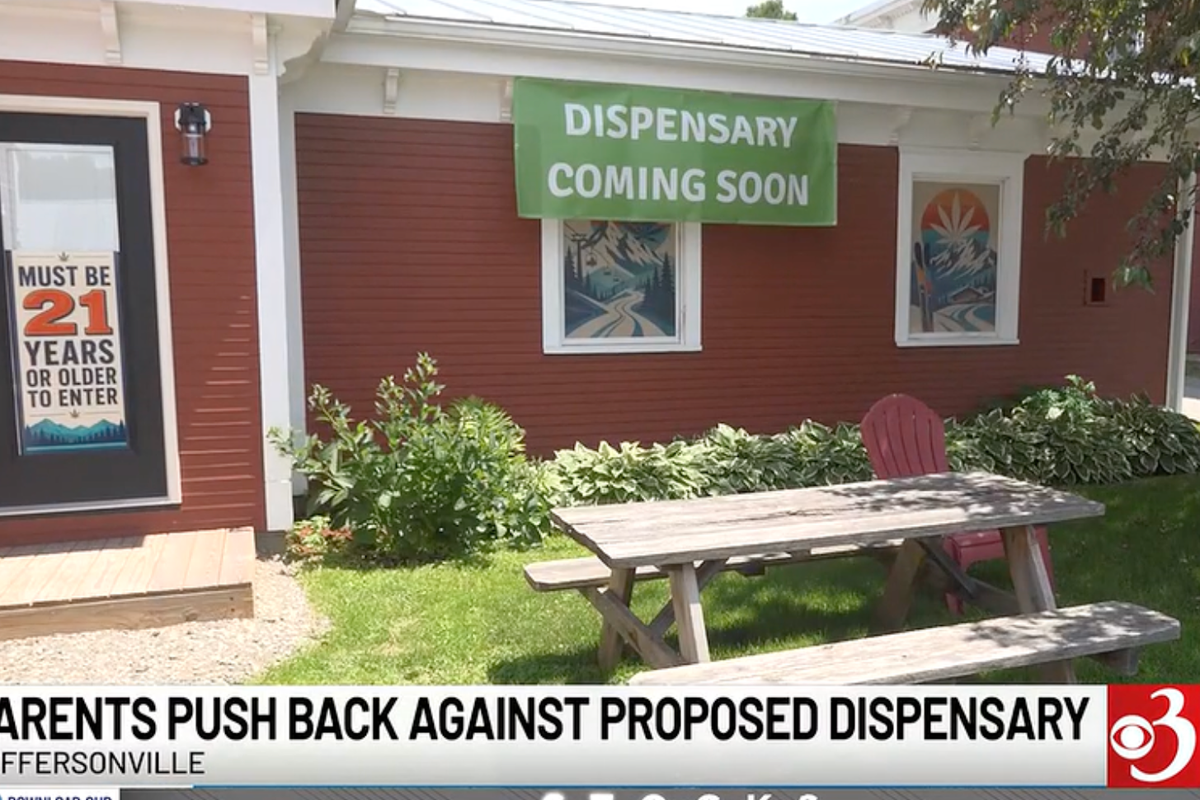
Municipalities across the country are facing a sharp reckoning as commercial cannabis dispensaries crop up within walking distance of elementary schools. While local parent groups voice immediate outrage, blaming predatory businesses or lax morality, the reality is far more bureaucratic. These situations are almost entirely driven by hyper-specific local zoning ordinances, state-mandated buffer measurements, and property owners seeking premium lease rates. Cannabis businesses do not randomly select these locations to target children; they find themselves legally funneled into thin slivers of commercial real estate where property boundaries, state law, and local zoning map overlays collide.
Understanding this friction requires stripping away the emotional rhetoric from city council meetings. It requires looking at the raw mechanics of municipal real estate. Meanwhile, you can find other events here: The Blueprint of Asymmetrical Alignment Decoupling India and the United States in a Transactional Era.
The Math Behind the Buffer Zones
When a state legalizes recreational cannabis, lawmakers typically establish a standard buffer zone. This is frequently 1,000 feet or 500 feet from schools, playgrounds, and daycare centers. On paper, a 1,000-foot buffer sounds like an impenetrable wall that keeps cannabis retail safely tucked away in industrial parks. In practice, the geometry of a city map makes these buffers incredibly porous.
The conflict begins with how a city measures distance. State regulations generally use a straight-line method, colloquially known as "as the crow flies," measuring from the closest property line of the school to the closest property line of the proposed dispensary. Local zoning boards, however, sometimes measure along standard pedestrian travel routes. This distinction changes everything. To understand the full picture, check out the detailed analysis by NPR.
Consider a hypothetical scenario where an elementary school sits at the center of a dense urban block. A commercial strip mall is located diagonally behind the school's sports field. Measured in a straight line, the distance from the school's fence to the back wall of the strip mall might be only 450 feet. Yet, if a pedestrian has to walk out to the main avenue, turn the corner, and walk down a secondary street to enter the retail storefront, the actual walking distance might exceed 1,200 feet.
If the local ordinance allows for pedestrian path measurement rather than straight-line measurement, a dispensary can legally open in that strip mall. To a parent standing at the edge of the schoolyard looking directly across a narrow parking lot at a green cross sign, the distinction between a straight line and a pedestrian path feels like a insult. To the zoning board, it is a binary checkbox. The applicant met the criteria. The permit must be issued.
The Restricted Map Phenomenon
A massive unintended consequence of cannabis regulation is the creation of artificial real estate monopolies. By the time a city layers state school buffers, local park buffers, house of worship restrictions, and existing dispensary exclusion zones onto a standard commercial map, 95% of the available retail space disappears.
The remaining 5% becomes hot property. Cannabis operators, backed by significant venture funding or private equity, are forced to compete fiercely for the handful of parcels that are legally viable.
This scarcity creates a predictable chain reaction:
- Skyrocketing Rents: Landlords who own property within these legal zones quickly realize their buildings are worth three to four times the standard market rate. A struggling laundromat or an independent auto parts store cannot compete with a cannabis operator willing to pay $10,000 a month for a space that typically commands $2,500.
- Rapid Displacement: Long-term neighborhood businesses are pushed out when their leases expire, replaced by highly secure, well-lit cannabis dispensaries.
- Concentration Effects: Because the viable zones are so small, multiple dispensaries often cluster along the exact same two-block stretch of a commercial corridor, maximizing the visual impact on the surrounding neighborhood.
When a dispensary opens near a school, it is rarely because the operator fought to be close to children. It is because that specific storefront was one of only three locations in the entire city where the business could legally exist. The operator is trapped by the map.
The Property Rights Versus Community Protection Balance
City councils frequently find their hands tied by vested property rights. When a cannabis operator submits a completely compliant application that meets every single requirement of the existing zoning code, the city cannot legally deny the permit based on sudden public outcry. Doing so opens the municipality to immediate, expensive lawsuits that they will almost certainly lose.
If a city abruptly changes its zoning laws to appease angry parents after an application has been submitted, the cannabis business can sue under the doctrine of prior non-conforming use or argue that the city engaged in an unconstitutional regulatory taking. Cities have spent hundreds of thousands of dollars in taxpayer money defending emotional denials in court, only for judges to order them to issue the licenses anyway.
This creates a deep sense of betrayal among residents. They watch elected officials sit silently at public forums, offering vague platitudes while refusing to block the business. The silence is not apathy. It is legal self-defense advised by risk-averse city attorneys.
The Marketing Mirage and Odor Management
Much of the panic surrounding school-adjacent dispensaries stems from the memory of early medical marijuana clinics. People picture dark windows, neon signs, and people smoking openly on the sidewalk. Modern recreational dispensaries look entirely different. They resemble boutique cellular service stores or high-end cosmetic shops.
Strict state regulations dictate everything about the exterior of these buildings. In most jurisdictions, product cannot be visible from the street. Window displays are completely banned. Signage is restricted to basic typography, forbidding any imagery that could be construed as appealing to minors, such as cartoons or bright candy colors.
Security infrastructure is dense. Customers must pass through an initial identity verification checkpoint before they ever see a single product.
The real neighborhood nuisance is rarely underage sales, which carry catastrophic penalties capable of shutting down a multi-million dollar business instantly. The real issue is odor.
Despite advanced carbon filtration systems mandated by local building codes, large deliveries or high-volume foot traffic can cause a distinct skunk-like aroma to drift into the immediate vicinity. For a school trying to maintain an environment focused on learning, this atmospheric intrusion becomes a constant point of friction.
How Communities Can Actually Regulate Commercial Cannabis
Shouting at city council meetings after a dispensary has already signed a lease is completely ineffective. If a community wants to prevent cannabis retail from encroaching on schools, the work must be done years in advance through structural zoning reform.
Municipalities have several highly effective tools at their disposal that do not violate commercial rights. They can implement strict cap-and-distance rules, which dictate that no two dispensaries can be within 2,000 feet of one another. This completely prevents the clustering effect that makes neighborhoods feel overrun.
Towns can also shift cannabis retail entirely out of standard commercial zones and into light industrial or highway commercial zones. By restricting dispensaries to areas dominated by warehouses, car dealerships, and regional shopping centers, cities naturally keep the businesses far away from pedestrian-heavy residential neighborhoods and elementary schools.
The most successful approach involves creating a comprehensive sensitive-use matrix during the initial planning phases. This matrix goes beyond schools and parks, including public libraries, youth centers, and substance abuse treatment facilities in the buffer calculation. This comprehensive mapping effectively seals off residential cores while still leaving clear, predictable corridors for legal commerce to operate without community friction.


