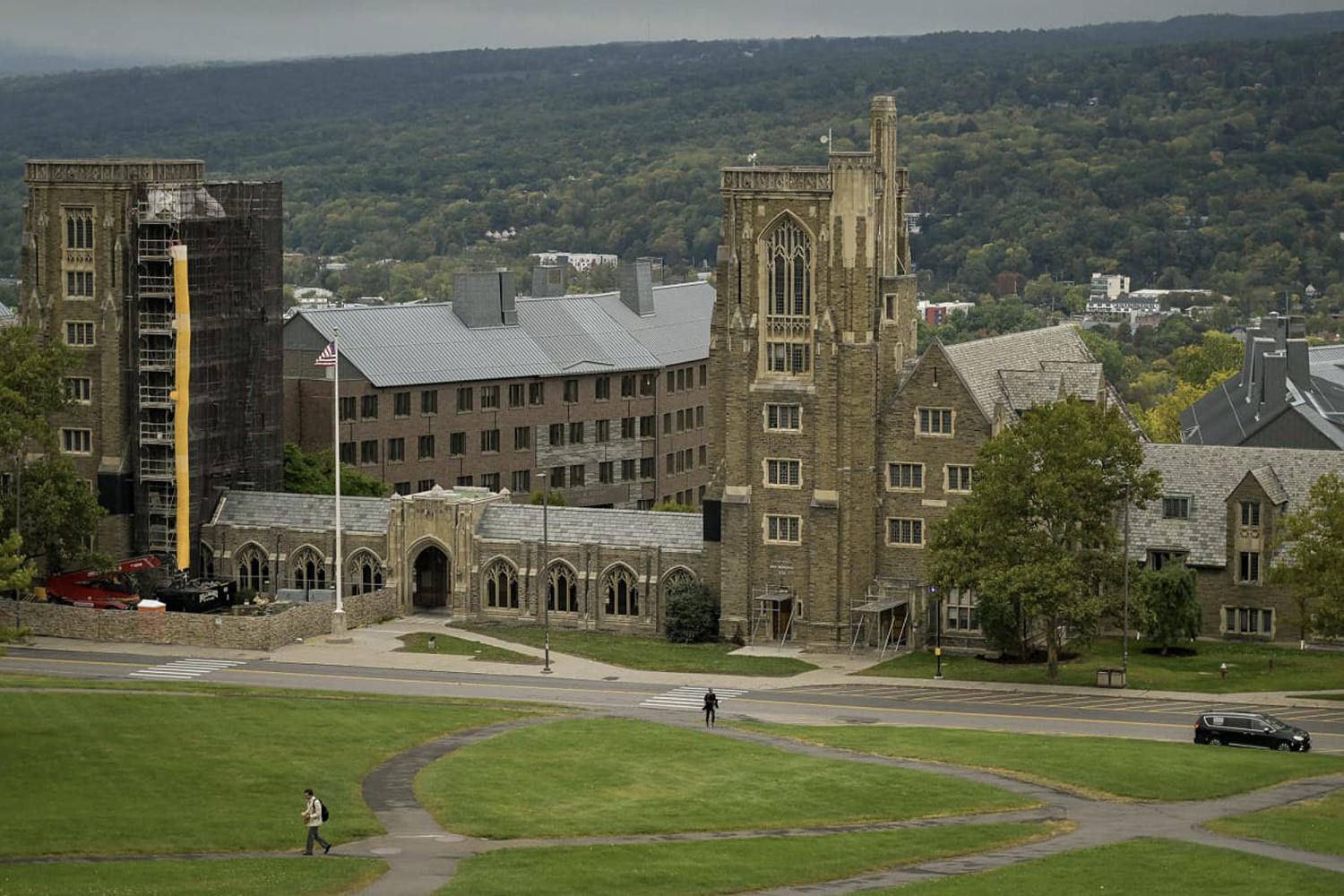
Organizational accountability models face their most severe stress tests when institutional procedures intersect with allegations of violence. The planned seven-hour sit-in by Cornell students responding to an alleged 2024 fraternity assault provides a clear case study in how institutional latency, procedural opacity, and stakeholder distrust compound into a systemic governance crisis. When formal administrative channels fail to project credibility or speed, student bodies substitute unstructured pressure tactics to force systemic friction.
Evaluating this phenomenon requires stripping away emotional rhetoric to examine the structural mechanics of how universities handle behavioral infractions, how student groups mobilize leverage, and why standard administrative protocols frequently collapse under high-visibility scrutiny.
The Structural Anatomy of Institutional Latency
Administrative delay is the primary catalyst for escalation in collegiate disciplinary disputes. The typical university investigative apparatus is designed around legalistic due process, which inherently prioritizes risk mitigation and liability limitation over temporal velocity.
This creates a structural mismatch between the institution's operating timeline and the affected community's expectation of resolution.
- Evidentiary Thresholds: Formal adjudication requires a burden of proof that takes months to assemble through Title IX offices or judicial boards.
- Confidentiality Mandates: Privacy regulations restrict administrators from broadcasting procedural progress, creating an information vacuum.
- Liability Buffers: Legal counsel advises minimal public disclosure to avoid compromising due process or exposing the institution to tort liability.
In the absence of transparent updates, stakeholders fill the information void with worst-case assumptions. The administrative insistence on procedural quietness is systematically misinterpreted as institutional complicity or cover-up. This misinterpretation forms the foundational justification for disruptive mobilization, such as sit-ins, occupations, and public demonstrations.
The Leverage Mechanics of Direct Action
A sit-in is not merely an expression of grievance; it is a tactical intervention designed to disrupt institutional operations and impose a quantifiable cost on the university leadership. Understanding why student bodies utilize this mechanism requires analyzing the utility function of civil disruption within a bureaucratic ecosystem.
Universities operate as complex service enterprises with multiple operational priorities: maintaining campus safety, protecting brand equity, securing donor relations, and ensuring uninterrupted academic delivery. Routine grievances submitted through standard feedback loops rarely impose immediate costs on decision-makers. Conversely, physical occupation of administrative spaces introduces high-visibility externalities.
- Reputational Exposure: Media coverage of student unrest threatens the institution's external brand and applicant pipeline.
- Operational Friction: Halting normal business in central administration buildings forces executive attention by disrupting daily workflows.
- Resource Diversion: Managing large-scale demonstrations requires immediate deployment of campus security, student affairs personnel, and legal counsel, pulling resources from core educational functions.
By shifting the cost-benefit analysis for administrators—making inaction more expensive than intervention—disruptive tactics force institutional actors to accelerate timelines that would otherwise move at bureaucratic speeds.
Fraternity Governance and Structural Vulnerability
Fraternity systems within residential universities represent decentralized nodes that operate with a hybrid status: officially recognized student organizations tied to national umbrella entities, yet physically and culturally autonomous. This structural ambiguity creates profound vulnerabilities during crisis events.
When an assault is alleged within a fraternity context, the failure modes multiply across multiple organizational layers:
- Local Autonomy vs. National Oversight: Local chapters maintain independent social cultures and housing management, while national organizations maintain risk management policies that can disconnect rapidly from ground-level realities.
- Peer Enforcement Dynamics: Closed social structures within Greek organizations often foster insular norms that resist external oversight or internal whistleblowing.
- Collective Liability: Administrative responses frequently struggle to balance individual culpability with chapter-wide sanctions, leading to disputes over fairness and collective punishment.
This structural disconnect means that when an infraction occurs, the university is forced to regulate an entity over which it holds limited direct operational control, while the student body perceives the university as directly culpable for licensing and housing that entity.
The Communication Breakdown Loop
The dialogue between university administrations and student activists during high-stakes protests is routinely characterized by a complete failure of translation. Administrators speak the language of compliance, risk management, and legal counsel. Activists speak the language of moral urgency, immediate safety, and systemic overhaul.
This linguistic divergence guarantees friction. When an administrator issues a statement noting that "due process is being strictly followed," activists hear "bureaucratic delay protecting perpetrators." When activists demand "immediate expulsion and chapter revocation," administrators hear "illegal circumvention of contractual and legal rights."
Resolving this communication deadlock requires an operational shift from defensive public relations to transparent crisis architecture. Institutions must establish pre-computed thresholds for public disclosure that respect privacy laws while satisfying the community's demand for procedural visibility.
Strategic Forecast and Systemic Adaptation
The trajectory of campus disciplinary crises indicates that traditional administrative playbooks are increasingly obsolete. As digital organizing accelerates mobilization speeds, universities that rely on slow, opaque investigative timelines will continue to face escalated direct action.
The strategic imperative for institutional leadership is twofold. First, investigative workflows must be streamlined through dedicated, expedited response units that can process behavioral allegations without compromising fairness. Second, communication protocols must transition from reactive damage control to proactive transparency frameworks that outline exact procedural steps and expected timelines upon the filing of a grievance.
Without structural adaptation, the cycle of alleged infractions, administrative silence, student disruption, and forced compromise will remain the default operating model for campus conflict resolution. Organizations that fail to re-engineer their internal response functions will find their governance authority continuously usurped by tactical disruption.