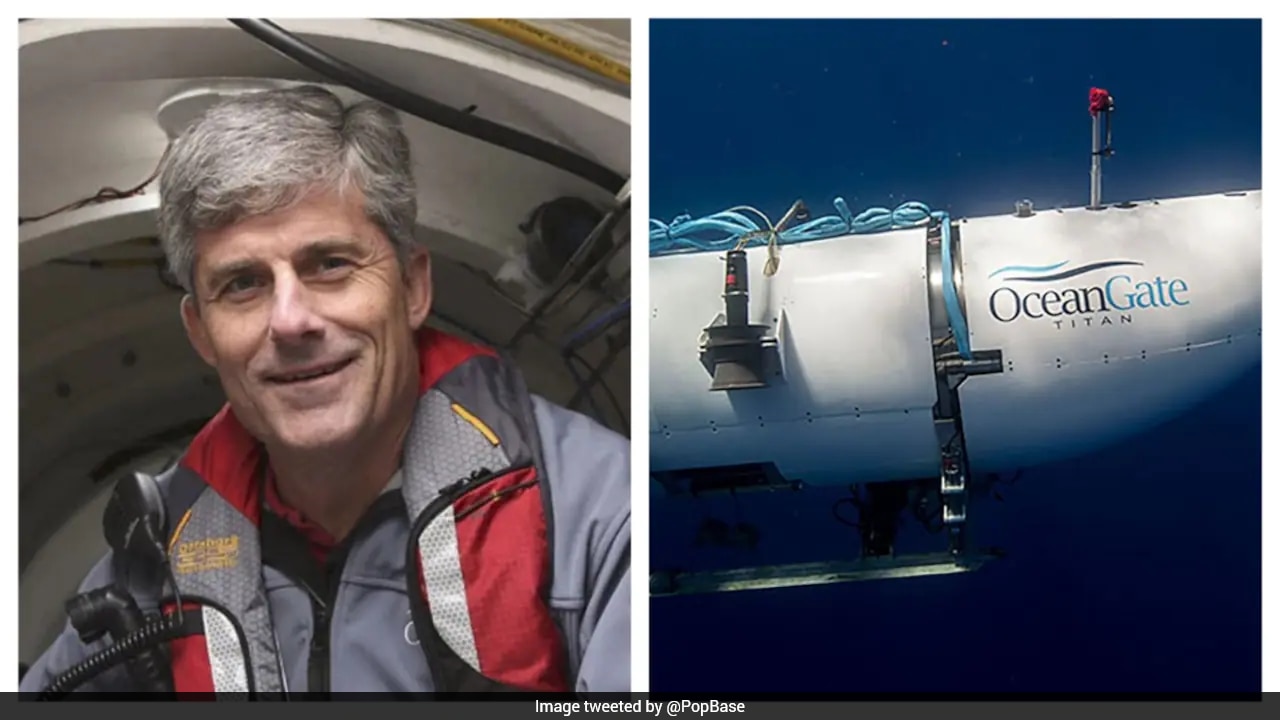
Sensational claims that an executive engineered a fatal outcome for wealthy clients mistake dramatic motive for structural cause. When an acquaintance alleges that OceanGate CEO Stockton Rush intended to die inside the Titan submersible, the real analytical question is not whether a single man harbored suicidal intent, but how an organization's governance, material choices, and incentive structure made catastrophic failure statistically probable long before the final dive.
To evaluate that narrative rigorously, we have to separate verified physical facts from unverified personal claims, map the competitor's argument onto explicit risk mechanics, and trace the cause-and-effect chain connecting deep-sea pressure, carbon-fiber hull behavior, and high-net-worth tourism pricing.
Deconstructing the "Mousetrap" Claim
Competitor headlines built around a friend's allegation of a planned death rely on intentionality bias—the human habit of attributing a dramatic, deliberate plot to a complex or chaotic failure. In high-stakes engineering and financial analysis, attributing a complex system collapse to a secret death wish is usually an analytical shortcut. It compresses months or years of warning signs, design compromises, and organizational friction into a single psychological motive.
A rigorous examination sorts the underlying claims into three distinct analytical buckets:
- Verified physical constraints: Deep-ocean submersibles operating near the Titanic wreck face external hydrostatic pressure on the order of roughly 380 to 400 atmospheres (around 5,500 to 6,000 pounds per square inch), where any structural breach occurs on a millisecond timescale.
- Documented organizational behavior: Publicly reported disputes over hull testing, acoustic monitoring, third-party classification, and safety warnings show a pattern of overriding conservative engineering checks to keep a commercial schedule moving.
- Unverified personal allegations: Claims from an acquaintance that Rush planned to die with passengers aboard are hypotheses without hard documentary proof, and treating them as established fact distorts both risk analysis and historical accuracy.
The first limitation of the "mousetrap" framing is that it explains almost nothing about how the vessel actually failed under cyclic loading. Even if someone wanted a fatal outcome, physics still requires a specific failure mode—buckling, delamination, resin cracking, or bond failure—to materialize at depth. Focusing on alleged intent distracts from the mechanics that turn ambition into an implosion.
Known Facts vs. Educated Hypotheses
Separating established evidence from informed inference keeps the analysis grounded:
- Known fact: An implosion occurred during the June 2023 Titan expedition in the North Atlantic, resulting in the loss of all five people on board, including Stockton Rush.
- Known fact: Carbon-fiber composites behave differently under repeated external compression than thick titanium or steel spheres, where microscopic matrix damage and delamination can accumulate across dives.
- Educated hypothesis: Repeated pressurization cycles progressively degraded the composite pressure hull until it could no longer sustain external water pressure at target depth.
- Educated hypothesis: High ticket prices and bespoke expedition branding created a self-selecting buyer pool willing to waive standard regulatory or classification assurances in exchange for perceived exclusivity and access.
The Cost Function of Extreme Expeditions
Sensational coverage often frames ultra-wealthy adventure clients as passive victims lured into a trap. A sharper economic model looks at the cost function of extreme expeditions: fixed capital outlays, small batch sizes, steep per-seat pricing, and high sensitivity to schedule delays.
When a venture targets ultra-high-net-worth individuals with six-figure seat prices, demand is narrow and lumpy. Every canceled dive or prolonged engineering hold carries two penalties at once: delayed cash collection and reputational erosion among a tight circle of prospective buyers. In capital-constrained deep-tech or adventure ventures, schedule pressure acts like an external load on the organization.
In extreme environments, commercial urgency does not negotiate with physics; it simply shortens the margin between a hairline flaw and an irreversible breach.
Why Wealth Does Not Buy Structural Margin
High net worth changes a customer's budget constraint, not the laws of continuum mechanics. A billionaire's willingness to pay a premium cannot strengthen a composite laminate, add redundant thickness to a hull, or slow down an implosion once buckling starts.
Two structural dynamics often appear in high-end experiential markets:
- Prestige pricing masks technical risk: When a ticket is priced for the ultra-wealthy, buyers frequently equate high cost with high competence, assuming rigorous oversight is already baked into the price.
- Waivers shift legal exposure, not physical reality: Liability waivers may alter post-incident litigation dynamics, yet they provide zero mechanical resistance against external hydrostatic pressure.
This creates a bottleneck in risk governance: the very customers who can afford unconventional ventures are also the easiest to onboard through bespoke agreements, reducing external friction that might otherwise force a redesign or a pause.
Cause-and-Effect Chain of Catastrophic Failure
Competitor articles often jump straight from a shocking quote to a moral verdict, skipping the causal chain that links executive mindset to physical destruction. In operational risk management, catastrophic accidents rarely stem from a single isolated act. They emerge when latent conditions—flawed assumptions, deferred testing, ignored warning signals—align with an extreme operating envelope.
Tracing the mechanism step by step clarifies how ambition and overconfidence compound:
- Unconventional material selection: Choosing a carbon-fiber composite cylinder for deep external pressure departs from conventional deep-submergence design norms, introducing anisotropic behavior and fatigue questions under cyclic compression.
- Resistance to external verification: Bypassing independent classification societies removes an adversarial check that typically enforces conservative safety factors and documented validation gates.
- Reliance on real-time monitoring as a substitute for margin: Treating acoustic sensors as an early-warning safety net assumes flaws announce themselves cleanly before sudden collapse, whereas composite failure under high external pressure can escalate rapidly.
- Normalization of deviance: Each dive that returns safely without an obvious catastrophe reinforces management's confidence that critics are overly cautious, lowering the threshold for future dives.
The second limitation of a motive-first story is that it ignores survivorship bias in decision-making. When a risky system works once or twice, leaders often read survival as proof that their model is right, rather than evidence that the distribution of outcomes still contains a lethal tail event.
What Readers Actually Want to Understand
When people encounter claims about a CEO allegedly planning a fatal implosion, their underlying questions usually center on four practical issues:
- Plausibility vs. sensationalism: How much weight should an analyst give to a friend's claim of planned death compared with engineering and operational evidence?
- Failure physics: Why does a deep-sea hull breach cause an instantaneous implosion rather than a slow leak?
- Oversight gaps: How can an experimental vessel carry paying passengers into extreme waters without standard classification approval?
- Governance lessons: What warning signs tell investors, partners, and clients that an organization is prioritizing speed and narrative over structural safety?
Addressing these points through systems thinking answers the real curiosity behind the headline without turning speculation into gospel.
Operational Lessons and Strategic Limits
From an operational and advisory standpoint, preventing catastrophic failure in high-risk ventures requires hard structural controls rather than reliance on founder charisma or visionary intent. Whether the domain is deep-sea exploration, aviation, industrial manufacturing, or frontier engineering, sustainable execution depends on separating commercial advocacy from independent technical authority.
A practical operating checklist for evaluating or governing high-risk ventures includes:
- Mandate independent verification: Require third-party engineering review and formal classification or certification before putting human lives into extreme environments.
- Enforce hard stop criteria: Define objective sensor thresholds, material inspection intervals, and abort rules that no executive can waive on the fly.
- Separate P&L from safety sign-off: Ensure engineering and safety leads have authority to halt operations regardless of revenue targets or investor timelines.
- Audit assumption drift: Periodically test whether past successes are being used to justify lower safety margins than the physics warrants.
None of these measures is a silver bullet. Independent oversight adds cost and slows time to market; conservative margins can make a concept commercially harder to fund; and even well-governed engineering programs face unknown unknowns at the frontier. Rigorous risk management does not eliminate uncertainty—it prices it honestly, caps exposure, and refuses to treat human lives as test articles.
For any organization or investor assessing extreme-risk ventures, the decisive strategic move is to require auditable safety gates and independent engineering sign-off before capital or passengers are committed, treating founder conviction as a hypothesis to be stress-tested rather than a substitute for verified structural margin.