The sensory assault of a modern airport is a nightmare designed for efficiency, but it creates a wall that many families simply cannot scale. Between the high-frequency whine of jet turbines, the unpredictable bark of security personnel, and the claustrophobic squeeze of a narrow fuselage, air travel is a gauntlet of triggers. For families living with autism, these are not mere inconveniences. They are hard stops.
Saskatoon’s recent Autism Aviation Day was not just a community gathering. It was a controlled experiment in accessibility. By opening a stationary aircraft and a silent terminal to families, the event highlighted a massive gap in the commercial travel industry. The primary goal was simple: remove the fear of the unknown. When a child on the spectrum knows exactly what the "ding" of a seatbelt sign sounds like before they are 30,000 feet in the air, the chance of a mid-flight crisis drops significantly.
But one day of practice does not fix a broken system. While the event offered a crucial "dry run," it also exposed how much the aviation industry relies on rigid, neurotypical standards that leave a growing segment of the population grounded.
The Mechanics of Sensory Overload
Modern aviation is built on the principle of high-density throughput. We pack people into tight spaces and move them through checkpoints with military precision. This environment is the antithesis of what a neurodivergent traveler needs.
Consider the security checkpoint. For most, it is a boring chore. For someone with sensory processing sensitivities, it is a barrage of tactile and auditory stressors. You are told to strip off shoes and belts while being shouted at by staff. You are forced through scanners that require specific physical stances. To a child who struggles with body awareness or tactile defensiveness, this is an aggressive confrontation.
Saskatoon’s initiative allowed families to bypass the pressure of the "real" line. They could touch the bins, look at the scanners, and meet the personnel without the ticking clock of a departing flight. This kind of desensitization is the only proven method to reduce the cortisol spikes associated with travel. However, the industry at large lacks a standardized "quiet path" that maintains security without the sensory trauma.
The Financial Stakes of Exclusion
From a business perspective, the failure to accommodate neurodivergent travelers is a massive oversight. We are talking about a significant demographic with disposable income that is currently being left on the sidelines because the barrier to entry is too high.
Airlines spend billions on loyalty programs and business class pods, yet they struggle to provide a consistent, predictable experience for families who need basic accommodations. If a family of four avoids flying because the risk of a public meltdown is too high, that is thousands of dollars in lost revenue per household. Multiply that across the global population of people on the spectrum, and the "accessibility gap" becomes a multi-billion dollar leak.
The Saskatoon event proved that the infrastructure already exists; it just requires a shift in operational priority. It doesn't cost a fortune to let a family board ten minutes early or to provide a visual storyboard of the flight process. The "cost" is usually perceived as a delay in the turnaround time of the aircraft. In the world of low-cost carriers, every minute on the ground is a loss. This creates a direct conflict between the bottom line and the human need for accommodation.
Why One Day is Not Enough
While the first Autism Aviation Day in Saskatoon was a milestone, we have to look at the limitations of "special event" accessibility. If a child successfully navigates a quiet, empty plane on a Saturday, there is no guarantee they can handle the same plane when it is filled with 160 frustrated passengers and a two-hour tarmac delay on a Tuesday.
The industry needs to move beyond performative one-off events. We need permanent, integrated systems.
- Standardized Visual Aids: Every airline should provide a downloadable "Social Script" that uses the exact photos of the specific terminal and aircraft the passenger will encounter.
- Mandatory Sensitivity Training: Ground crews and flight attendants need more than a pamphlet. They need to understand that "non-compliance" from a passenger on the spectrum is often a physiological response to stress, not a behavioral choice.
- Designated Calm Zones: Most airports have duty-free shops the size of football fields but lack a single room where a person can escape the noise and flickering lights.
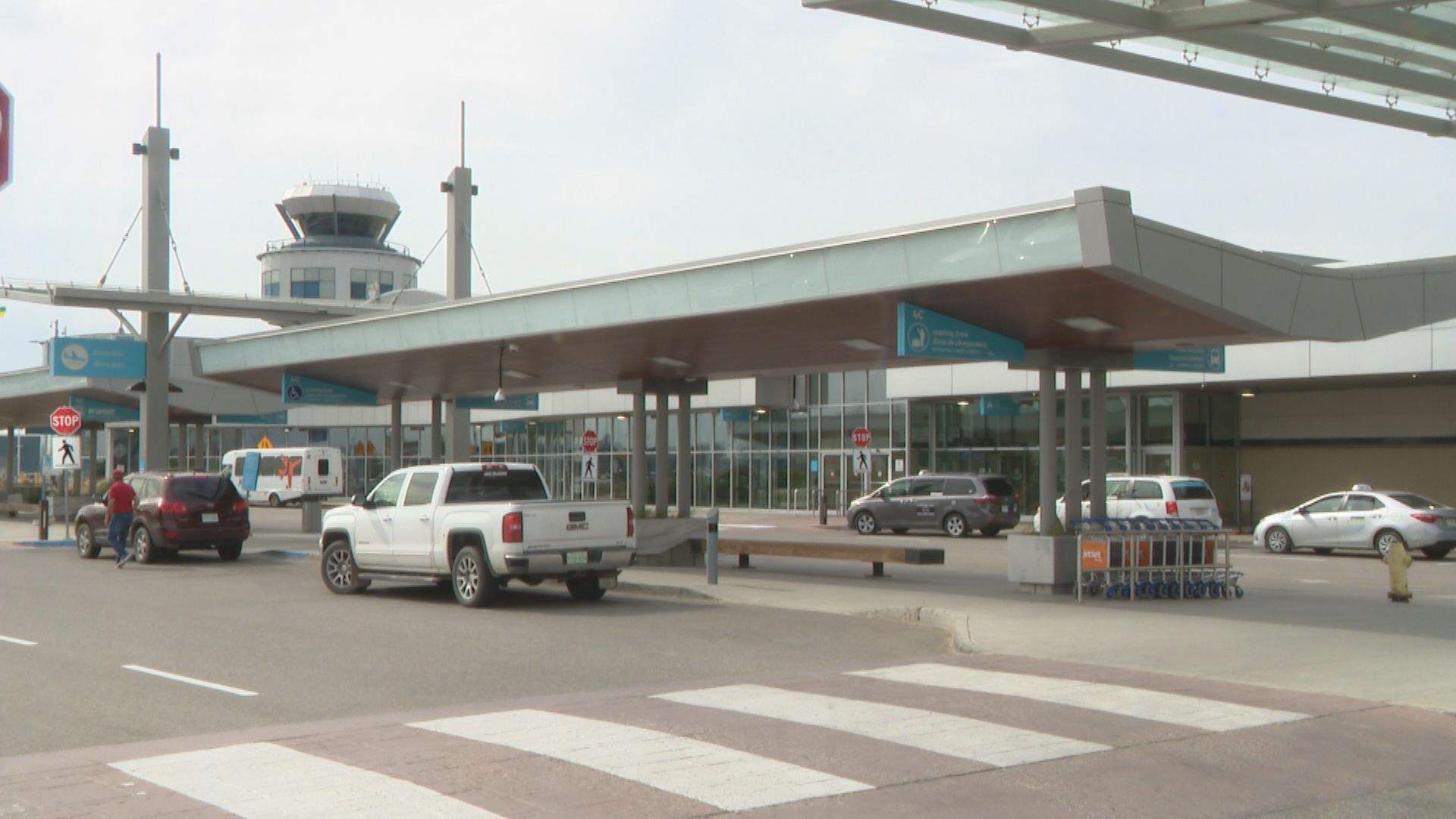
The Saskatoon International Airport took a step forward by acknowledging the problem. They coordinated with local advocacy groups to ensure the environment was controlled. But the real test happens when the cameras are off and the families are trying to make a connecting flight in a crowded hub like Toronto or Vancouver.
The Gatekeeper Problem
The most significant hurdle isn't the plane itself; it's the people. Security and gate agents are trained to look for "deviant" behavior. In a post-9/11 world, pacing, avoiding eye contact, or repetitive hand movements—all common self-regulation techniques for people with autism—can be misinterpreted as suspicious or intoxicated behavior.
This creates a high-stakes environment where a parent has to constantly "out" their child's diagnosis to strangers just to avoid being pulled aside for extra screening. It is exhausting. It is humiliating. And it is a primary reason why many families choose to stay home.
The "Hidden Disabilities Sunflower" lanyard program has started to gain traction in some Canadian airports. It is a simple tool: a lanyard that signals to staff that the wearer might need extra time or a different communication style. It’s a low-tech solution to a high-stress problem, but its effectiveness relies entirely on the training of the staff seeing it. Without that training, the lanyard is just a piece of green ribbon.
Beyond the Runway
We have to ask why it took this long for a major regional hub to host such an event. The technology to make travel easier has been here for years. We have noise-canceling headphones, mobile apps for pre-boarding, and advanced communication tools. The delay isn't technological; it's cultural.
Aviation culture is rooted in a "command and control" hierarchy. You follow the pilot’s orders, you sit in the assigned seat, and you move when the light turns on. There is very little room for the individual. For a person whose brain requires a sense of autonomy and predictability to remain calm, the rigid structure of a flight is a prison.
The Saskatoon initiative broke that structure for a few hours. It gave the power back to the families. They could leave when they wanted. They could explore the galley. They could sit in the cockpit. This sense of agency is the antidote to the anxiety that travel produces.
The Reality of the "Trial Run"
Let’s be clear about what these events actually achieve. They do not "cure" the difficulty of travel. They provide a data point. A parent learns that their child can handle the smell of the cabin but can't stand the pressure of the seatbelt. This allows for targeted interventions. Maybe they bring a specific weighted lap pad next time. Maybe they realize that flying isn't an option right now.
That knowledge is power. It prevents the trauma of a failed trip. But the burden of this preparation still falls almost entirely on the family. The airlines are providing the "stage," but the families are doing all the heavy lifting.
If the industry is serious about inclusion, the next step isn't another practice day. It’s the implementation of a "quiet boarding" tier that isn't locked behind a first-class ticket. It’s the creation of sensory rooms that are as common as airport bars.
High Altitude Stress
The pressure changes in a cabin are a factor that no stationary event can replicate. The "popping" of ears is a physical sensation that can be terrifying if you don't understand it or if you have sensory hypersensitivity. This is where the industry's lack of imagination is most evident.
Why aren't there haptic tools or specialized ear protection offered as a standard part of the "special assistance" package? Why is the burden of bringing every single piece of sensory equipment on the passenger? We provide wheelchairs for those with mobility issues. We provide oxygen for those with respiratory issues. We must start providing sensory support for those with neurological differences.
The success of the Saskatoon event should be measured by what happens next month, not what happened during the event itself. If the airport and the participating airlines don't change their daily operating procedures, then the event was merely a PR exercise.
Families are ready to see the world. They have the bags packed. They have the desire to travel. They are just waiting for the industry to realize that their money is as good as anyone else's, provided the "cost" of the flight isn't a total sensory breakdown.
The aviation sector prides itself on being the peak of human engineering and logistics. It is time they applied that same level of ingenuity to the human element. The sky should be open to everyone, not just those who can tolerate the noise.
Stop treating accessibility like a special event and start treating it like a standard requirement.