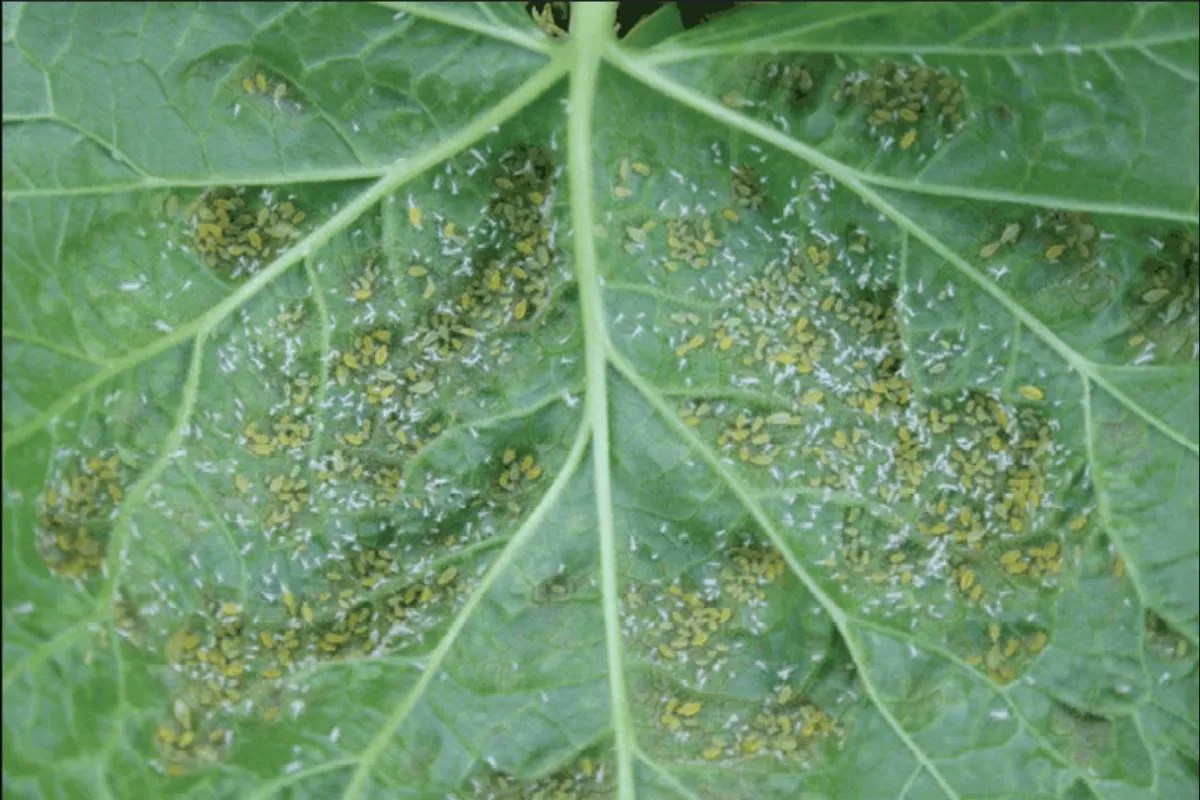
Ramesh doesn't remember the name of the chemical he sprayed on his cauliflower patch three summers ago. He remembers the smell. It was a sharp, metallic bite that clung to the back of his throat for days, a scent that felt like it belonged in a laboratory rather than a blooming field in rural Haryana. He remembers mixing two different jugs together because a neighbor told him the combination would "double the kill" on the diamondback moths ravaging his crop.
It worked. The moths died instantly. But something else began to grow.
We have spent decades looking at pesticides through a singular lens. We study one chemical, determine its toxicity, set a "safe" limit, and move on. It is a neat, orderly system of checkboxes. The problem is that nature does not live in a checkbox. Farmers do not live in a checkbox. When Ramesh tilted those two jugs into his sprayer, he wasn't just killing bugs; he was conducting an unregulated chemistry experiment with his own life as the primary variable.
Recent data has begun to pull back the curtain on this chemical alchemy. When certain pesticides are mixed—a practice so common it is almost universal in industrial farming—the risk of developing specific cancers doesn't just climb. It leaps. We are talking about a surge in risk as high as 150%.
The Synergy of Shadows
The human body is a masterpiece of resilience, but it has its breaking points. Think of your immune system as a seasoned security team. It can handle a single intruder quite well. It knows the protocol. But when two different intruders attack from opposite directions using different weapons, the system enters a state of chaotic failure.
In the world of toxicology, this is known as "synergistic effects." It is the terrifying reality where $1 + 1$ does not equal $2$. In the context of pesticide mixtures, $1 + 1$ can equal $10$.
When a farmer mixes an organophosphate with a pyrethroid, they aren't just doubling the toxicity. They are creating a third, more aggressive entity. One chemical may weaken the cell's outer wall, while the second chemical, which might have been harmless on its own, suddenly finds an open door to the DNA inside. Once that door is breached, the blueprint of the cell is rewritten. This is where cancer begins—not with a bang, but with a typo in the genetic code.
The numbers coming out of recent longitudinal studies are sobering. Researchers are finding that the "cocktail effect" is particularly brutal when it comes to non-Hodgkin lymphoma, leukemia, and prostate cancer. The statistics are no longer just lines on a graph. They are the stories of men like Ramesh, who are finding themselves in oncology wards wondering why "safe" chemicals led them here.
The Myth of the Controlled Environment
Regulatory bodies often test chemicals in isolation. They put a single substance in a petri dish or a controlled animal environment and measure the results. It is clean. It is scientific. It is also completely detached from the reality of a modern farm.
Rain washes one chemical into the groundwater where it meets the runoff from a different farm three miles away. A breeze carries a fungicide from a vineyard and settles it onto a wheat field already treated with herbicides. By the time that food reaches your plate, it isn't carrying a single residue. It is carrying a history.
We have been told for years that if we stay below the "Maximum Residue Limit," we are fine. But those limits were calculated for individual chemicals. No one calculated the limit for the twenty different substances found on a single supermarket strawberry. We are eating a chemical soup, and our regulatory frameworks are still using a fork.
Consider the biological burden on a child's developing system. Their organs are still learning the ropes. Their metabolic pathways are being paved. When they ingest these mixed residues, the potential for neurological disruption and long-term carcinogenic shifts is magnified. It is a debt we are forcing the next generation to pay, interest-free for now, but with a massive balloon payment waiting in their thirties and forties.
The Psychology of More
Why do we do this? Why does a farmer like Ramesh feel the need to mix his own "special sauce" of toxins?
The answer lies in the desperation of the modern food system. Pests evolve. They get tougher. They build resistance. To keep up, the farmer is told he needs more power, more speed, more "efficiency." The chemical companies sell the solution to the problem they helped create. It is a treadmill that only goes faster.
The pressure to produce perfect, blemish-free produce for global markets drives people to take risks they don't fully understand. There is a psychological disconnect. If the chemical is sold in a store, it must be safe. If a little is good, a lot must be better. If one works, two will be a miracle.
But the miracle is a mirage. We have traded the long-term health of our soil and our bodies for the short-term aesthetics of a shiny red apple. We have forgotten that the earth is a closed loop. Whatever we pour into the ground eventually finds its way into our veins.
The Turning Tide
The conversation is shifting, though perhaps not fast enough for those already sick. There is a growing movement toward "Integrated Pest Management" and regenerative practices that prioritize biology over chemistry. We are rediscovering that a healthy ecosystem has its own checks and balances.
But for the change to be meaningful, it has to move beyond the farm. It has to reach the halls of policy and the aisles of the grocery store. We need testing protocols that account for the cocktail effect. We need transparency in labeling that reflects the complexity of what was used to grow our food.
Most importantly, we need to stop viewing ourselves as separate from the environment. When we talk about "pesticide runoff" or "soil contamination," we are talking about our own biology. There is no "away." There is only here.
Ramesh sits on a wooden bench outside a clinic now. He watches the younger farmers in his village load their sprayers, the white mist rising into the morning air like a ghost. He wants to tell them about the smell. He wants to tell them that the moths weren't the real enemy.
The real enemy was the silence—the silence of the regulators, the silence of the manufacturers, and the silence of a society that demands cheap food at any cost. We are all part of this experiment. We are all holding the beaker. The only question left is how much longer we are willing to wait before we stop the pour.
The soil remembers everything we give it, and eventually, it gives it all back.