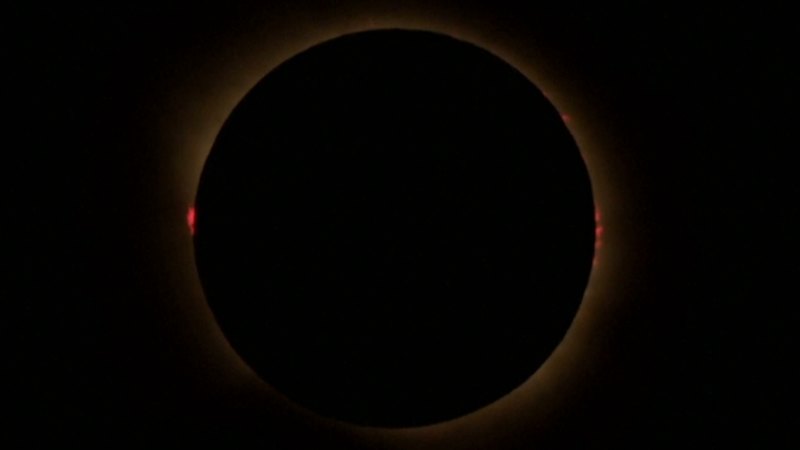
When a solar eclipse sweeps across Europe, the headlines predictably fixate on millions of people donning cardboard protective glasses, staring skyward, and marvelling at a temporary celestial alignment. Beneath that public fascination lies a frantic, high-stakes logistical operation happening inside continental power control rooms. Grid operators do not watch the moon block the sun with wonder. They watch it with sheer terror. A sudden, massive shadow crossing the continent triggers an immediate, catastrophic drop in photovoltaic energy production, forcing transmission system operators to manage volatility that threatens regional blackouts.
Consider the sheer scale of modern European solar capacity. Over the past decade, photovoltaic installations have exploded across rooftops, commercial parks, and sprawling rural fields from Andalusia to the rolling hills of Bavaria. This rapid decarbonisation has fundamentally altered the baseload dynamics of the European interconnected grid. When the moon crosses the solar disk, hundreds of gigawatts of generation capacity vanish within minutes, then flood back just as abruptly when the alignment passes. For a more detailed analysis into similar topics, we recommend: this related article.
This phenomenon is not a distant theoretical exercise. It is a recurring stress test that exposes the fragile fault lines of Europe's energy transition. While journalists publish breathless accounts of shadow bands and corona sightings, engineers sweat over frequency drops, reserve margins, and the terrifying speed of ramping requirements.
The Anatomy of a Generation Drop
Physics cares very little for political targets or carbon emission goals. When sunlight dims during an eclipse, power output drops in direct proportion to the obscuration percentage and local cloud cover conditions. To get more context on this development, in-depth reporting is available on NBC News.
An eclipse introduces a double shock to the power system. First, generation drops rapidly along a steep downward slope as the moon obscures the sun. Then, just as operators stabilise the grid by firing up peaker plants or importing hydroelectric power, the sun emerges with terrifying speed. Generation spikes upward on an equally steep recovery slope.
This rapid downward and upward ramping requires an unprecedented degree of operational flexibility. Traditional thermal power plants, such as massive coal and nuclear units, cannot ramp up or down quickly enough to match these fluctuations. They are designed for steady, predictable baseload production. Cycling a nuclear reactor or a supercritical coal boiler to chase an eclipse is inefficient, mechanically damaging, and economically ruinous.
Instead, grid controllers rely on a patchwork of fast-acting assets. Gas-fired turbines, pumped-storage hydroelectric facilities, and cross-border interconnectors bear the brunt of the shock. Yet, as Europe phases out fossil fuels to meet climate mandates, the availability of gas peaker plants is shrinking precisely when weather-dependent renewables demand more backup support.
Back in 2015, a major partial solar eclipse crossed Europe, serving as the first true large-scale trial for modern renewable grids. At that time, photovoltaic penetration was a fraction of what it is today. Even then, operators reported severe scheduling difficulties and near-miss frequency deviations. Regulators breathed a sigh of relief when the system held together. They treated it as an anomalous event rather than a harbinger of structural vulnerabilities that would multiply exponentially as solar adoption accelerated over the next decade.
The Illusion of Storage Solutions
Politicians love to point to battery storage as the silver bullet for renewable intermittency. Lithium-ion battery installations have proliferated across European substations, promising a clean, instantaneous buffer against sudden drops in generation.
The reality on the ground is starkly different. Current grid-scale battery installations are engineered primarily for short-duration frequency response, lasting anywhere from thirty minutes to two hours. An eclipse can blanket a significant portion of the continent for several hours, depending on the path of totality or partial obscuration.
When batteries are forced to discharge continuously over an extended period to compensate for a massive solar blackout, their state of charge plummets rapidly. If the sky remains overcast after the eclipse passes—a common meteorological occurrence in Northern and Central Europe—those batteries cannot recharge via solar panels. Operators are left with depleted storage reserves and an unstable grid, creating a secondary crisis hours after the celestial event has ended.
Furthermore, the supply chain for battery components remains heavily constrained by geopolitical bottlenecks, raw material mining limits, and manufacturing constraints. Relying on batteries to bridge the gap during a continental-scale solar eclipse is like trying to empty a swimming pool with a teaspoon while a fire hydrant pours water in.
The Prosumer Variable
Compounding the challenge is the explosion of decentralised rooftop solar installations owned by residential and commercial prosumers. Millions of individual households and small businesses now feed surplus electricity back into local low-voltage distribution networks.
These small-scale systems are largely invisible to central transmission system operators in real time. Traditional power plants are centrally monitored and dispatched, but residential inverters operate autonomously based on local grid voltage and frequency parameters.
During an eclipse, millions of automated residential inverters experience sudden drops in voltage and frequency as the local network strains under the sudden loss of generation. Many of these inverters are programmed to automatically disconnect from the grid to protect household wiring when parameters drift outside narrow safety thresholds.
This mass autonomous tripping introduces chaotic, unpredictable drops in generation at the distribution level. Central operators cannot accurately forecast how hundreds of thousands of residential solar arrays will react collectively to a moving shadow across a region. The macro-level grid stability calculations are thus disrupted by micro-level behavioral anomalies of millions of decentralised devices working independently.
Cross Border Vulnerabilities
Europe operates one of the most complex interconnected electricity grids on Earth. Power flows across national borders, balancing supply and demand between France, Germany, Spain, Italy, and dozens of other sovereign states.
This interconnection is supposed to act as a shock absorber. If solar generation drops sharply in Germany, excess power can theoretically be imported from Scandinavian hydro or French nuclear facilities.
Yet, interconnectors have physical transmission capacity limits. During a widespread eclipse, multiple countries experience simultaneous drops in photovoltaic generation. Germany, the Netherlands, and Italy might all demand emergency power imports at the exact same moment.
When transmission lines hit their thermal limits, automated safety systems trip to prevent physical damage to the infrastructure. If too many interconnectors trip offline simultaneously, the European grid fractures into isolated regional electrical islands. Once an island forms, local generation must match local load instantly, or the entire sub-grid collapses into a cascading blackout.
The coordinated response required by ENTSO-E is a masterclass in high-wire management. Hundreds of automated algorithms calculate line flows and redispatch instructions in milliseconds. Human intervention remains critical when automated systems encounter edge cases they were never programmed to handle.
The Market Distortion of Zero Pricing
The financial mechanisms governing European electricity markets introduce another layer of risk during a solar eclipse. On sunny days, massive influxes of zero-marginal-cost solar power frequently push wholesale electricity prices into negative territory. Producers effectively pay consumers or grid operators to take excess electricity off their hands.
When the eclipse hits, solar generation evaporates, and electricity prices instantly skyrocket from negative values to hundreds of euros per megawatt-hour.
This wild price volatility wreaks havoc on algorithmic trading desks and industrial energy consumers. Energy-intensive industries, such as chemical manufacturers and steel mills, often have automated demand-response protocols that shut down operations when electricity prices spike.
Suddenly shutting down heavy industrial processes to save power creates its own operational risks and financial losses. Conversely, if industrial plants fail to curtail consumption quickly enough during the eclipse-induced generation drop, overall grid demand outstrips supply, causing a dangerous frequency drop.
Frequency is the heartbeat of the electrical grid. In Europe, the nominal frequency is fifty hertz. If supply falls short of demand even slightly, the frequency drops below fifty hertz. If it dips too low, power plants automatically disconnect to protect their internal turbine blades from destructive harmonic vibrations, triggering a cascading total system failure.
Meteorological Blind Spots
Predicting the exact impact of an eclipse on power grids requires hyper-local meteorological forecasting. Weather models must account not only for the astronomical alignment but also for regional cloud cover, atmospheric turbidity, and local microclimates.
A stray cloud bank rolling in from the Atlantic during an eclipse can amplify the generation drop unexpectedly, turning a manageable partial obscuration into a severe power deficit. Traditional weather forecasting models often lack the temporal and spatial resolution needed to predict cloud formation on a minute-by-minute basis over a specific solar farm.
Grid operators compensate for this uncertainty by buying extra ancillary services and keeping expensive fossil-fuel plants on spinning reserve. These precautionary measures cost European electricity ratepayers billions of euros annually. The public rarely sees these hidden costs, which are quietly buried in regulated grid tariffs and monthly utility bills.
The Structural Dilemma Ahead
As Europe continues its aggressive march toward complete decarbonisation, the proportion of weather-dependent generation on the grid will only increase. Future solar eclipses will occur against a backdrop of even lower thermal baseload capacity.
The structural dilemma facing energy policymakers is glaring. Building enough storage and fast-acting backup capacity to handle extreme, rare events like solar eclipses requires massive capital expenditure that yields zero productive output for ninety-nine percent of the year.
Maintaining that idle backup infrastructure contradicts the core economic principles of a liberalised energy market, which penalises overcapacity and rewards lean operations. Failing to maintain that backup invites catastrophic grid failure when the sun disappears behind the moon.
Engineers are forced to walk a razor-thin line between economic efficiency and systemic survival. Every eclipse serves as a loud, unmistakable warning klaxon from the physical universe.
The sky goes dark for a few hours. The crowd below cheers, snapping photographs of the glowing solar corona with smartphones. Inside the windowless concrete bunkers of national control centres, weary operators stare at flashing red monitors, praying that the transmission lines hold, that the batteries do not trip, and that the frequency holds steady at fifty hertz until the light returns.
The real danger is not the darkness in the sky. It is the blinding hubris of assuming our technological infrastructure is invulnerable to the basic mechanics of nature.


