The sky over the Middle East has always been a crowded place, thick with the ghosts of ancient empires and the heat haze of the desert. But recently, the air has grown heavier with a different kind of presence. It is a high-pitched, lawnmower whine that signals a shift in the way we kill each other.
For months, the Shahed drones—those triangular, low-cost "suicide" messengers designed by Iran—have been the undisputed predators of the low-altitude corridor. They are cheap. They are relentless. They have turned the concept of air superiority on its head, proving that you don't need a billion-dollar stealth fighter to bring a capital city to its knees. You just need enough fiberglass and a basic GPS chip.
Then came the revelation from Kyiv.
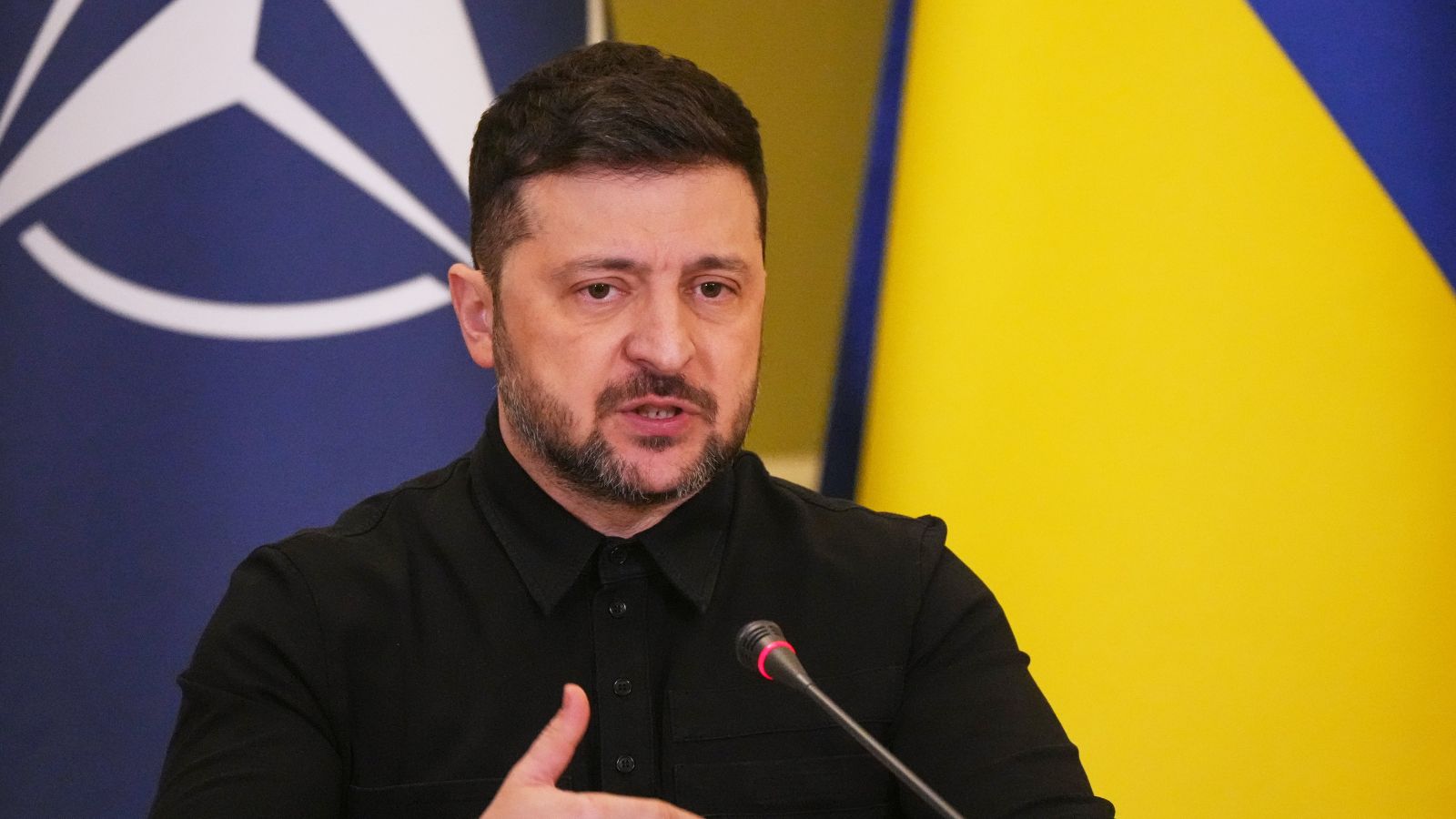
Volodymyr Zelenskyy didn't just report a military statistic; he pulled back the curtain on a secret war of ghosts. Ukrainian drones, forged in the fires of a resistance that has had to innovate or die, are now operating thousands of miles from their own borders. They are hunting their own tormentors. In the shifting sands of West Asia, the hunters have become the prey.
The Geography of Revenge
The connection between the frozen trenches of the Donbas and the sun-scorched valleys of the Middle East is not as tenuous as it looks on a map. It is a straight line of hardware and blood.
Every Shahed that dives into a Kyiv apartment block is a data point. Ukrainian engineers have spent two years dissecting these machines, tracing the origin of every wire and the logic of every circuit board. They know the Shahed’s heartbeat better than the people who built it. They have learned how it thinks, how it hides, and, most importantly, how it fails.
Consider a hypothetical operator—let’s call him Mykola. Mykola doesn't wear a flight suit. He sits in a darkened room, his eyes bloodshot from the blue light of a monitor, controlling a gimbal-mounted camera a world away. For Mykola, the war is no longer about defending a specific square of Ukrainian soil. It is about disrupting the ecosystem that feeds the fire. When a Ukrainian drone intercepts an Iranian-made threat over West Asian skies, it is a message: We can find you anywhere.
This is not a traditional dogfight. There are no pilots pulling six Gs in a cockpit. It is a slow, methodical chess match played in the electromagnetic spectrum. The Ukrainian drones—often small, nimble, and deceptively simple—intercept these loitering munitions with a terrifying efficiency. It is the first time in history that a nation under total invasion has projected its power so far abroad to neutralize the specific supply chain of its own destruction.
The Irony of the Low-Cost War
War used to be an enterprise of the rich. You needed foundries, shipyards, and massive industrial complexes. Now, the barrier to entry is a credit card and a 3D printer.
The Shahed was supposed to be the great equalizer for Tehran and its proxies. It offered a way to bypass expensive missile defense systems by sheer volume. If you fire ten, and nine are shot down, the tenth one makes the entire mission a success. It is a math problem where the human cost is the remainder.
Ukraine has changed the variables. By deploying their own autonomous systems in the Middle East, they are performing a sort of global surgery. They are cutting the tendons of the Iranian drone network before the machines can even be crated and shipped to the Russian front.
The stakes are invisible but absolute.
If Ukraine can prove that the Shahed is vulnerable in its own backyard, the market for those drones collapses. The psychological shield of Iranian drone "invincibility" evaporates. This is why Zelenskyy’s announcement carries such weight. It isn't just about tactical victories; it's about exposing a flaw in the enemy's fundamental strategy.
The Ghosts in the Machine
Technology is often described as cold, but these drones are deeply human artifacts. They are built with the desperation of a people who have seen their power plants shattered and their children sleeping in subway stations.
When a Ukrainian-operated drone tracks a Shahed across a desert horizon, that drone carries the collective memory of every siren that has wailed in Lviv or Kharkiv. There is a visceral, poetic justice in it. The very technology intended to break the Ukrainian spirit has been mastered, repurposed, and sent back across the globe to haunt its creators.
The world is watching this play out with a mixture of awe and quiet dread. We are entering an era where borders are increasingly irrelevant to the reach of autonomous weapons. The "West Asia war" is no longer a localized conflict. It is a node in a global network of kinetic energy.
Western intelligence agencies are scrambling to keep up. They see the data. They see the wreckage. They realize that the manual for modern warfare is being written in real-time by people who don't have the luxury of academic theory.
The Sound of a Changing World
The silence that follows a drone strike is different from the silence after a traditional bombing. It is a hollower, more clinical quiet.
We often talk about "geopolitics" as if it were a game of Risk played by men in suits. But the reality is found in the dirt. It is found in the charred remains of a carbon-fiber wing found in a place where it shouldn't be. It is found in the realization that the distance between a workshop in Kyiv and a launch site in the Middle East has shrunk to nothing.
The "Shaheds" are no longer the apex predators. They are being hunted by the very people they were meant to destroy. It is a cycle of innovation driven by the most basic human instinct: the refusal to be a victim.
As the sun sets over the desert, the whine of the drones begins again. But now, there is a second sound—a different frequency, a different intent. It is the sound of a country fighting for its life, not by digging in, but by reaching out across the world to stop the hand that strikes it.
The desert wind blows over the dunes, covering the tracks of the vehicles and the scars of the impact sites. But the data remains. The precedent is set. The sky is no longer a safe place for those who hide behind machines, because the ghosts of Kyiv have found their way to the sand.