The American pantry is becoming a luxury. While April’s consumer price index data suggests a cooling in some sectors, the grocery aisle remains a theater of financial pain for the average household. The prevailing narrative—often pushed by surface-level analysis—blames the recent surge in food costs on fluctuating gasoline prices and the broad ghost of inflation. This is a half-truth that masks a much more predatory reality. Gasoline is a delivery cost, certainly, but it is a temporary one. The structural shifts occurring within the global supply chain, coupled with aggressive margin protection from the world’s largest food conglomerates, have created a permanent floor for high prices that isn’t coming down.
Food prices at home rose again in April, defying expectations of a meaningful plateau. To understand why your cereal and eggs cost 20% more than they did three years ago, you have to look past the fuel pump. You have to look at the consolidation of the meatpacking industry, the collapse of specialized labor in logistics, and the "just-in-case" inventory models that have replaced the "just-in-time" efficiency of the pre-pandemic era.
The Myth of the Gas Pump Scapegoat
Energy costs are the most visible variable in the economy. When the price of a gallon of diesel ticks up, every trucking company in the country adds a surcharge. It is easy to point at the local gas station and say, "There is the culprit." But the math doesn't fully support this as the primary driver of the current grocery crisis.
Fuel typically accounts for roughly 5% to 8% of the total operating costs for a major food distributor. Even a 20% spike in fuel costs, while significant, should only translate to a fraction of a percentage point increase in the final shelf price of a head of lettuce or a gallon of milk. Yet, we see double-digit increases. The discrepancy is where the real story lies. Companies are using the "inflationary environment" as a psychological shield to pass on costs that have nothing to do with the price of oil.
The reality is that logistics companies have hiked their base rates to compensate for a chronic shortage of drivers and aging fleets. These are fixed structural costs. Even if gas prices dropped to two dollars tomorrow, the contracts signed between producers and retailers are locked in at these higher baselines. The "pump" is a convenient distraction from the "payroll" and the "profit margin."
The Corporate Fortress and Margin Expansion
For decades, the grocery business was a "penny business." Supermarkets operated on razor-thin margins of 1% to 2%, relying on massive volume to stay profitable. That changed in 2021. During the height of the supply chain chaos, the industry realized that the American consumer, fueled by stimulus and a lack of alternative spending options, would accept price hikes without much rebellion.
We are now seeing the results of this grand experiment. Net profit margins for major food processors and retail giants have reached decade-level highs. They aren't just covering their increased costs; they are expanding their take. When a major brand increases the price of a soda by 15% citing "input costs," but then reports record-breaking quarterly earnings, the math reveals the truth. This is "excuse-based pricing."
The consolidation of the market allows for this behavior. In many categories—meat, bread, and dairy—four or fewer companies control the vast majority of the market share. When competition is this restricted, the pressure to lower prices to win customers disappears. Instead, these giants move in lockstep. If one raises prices, the others follow, knowing the consumer has nowhere else to turn.
The Fertilizer Trap and Global Instability
While the average shopper looks at the sticker price, the investigative eye looks at the soil. The cost of food starts months, or even years, before it hits the shelf. Nitrogen-based fertilizers, essential for the massive yields of corn and soy that underpin the American diet, are tied directly to natural gas.
Geopolitical instability in Eastern Europe and trade restrictions with major mineral exporters have made fertilizer a volatile commodity. Farmers are paying nearly double what they paid five years ago to prep their fields. This doesn't just make your corn on the cob more expensive; it ripples through the entire protein chain. Corn and soy are the primary feed for beef, pork, and poultry.
When the "input" at the farm level rises, it creates a bullwhip effect. By the time that cow is slaughtered, processed, packaged, and shipped, the initial increase in fertilizer cost has been compounded at every single hand-off.
Labor Shortages in the Hidden Middle
We talk often about the shortage of workers at the checkout counter, but the "hidden middle" of the food system is where the real labor crisis lives. This includes the people who work in cold-storage warehouses, the inspectors at processing plants, and the specialized mechanics who keep the refrigerated trucks running.
These roles are demanding, often dangerous, and historically underpaid. To keep these facilities running, companies have had to aggressively hike wages and improve benefits. While this is a victory for the American worker, it is a permanent increase in the cost of doing business. Unlike a spike in gas prices, wages almost never go down. We have reached a new equilibrium in labor costs, and that cost is being baked into the price of your Tuesday night dinner.
Furthermore, the "efficiency" of the modern food system was built on a surplus of cheap, often migrant, labor. As immigration policies have tightened and the domestic workforce has aged out of manual labor, the system is struggling to adapt. Automation is the touted solution, but the capital expenditure required to automate a meat-packing plant is astronomical. Those billions of dollars in investments are currently being clawed back through—you guessed it—higher prices at the register.
The Strategy of Shrinkflation and Skimpflation
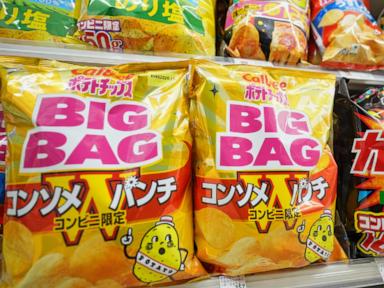
If you feel like your grocery bag is lighter despite spending more, you aren't imagining it. "Shrinkflation" is the practice of reducing the volume or weight of a product while keeping the price and packaging nearly identical. A 12-ounce bag of chips becomes 10 ounces. A half-gallon of orange juice quietly drops to 52 ounces.
But there is a more insidious cousin to this trend: "Skimpflation." This is when companies change the formulation of a product to use cheaper ingredients. Replacing cocoa butter with palm oil, or increasing the ratio of water and fillers in processed meats. You are paying more for an inferior product. This is a desperate attempt by brands to maintain their high profit margins without crossing a psychological price barrier that would cause a consumer to stop buying altogether.
Retailer Tactics in the April Surge
Retailers are also changing how they price their private-label goods. Traditionally, store brands (like Kirkland or Great Value) were the budget-friendly alternative meant to undercut the big names. However, as brand-name prices have soared, retailers have realized they can raise the price of their store brands as well, as long as they stay slightly cheaper than the national brand. This "shadow pricing" has effectively removed the floor for many grocery categories, leaving low-income families with no "safe" options.
Climate Volatility as a Fixed Expense
We can no longer treat "weather events" as anomalies. Extreme heat in the Midwest, droughts in California, and flooding in the South are now recurring line items on the corporate balance sheet. The insurance industry has already reacted, hiking premiums for farms and food processing facilities.
When a crop fails due to a heatwave, the immediate supply drop spikes prices. But the long-term effect is more damaging. Farmers are switching to less productive, "hardier" crops, or investing in expensive irrigation and climate-control systems. These are not one-time costs. They represent a fundamental shift in how we produce food in a more volatile world. The "stability" of the 20th-century food supply is gone, replaced by a high-risk, high-cost model that favors the largest corporate players who can afford to weather the storms.
The Deceptive Nature of "Core" Inflation
The government’s "Core CPI" often excludes food and energy because they are considered too volatile. For the policy wonks in Washington, this makes sense for long-term planning. For the person trying to feed a family of four, it is an insult.
Food is not a discretionary expense. You cannot "wait out" high egg prices the way you can wait out a high interest rate on a new car. This creates a captive market. When the price of rent, healthcare, and utilities are also rising, the grocery bill becomes the primary source of daily stress. We are seeing a shift in consumer behavior where "value" is no longer about the lowest price, but about caloric density. People are moving away from fresh produce and lean proteins toward highly processed, shelf-stable goods because they offer a more predictable cost-per-meal. This has long-term implications for public health that will eventually manifest as even higher healthcare costs—another invisible tax on the American consumer.
The Path to a New Reality
There is no "fix" coming in the next quarter. The federal interest rate hikes are a blunt instrument designed to curb spending, but people won't stop eating. To see real relief, we would need to see a radical decoupling of the food supply chain from corporate monopolization.
The focus must shift toward regional food systems that bypass the national logistics nightmare. Until then, the grocery aisle will remain the most accurate—and painful—barometer of the American economy. The prices you see today are not a peak; they are the new foundation.
Stop waiting for the "old prices" to return. They are gone. The most effective tool the consumer has is a radical shift in brand loyalty. The moment a brand realizes that its "excuse-based pricing" is leading to a permanent loss in market share is the only moment the price will actually move. Shopping at farmers' markets, buying in bulk, and opting for raw ingredients over processed goods isn't just a lifestyle choice anymore; it's a necessary act of economic rebellion against a system designed to extract every possible cent from your kitchen table.