The roar of eighty thousand people inside a stadium does not sound like a crowd. It sounds like an ocean. It is a heavy, rhythmic wave of noise that vibrates in your chest cavity, a sound so vast it makes you feel entirely inconsequential and intensely alive all at the same time. If you have ever stood in the concourse of a World Cup match when the home team scores, you know this feeling. The concrete beneath your boots literally shakes.
For the average fan, the magic of the World Cup is entirely contained within those four white lines on the pitch. It lives in the impossible trajectory of a curling free-kick, the desperate dive of a goalkeeper, or the collective intake of breath before a penalty is taken. We want to believe the tournament is a pure manifestation of human will and athletic genius. You might also find this similar article insightful: The Weight of the Heavy Hitter And The Ghost of Flushing Meadows.
But it isn't. Not entirely.
Behind the bright lights, the roaring fans, and the pristine green grass lies a staggering logistical nightmare. A World Cup is not just a sporting event; it is a temporary megacity dropped into a host nation. Hundreds of thousands of fans arrive all at once, speaking dozens of languages, all needing to be fed, secured, housed, and transported simultaneously. If the transport grid locks up for even thirty minutes, the entire illusion of the tournament collapses. A delayed train is not just an inconvenience; it is a security risk, a public relations disaster, and a broken promise to millions watching at home. As extensively documented in latest reports by ESPN, the implications are notable.
When Mexico prepares to take its place on the global stage as a host, the stakes are impossibly high. The pressure on the local organizers is suffocating. To keep this massive, chaotic human machine moving, Mexico has had to look far beyond its own borders for a solution, quietly anchoring its tournament infrastructure to an unexpected lifeline thousands of miles away: Chinese industrial tech.
The Choreography of the Mob
Consider a hypothetical fan named Mateo. Mateo spent his life savings on a ticket to see Mexico play in the group stage. He arrives at the stadium three hours early, his face painted, his heart hammering against his ribs. He does not think about the electricity powering the turnstiles. He does not think about the digital network validating his ticket in microseconds. He certainly does not think about the fleet of buses idling outside, waiting to disperse the crowd when the final whistle blows.
He shouldn't have to. That is the point of good engineering. It is meant to be invisible.
But if Mateo were to look closely at the logos on the buses lining the boulevards, or the hardware routing the security feeds through the stadium corridors, he would see names like Yutong, CRRC, and Huawei.
The scale of the movement required for a modern World Cup is difficult to comprehend. Imagine trying to evacuate a medium-sized city every three hours, calmly and safely, while half the population is either deliriously happy or profoundly angry. Traditional transit systems break under this kind of acute, spike-demand pressure.
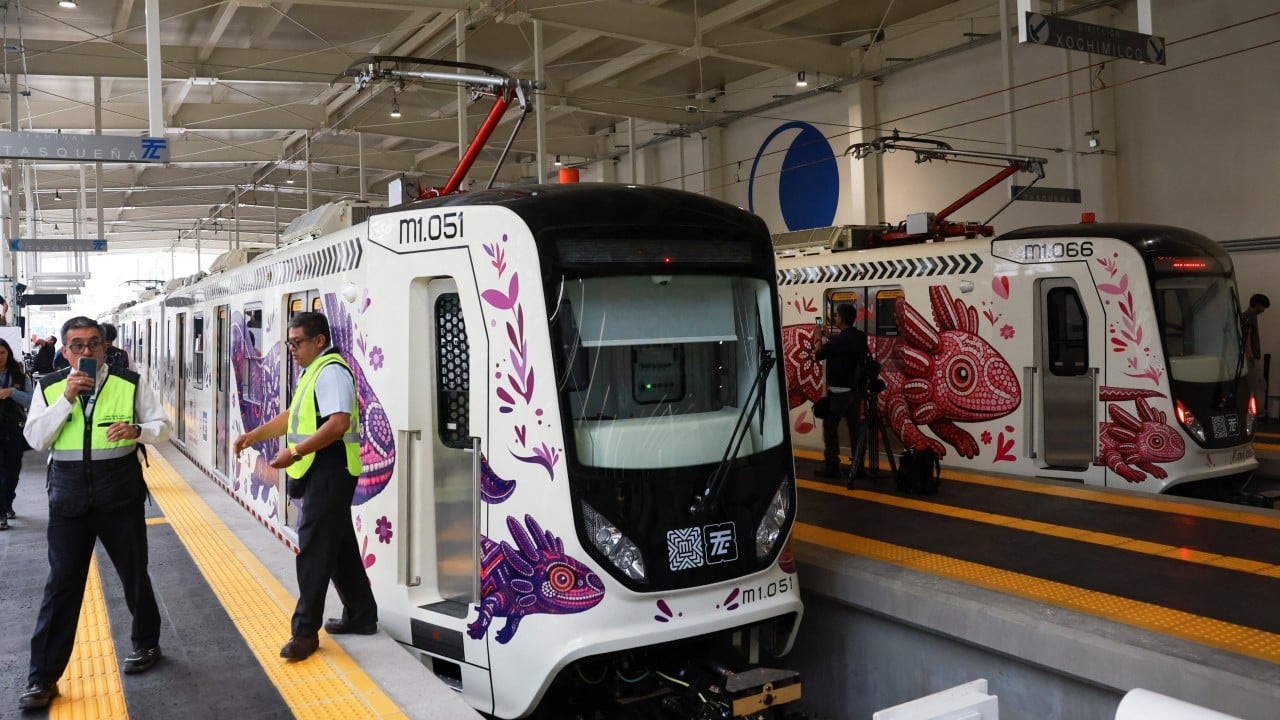
To prevent total gridlock, Mexican municipalities have undergone a quiet, massive overhaul of their public transit systems. Cities like Mexico City and Monterrey have integrated Chinese electric buses and light-rail cars into their primary arteries. These are not just standard vehicles bought off a lot; they are highly customized rolling computers designed to handle extreme passenger densities while churning out real-time telemetry data back to centralized command centers.
The transition from old, diesel-spewing collective buses to high-capacity electric transit is a massive leap forward. The old system was romantic, perhaps, with its brightly painted peseros dodging through traffic, but it was fundamentally incapable of handling the disciplined, high-velocity movement required by FIFA. The modern tournament demands predictability. It demands data.
The Nerve Center Beneath the Concrete
Step away from the pitch and walk down the subterranean concrete corridors of the stadium, past the media mix zones and the VIP lounges. Deep inside the belly of the venue sits the security and operations command center. This is where the true battle of the World Cup is fought and won.
Dozens of monitors line the walls, flickering with high-definition feeds from every gate, every concourse, and every major intersection within a five-mile radius. Here, the challenge is not just seeing what is happening, but understanding it.
If a crowd bottlenecks at Gate G, human eyes might take ten minutes to realize it is a systemic blockage rather than a temporary slowdown. By then, temperaments flare, people push, and danger escalates. This is where the digital architecture comes into play. The network switches, data storage systems, and cloud-computing frameworks running these command centers—heavily reliant on Chinese telecommunications infrastructure—are processing thousands of data points per second.
Algorithms track the density of the crowd. They flag anomalies. They predict bottlenecks before they happen. If a train on the light-rail line slows down by even ninety seconds, the system automatically recalculates the optimal dispatch rate for the electric bus fleet waiting outside.
It is a beautiful, terrifying symphony of logistics.
There is an uncomfortable truth here that many western observers prefer to ignore. For years, there has been significant geopolitical hand-wringing regarding Latin America’s growing reliance on Chinese technology. Critics write lengthy policy papers warning of economic dependency and data security risks. They debate it in climate-controlled rooms in Washington and Brussels.
But when you are a local transit official in Mexico, tasked with ensuring that two million international visitors do not paralyze your capital city during a global broadcast, policy papers offer very little comfort. You need hardware that works. You need it delivered on time. Most importantly, you need it at a price point that does not bankrupt your local municipality for the next three decades.
China offers an integrated package that currently has very few rivals: the financing, the manufacturing capacity, and the digital ecosystem to back it up. When the world is watching, pragmatism wins every single time.
The Friction of Reality
Yet, this reliance is not without its deep anxieties. It would be dishonest to paint this technological marriage as entirely flawless.
When you speak to local engineers and transit operators, the men and women who actually have to maintain these systems when the foreign dignitaries go home, you hear a different tone. It is a mix of awe and trepidation. They are operating systems so advanced that local supply chains can struggle to keep pace. If a highly specialized electronic component in a Chinese-built light-rail car fails three days before a quarterfinal match, you cannot simply run down to the local hardware distributor to buy a replacement. You are tethered to a global supply line that stretches across the Pacific Ocean.
There is also the cultural and operational friction of importing an entire philosophy of infrastructure. The software interfaces, the maintenance protocols, the engineering standards—they all require a massive, rapid re-skilling of the domestic workforce. Mexican transit workers have had to undergo intensive, crash-course training modules, learning to diagnose optical fiber issues and battery degradation metrics instead of mechanical engine blocks.
It is a stressful, high-stakes gamble. The system is incredibly efficient, but efficiency is a brittle thing. High efficiency means low tolerance for error.
The Final Whistle
When the tournament eventually concludes, the trophies will be hoisted, the confetti will be swept from the grass, and the fans will board their flights home. The global media will move on to the next big story.
But the infrastructure will remain.
This is the real victory of the logistical gamble. Long after the FIFA executives have packed their bags, the residents of Mexico City, Monterrey, and Guadalajara will be the ones boarding those electric buses to get to work. They will be the ones riding the light-rail lines to see their families. The tournament is the catalyst, the forge that forces a decade's worth of modernization into a few hyper-accelerated years.
The next time you watch a match, look past the striker celebrating at the corner flag. Look past the flashing advertisement boards. Look out toward the horizon, beyond the stadium rim, where the streetlights stretch into the night.
Somewhere out there, a silent, electric bus is gliding through the dark, guided by a network of invisible code, carrying a tired fan home. The beautiful game is played on grass, but it is kept alive by the cold, unblinking efficiency of silicon and steel.