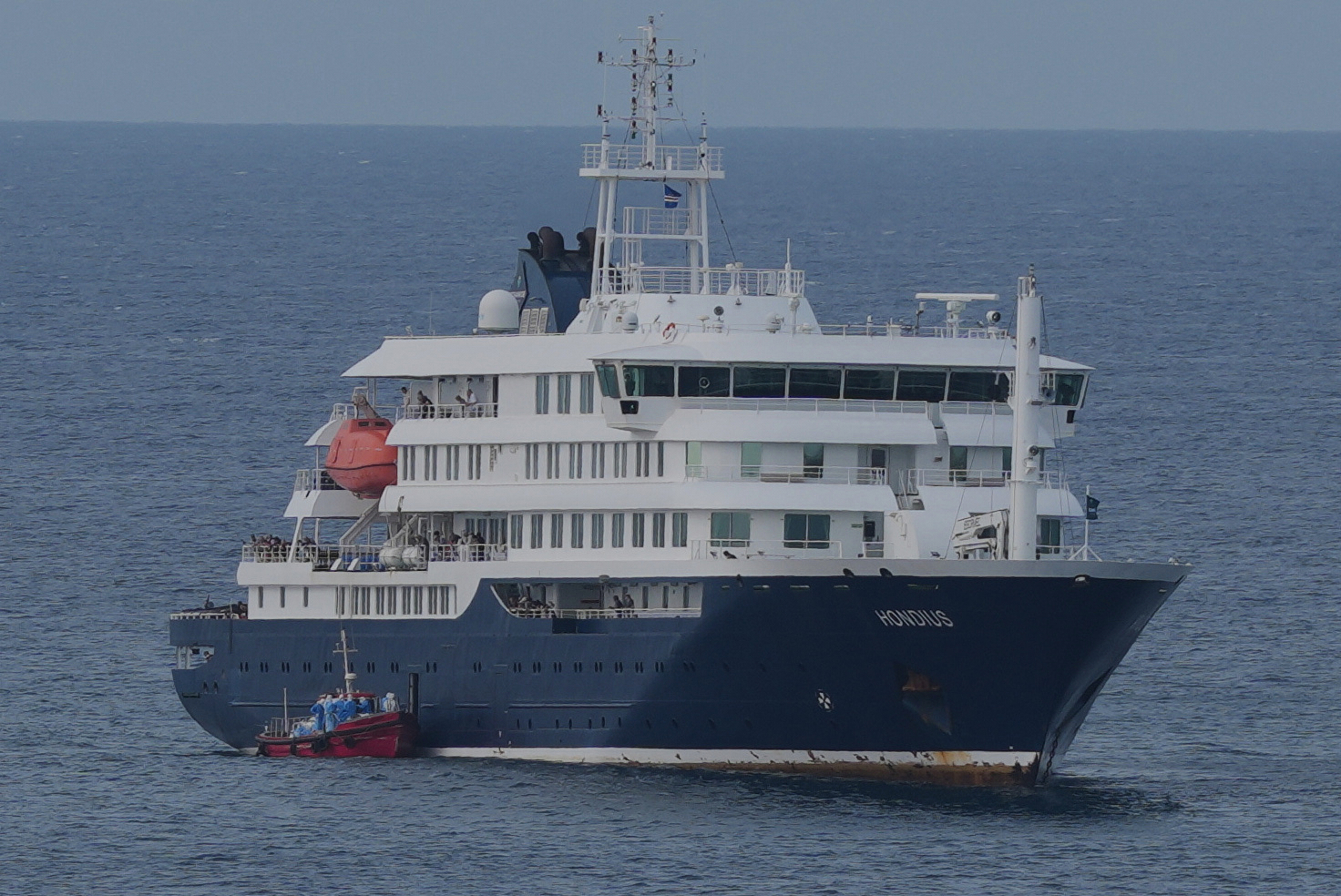
The steel hull of a cruise ship is a world of curated perfection. Every surface is buffed to a mirror shine, every buffet line is a monument to abundance, and the air is chilled to a crisp, artificial cool that makes you forget the sweltering humidity of the Mexican coast outside. For the Californians who boarded the ship last month, the dream was simple: salt air, deep sleep, and the total suspension of reality.
They didn't know they were sharing their sanctuary with a ghost.
News broke quietly at first, the way terrifying things often do. Reports surfaced of a respiratory illness circulating among the crew and passengers. But this wasn't the common flu, nor was it the now-familiar shadow of COVID-19. This was Hantavirus. To most, the name sounds like something out of a Cold War thriller or a dusty medical textbook. In reality, it is a ruthless, lung-choking pathogen that usually lives in the quiet corners of rural barns and abandoned sheds—not on a multi-million dollar vessel slicing through the Pacific.
Consider the passenger we’ll call Elena. She is a grandmother from Sacramento, retired and finally spending the "fun money" she saved for three decades. She spent her days on the Lido deck, reading paperbacks and feeling the vibration of the engines beneath her feet. She felt safe. The ship was a fortress. Yet, while she sipped her morning coffee, health officials were already tracing the invisible threads of an outbreak that started far from the ocean.
The Mechanics of a Shadow
Hantavirus is not like the viruses we have grown accustomed to fearing. It doesn't typically hang in the air of a crowded elevator, waiting for someone to sneeze. It is a zoonotic disease, a spillover from the wild. Usually, it begins with the Deer Mouse. These tiny, large-eyed creatures carry the virus in their waste. When that waste dries and is disturbed—perhaps by a broom in a cabin or a breeze through a ventilation duct—the virus becomes aerosolized.
You breathe it in. You don't even cough.
The biology of the infection is a slow-motion car crash. There is an incubation period that can last up to several weeks, a cruel window of time where you feel perfectly fine while the virus quietly replicates. Then, the fever hits. Your muscles ache with a deep, bone-weary throb. You might think you just spent too much time in the sun. But then comes the hallmark of Hantavirus Pulmonary Syndrome (HPS): your lungs begin to fill with fluid.
It is, quite literally, drowning on dry land.
The fear among the public, specifically those back home in California watching the ship dock, is palpable. Is the person standing next to you at the grocery store a walking biohazard? Here is the clinical truth that the headlines often bury to keep the clicks coming: Hantavirus is almost never transmitted from human to human. You cannot catch it from a handshake, a kiss, or a shared elevator ride with a returning traveler.
The risk to the general public is effectively zero.
But for the people on that ship, the "zero" felt like a lie. They were trapped in a floating laboratory of anxiety. When the news reached the cabins, the atmosphere shifted. The gleaming chrome started to look clinical. The staff, usually invisible in their efficiency, suddenly became subjects of scrutiny. Every cough in the dining room felt like a gunshot.
The Source in the Machine
How does a "wilderness" virus end up on a luxury cruise? This is where the mystery deepens and the human element turns toward the laborers who keep the world turning. Ships are not just hotels; they are massive, complex machines with deep holds, storage areas, and ports of call in regions where the local fauna doesn't care about a five-star rating.
Imagine a supply crate sitting in a warehouse near a rural port. It sits for three days, untouched. A single mouse finds its way inside, seeking a snack or a nest. The crate is sealed, loaded onto the ship, and moved into the bowels of the vessel. When a crew member opens that crate in a cramped, poorly ventilated storage room, the trap is set.
The crew are the front lines. They are the ones who breathe the dust first. While the passengers are concerned with the "risk to the public," the real story is the risk to the invisible workforce. These are often men and women from developing nations, working long hours to send money home, living in quarters that are far less airy than the suites on the upper decks. When one of them falls ill, the system is tested.
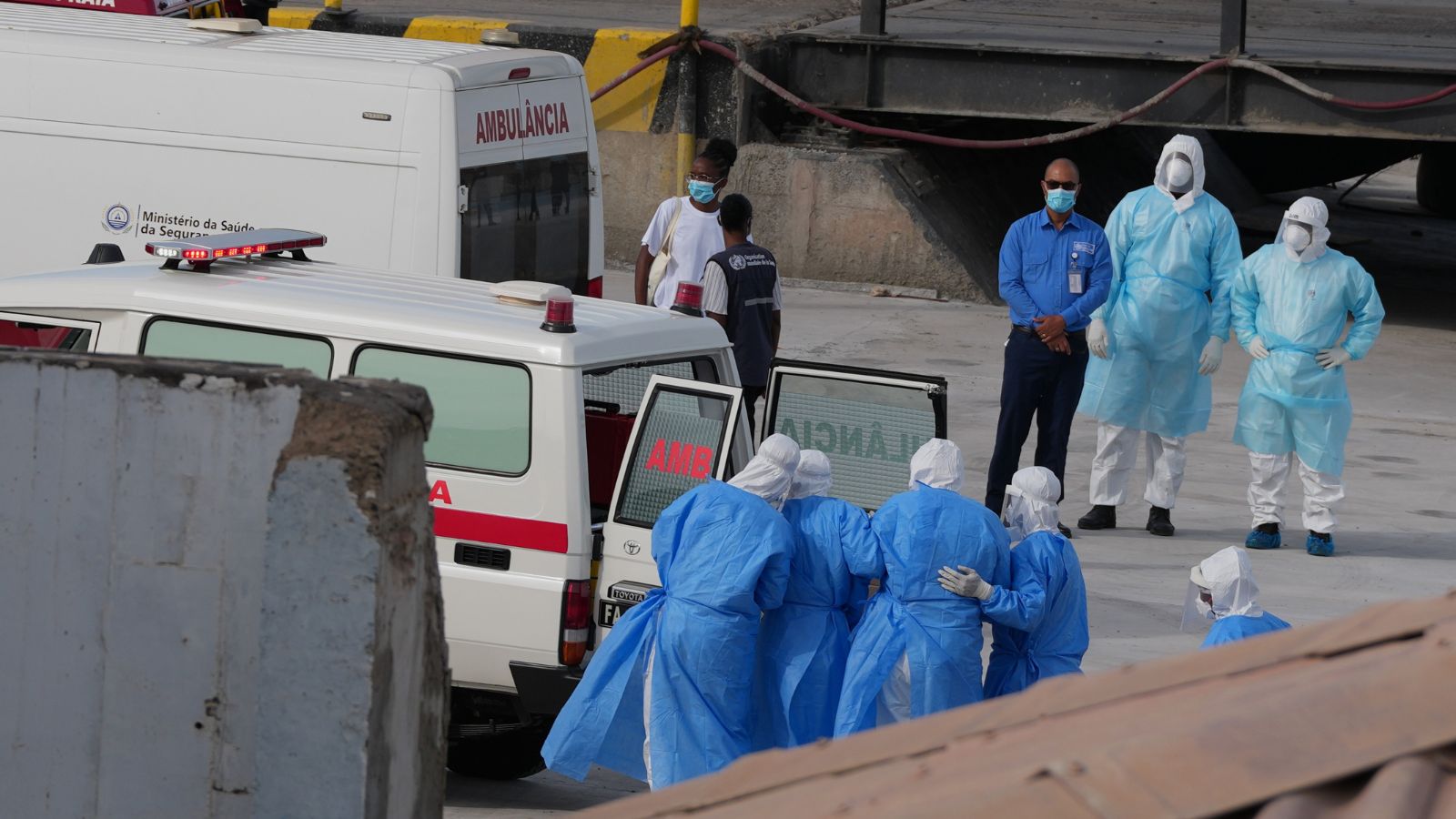
The California Department of Public Health had to move fast. They weren't just looking for sick people; they were looking for a timeline. They had to reconstruct the movements of every person who showed symptoms, mapping out which hallways they walked and which storage lockers had been opened.
The Weight of the Wait
For those who were on the ship, the return to California wasn't a relief. It was the beginning of the "worry window."
If you were on that ship, every tickle in your throat became an omen. Every morning you woke up and took your temperature, staring at the digital display, praying for $98.6$. If it climbed to $101$, what then? You go to the ER. You tell them you were on the ship. You see the nurses' eyes widen behind their masks.
This is the psychological toll of modern travel. We have built a world where we can be in a different climate in six hours, but our biology is still tethered to the ancient rhythms of disease. We are never as isolated as we think we are. The "public" isn't a separate entity; it’s a web of connections, and sometimes those connections include a mouse in a warehouse three thousand miles away.
The medical reality is sobering. HPS has a mortality rate of around $38%$. It is not a "wait and see" illness. It requires intensive care, often mechanical ventilation. Yet, because it is so rare, many doctors have never seen a case in person. They might mistake it for pneumonia or a bad case of the flu until the patient’s oxygen levels begin to crater.
The irony is that the very thing we seek in a vacation—an escape from the "real world"—is what makes us vulnerable. We let our guard down. we assume the environments we pay for are sterile, managed, and curated. We forget that the world is porous.
The Ghost Disperses
As the passengers disembarked and faded back into the sprawl of Los Angeles, San Francisco, and San Diego, the ship stayed behind to be scrubbed. Not just the usual cleaning, but a deep, industrial decontamination. The "stowaway" had to be evicted.
The headlines will eventually move on. The "Hantavirus ship" will become a trivia answer or a forgotten footnote in a travel blog. But for the people who were there, the sea will always feel a little less certain. They will remember the way the air felt when they heard the announcement, the way they suddenly became aware of their own breathing, and the realization that the most dangerous things in life are often the ones you can’t see coming.
The real risk wasn't to the public in the streets. It was to our sense of invulnerability. We walk through the world assuming the barriers we’ve built—the steel hulls, the HEPA filters, the sanitizing wipes—are absolute.
They are not.
We are still part of the dirt and the dust, linked to the smallest creatures in the darkest corners, whether we are standing in a forest or sailing across the deep, blue silence of the ocean. The breath you just took is a gift, and it is never as guaranteed as the brochure promised.