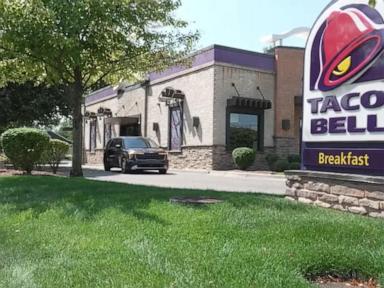
The drive-thru at six o’clock on a warm Tuesday evening is a place of comfort and routine. You roll down the window, breathe in the familiar scent of seasoned beef and warm tortillas, and place your order. It is cheap, fast, and entirely predictable.
But for thousands of people across the Midwest and beyond, that comforting routine has dissolved into a quiet, isolating medical nightmare.
We rarely think about the complex web of hands, trucks, and soil that brings fresh produce to our plates. We trust that the lettuce is clean, the cilantro is washed, and the onions are safe. We eat without thinking. Until, suddenly, we can think of nothing else.
At the center of a massive, multi-state health investigation is Cyclospora cayetanensis, a microscopic parasite that has turned ordinary dinners into weeks of debilitating illness. More than 4,000 people—mostly in Michigan, Ohio, West Virginia, and Kentucky—have fallen victim to an outbreak of cyclosporiasis. As federal and state investigators trace the paths of this invisible invader, their searchlights have landed on one of America’s most recognizable fast-food giants: Taco Bell.
The Ghost in the Gut
To understand the panic, you have to understand the parasite.
Consider a hypothetical diner—let’s call him Marcus. Marcus is a father of two living in the suburbs of Detroit. He grabs a couple of tacos on his way home from work. They taste exactly as they always do: crisp, cool, and satisfying.
For a week, nothing happens. Marcus goes to work, plays with his kids, and forgets all about the quick meal.
That delay is the parasite's greatest weapon. Unlike typical bacterial food poisoning from E. coli or Salmonella, which strikes violently within hours, Cyclospora is a slow burn. It takes about seven days to mature inside the body. By the time Marcus begins to feel the first dull ache in his abdomen, the taco he ate is a distant memory.
Then, the symptoms arrive with a sudden, devastating weight.
It starts with profound fatigue, a deep-seated exhaustion that makes lifting an arm feel like moving mountains. Then comes the nausea, followed by the hallmark of the infection: relentless, watery, and explosive diarrhea that can persist for weeks if left untreated. It robs the body of fluids, strength, and dignity.
Because Cyclospora is relatively rare, standard hospital stool tests do not look for it. Doctors routinely test for common bacteria, find nothing, and send patients home with advice to drink fluids. Days turn into weeks. Patients lose weight, grow dangerously dehydrated, and suffer in silence, wondering what mysterious disease has hijacked their bodies.
A Chain Under Scrutiny
For the investigators at the Centers for Disease Control and Prevention (CDC) and the Food and Drug Administration (FDA), the outbreak is a monstrous puzzle.
They are dealing with a cold trail. Asking a sick, exhausted patient to remember every single leaf of lettuce, garnish of cilantro, or spoonful of guacamole they ate ten days ago is an exercise in futility.
Yet, a pattern began to emerge. A significant number of the sickened individuals in Michigan and Texas mentioned eating at Taco Bell before their symptoms began.
In response, a quiet panic rippled through select franchises. Tape and hand-written signs began appearing over drive-thru menus in Detroit and parts of Texas.
"We are currently unable to sell Lettuce, Cilantro Onion, Pico de Gallo, and Guacamole due to a nationwide recall."
For customers, it was a confusing inconvenience. For the brand's parent company, Yum Brands, it was a financial hit, causing shares to slide as much as 4.5% in a single day. Taco Bell accounts for nearly 40% of the parent company's operating profit. A hit to Taco Bell's reputation is a hit to the entire corporate ecosystem.
But the real problem lies elsewhere. Despite the signs mentioning a "nationwide recall," neither the FDA nor the USDA has officially declared one.
Taco Bell stepped forward with a careful, defensive posture. They emphasized that public health officials have not confirmed any definitive link to their restaurants, their suppliers, or any specific ingredient. The removal of the ingredients was entirely voluntary—a self-imposed quarantine of fresh produce to protect their customers and their brand while the storm raged.
The Nightmare of Traceability
If Taco Bell isn't the confirmed source, why are they pulling lettuce and cilantro?
The answer lies in the maddening science of food tracking. Unlike bacteria, which can be rapidly mapped using advanced DNA fingerprinting, Cyclospora is incredibly difficult to genetically sequence. Investigators lack the high-speed technology to instantly match the parasite found in a patient in Ohio to a specific farm in California or Mexico.
Instead, they must rely on old-school detective work. They look at shipping manifests, trace distribution routes, and search for the common denominator.
Consider what happens next: investigators find that some people who got sick did not eat at Taco Bell. This crucial detail suggests the chain is not the origin, but rather a victim of a wider systemic failure. The contaminated produce—likely leafy lettuce or salad greens—was harvested, packed, and distributed to multiple entities. Taco Bell simply happened to buy from the same contaminated batch as other local grocery stores or restaurants.
The parasite itself is an environmental survivor. It is shed in human feces, finding its way into agricultural water systems in warm climates. When crops are sprayed or washed with contaminated water, the microscopic "oocysts" cling tightly to the rough, textured surfaces of cilantro, basil, and lettuce.
No amount of cold water rinsing in a restaurant kitchen can reliably dislodge them. Once they are on the leaf, they are on their way to the consumer.
The Human Cost of Convenience
It is easy to look at this crisis through the lens of corporate public relations and stock market fluctuations. We watch Yum Brands stock tick downward, read dry corporate statements about "precautionary measures," and scroll past the CDC health alerts.
But the true cost of this outbreak is measured in the quiet, drafty rooms of suburban hospitals and the households of thousands of sick Americans who are too weak to stand.
It is measured in the anxiety of a mother watching her teenager suffer from unexplained, agonizing cramps, praying it isn’t something worse. It is the frustration of local physicians who are only now receiving the national health alerts advising them to specifically request the specialized tests needed to identify this particular parasite.
We live in a world where we expect fresh summer produce to be available at our fingertips, twenty-four hours a day, for the price of a loose dollar bill. We want our shredded lettuce crisp, our guacamole green, and our pico de gallo sharp.
We rarely contemplate the invisible hand of global agriculture that fulfills these desires. We do not think about the water, the soil, or the sheer scale of the supply chains required to keep thousands of fast-food locations stocked with fresh, raw vegetables every single morning.
The current investigation is a stark reminder of how fragile that illusion of safety really is. A single contaminated water source, miles away across a border or a state line, can silently disrupt the lives of thousands of families and shake the foundations of a multi-billion-dollar food empire.
For now, the drive-thru lanes remain open. The chalupas and quesadillas are still sliding through the windows. But the cardboard boxes are missing their green garnishes, and the menus look empty.
We wait for the lab results, for the tracebacks, and for the definitive answers that science is struggling to provide. Until then, we are left to look at the simple, everyday items on our plates with a newfound, uneasy vigilance—realizing that the smallest, most innocent leaf of green can carry a weight we never anticipated.