The roar of eighty thousand people is a physical force. It vibrates in your chest, rattles the concrete beneath your boots, and drowns out your own voice. When a goal is scored in a World Cup stadium, the collective eruption is magnificent. It is the sound of pure, unadulterated human joy.
But if you are standing on the perimeter of that stadium, wearing a security headset, your ears are tuning out the crowd. You are listening for something else. A faint, high-pitched buzz. The sound of a swarm of angry bees.
To the untrained ear, it is easily missed. To a stadium security team, that sound makes the blood run cold.
We live in an era where the greatest threats to our most celebrated public spectacles no longer just walk through the front gates. They drift down from the clouds. Consumer drones, weighing less than a bag of sugar and bought online for a few hundred dollars, have transformed from harmless hobbyist toys into one of the most complex security nightmares of the modern age.
Because of this, global sports authorities are drawing a hard, invisible line in the sky. At the World Cup, the policy is absolute. Zero tolerance. No warnings. No second chances. If an unauthorized drone enters the airspace, it is brought down.
To understand why the stakes are so incredibly high, you have to look past the flashing stadium lights and look at the sky through the eyes of the people tasked with keeping those eighty thousand souls safe.
The Toy That Became a Weapon
Imagine a young fan named Lucas. He traveled across the ocean to see his country play. He brought his jersey, his face paint, and a sleek, compact drone he received for his birthday. He envisions the perfect video. He wants to fly his camera up over the stadium roof, capturing the sea of flags and the glowing pitch, a breathtaking clip that will go viral on his social media feed. Lucas means no harm. He is just a kid caught up in the magic of the tournament.
But security teams cannot afford to guess Lucas’s intentions.
From two miles away, a drone carrying a high-definition camera looks identical on radar to a drone carrying a payload of plastic explosives. It looks identical to a drone rigged with biological agents, or one designed to drop propaganda leaflets that could trigger a deadly, panicked stampede in the tightly packed stands below.
The reality of modern security is a grim numbers game. A single stadium entrance requires concrete bollards to stop vehicles, metal detectors to screen bags, and hundreds of trained personnel to check tickets. Millions of dollars are spent securing the ground. Yet, a drone bypasses every single one of these checkpoints in a matter of seconds. It flies over the walls, over the gates, and hovers directly above the heads of players and prime ministers alike.
The threat is not theoretical. We have already seen the previews. In 2014, a Euro championship qualifying match between Albania and Serbia dissolved into chaos when a political banner, flown into the stadium by a remote-controlled drone, sparked a massive brawl on the pitch. In 2018, an assassination attempt using explosive-laden drones was made against the Venezuelan president during a military parade.
The technology has outpaced our collective awareness. What used to require a military budget can now be orchestrated by a teenager in a parking lot.
The Chemistry of a Stampede
But let us put aside the worst-case scenarios of terrorism for a moment. Let us look at the simpler, more likely disasters that keep safety directors awake at night.
Mechanical failure.
A high-end consumer drone relies on lithium-polymer batteries, complex software, and plastic rotors spinning at thousands of revolutions per minute. Systems fail. Batteries overheat. Signals get jammed by the massive web of cellular data inside a stadium.
Consider what happens next. A three-pound piece of plastic and metal, equipped with spinning, razor-sharp blades, loses power at an altitude of three hundred feet. It plummets into a densely packed section of fans. It strikes a child, or a row of spectators, causing severe lacerations.
The immediate injury is terrible enough. But the real problem lies elsewhere. It is the psychological domino effect.
Human beings in large crowds behave like liquids under pressure. If a sudden explosion of movement occurs in Section 112 because a drone just crashed into someone’s face, the surrounding crowd does not stop to analyze what happened. They hear screams. They see blood. They run.
A localized panic can turn into a human crush within ninety seconds. In the history of sports stadium disasters, from Hillsborough to Kanjuruhan, the vast majority of fatalities were not caused by the initial incident, but by the frantic, terrifying crush of people trying to escape an unseen danger. A toy drone flown by an innocent hobbyist can trigger the exact same catastrophic instinct.
This is why the response from law enforcement must be unyielding. There is no time to locate the operator. There is no time to ask questions. The machine must be neutralized instantly.
The Invisible Shield
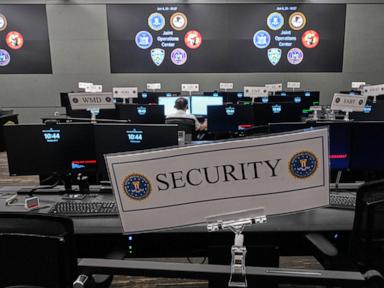
Securing the airspace above a World Cup stadium is a quiet, high-tech war of attrition. It involves layers of technology that the average fan buying a hot dog will never see.
First comes detection. Specialized radar systems scan the sky, calibrated to ignore birds but flag the distinct flight signatures of quadcopters. Radio-frequency sensors listen to the airwaves, intercepting the signals bouncing between drones and their controllers. Acoustic arrays listen for that telltale buzzing sound.
Once a drone is spotted, the counter-measures begin.
Security teams do not use shotguns or missiles. Firing projectiles into the air above a crowded city is a recipe for collateral damage. Instead, the weapons of choice are silent and invisible. Electronic jamming guns, looking like futuristic rifles, emit powerful beams of electromagnetic energy. These beams cut the connection between the drone and its pilot.
When a drone loses its signal, it is programmed to do one of two things: hover in place until the battery dies, or automatically return to its launch point. Sophisticated counter-drone systems can even hijack the drone's GPS coordinates, forcing it to land safely in a designated, empty containment zone.
For the operators who violate these airspaces, the consequences are no longer a slap on the wrist. Governments around the world have upgraded stadium airspaces to restricted zones, identical to the skies above airports or military bases. Flying a drone near a World Cup match can result in massive fines, the confiscation of equipment, and years in a federal prison.
The message is clear. The sky above the game belongs exclusively to the game.
The Cost of Peace
It is easy to feel a sense of melancholy about this. There was a time when the sky felt open and free, an empty canvas above our sporting rituals. We used to look up and see nothing but the afternoon sun or the stadium floodlights cutting through the evening mist. Now, we must look up with suspicion.
This is the tax we pay for living in an interconnected, technologically accelerated world. Every leap forward in human ingenuity brings with it a shadow, a new vulnerability that must be managed, policed, and locked down.
On game day, as the national anthems play and the players take their positions, a technician sits in a dark room beneath the grandstands. His eyes track across a glowing monitor, watching a digital map of the empty sky above the arena. He is tired. His coffee is cold. He will not see a single goal scored today.
Outside, a father sits with his daughter in the upper deck, sharing a box of popcorn, completely unaware of the electronic net spread out over their heads. They are looking down at the grass, waiting for the whistle, entirely safe, entirely blind to the invisible battle being fought to keep them that way.