Money used to smell like ink, cotton, and damp vaults. You could trace its journey by the greasy thumbprints left behind on ledger paper or the heavy clink of a canvas sack dropped onto a teller’s wooden desk. Today, money has no weight. It is a ghost, an electric impulse that circles the globe seven times before you finish your morning coffee.
And because money is weightless, it steals just as easily as it moves. You might also find this related story insightful: Structural Mechanics of Cross Border Digital Yuan Settlement.
Picture a compliance officer in a glass-walled office overlooking Manhattan. It is 3:00 AM. Outside, the rain streaks neon lights into long, blurry ribbons. Inside, the silence is heavy enough to hear the hum of cooling fans in server racks. This officer—let us call him Marcus—does not look like a detective. He wears a rumpled shirt with the sleeves rolled up, cold coffee beside him, eyes burning from staring at a screen for ten straight hours.
Marcus is not hunting hackers in hoodies with green code reflected in their corneas. He is hunting ghosts. As extensively documented in recent coverage by The Economist, the results are widespread.
A shell company in the Cayman Islands just transferred three million dollars through a subsidiary in Cyprus, ultimately landing in an account registered to a sleepy import-export firm in Delaware. To an ordinary computer program, it looks like dry corporate housekeeping. To Marcus, or rather, to the massive analytical engine humming beneath his feet, it triggers a microscopic red flag. A heartbeat skipped in the vast, roaring machinery of global finance.
This is the hidden theater where the quiet wars of the twenty-first century are fought. It is a war waged not with trenches and artillery, but with algorithms, pattern recognition, and billions of dollars changing hands behind closed doors.
The Anatomy of a Phantom
We rarely pause to consider the sheer vulnerability of the pipes carrying the world’s wealth. When trillions slosh across international borders every single day, the temptation for bad actors scales right alongside the volume. Financial crime has evolved from a lone accountant cooking books in a dusty back room into an industrialized, multinational enterprise powered by AI, synthetic identities, and lightning-fast offshore laundering rings.
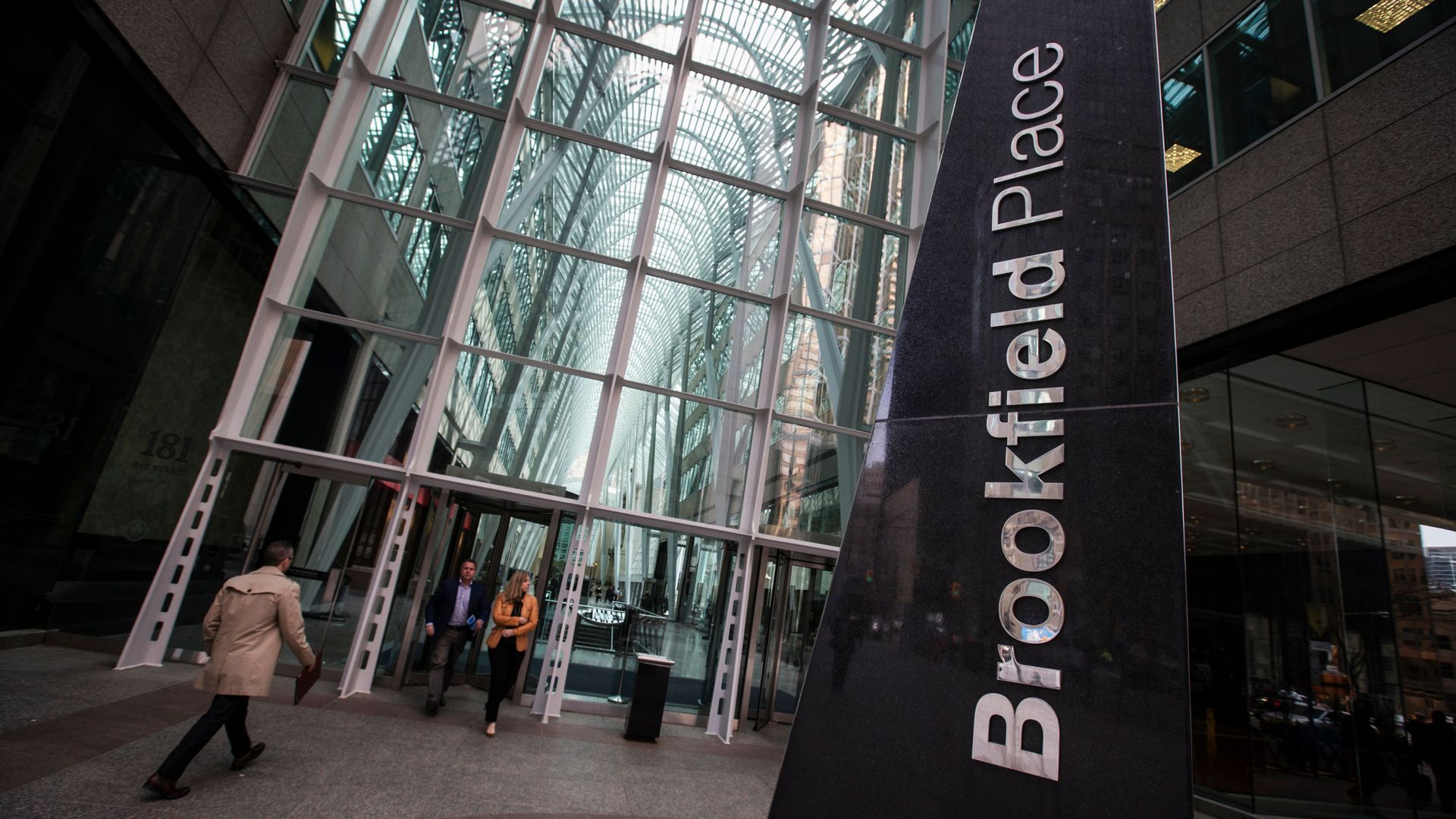
This brings us to a quiet pivot point in the machinery of capitalism. Brookfield, a titan of global asset management known for buying up skyscrapers, renewable energy grids, and sprawling infrastructure, recently set its sights on something entirely intangible. They began talks to acquire Actimize—a financial crime specialist—for a staggering two billion dollars.
Think about that for a moment. A firm built on concrete, steel, and physical land is dropping two billion dollars on code. On threat matrices. On the digitalantibodies designed to keep the world's banking system from bleeding out.
Why? Because physical assets are useless if the currency used to buy them is poisoned by illicit cash.
To understand why a company like Brookfield values a financial crime specialist so dearly, you have to look at how dirty money actually moves. It does not arrive in duffel bags. It flows like water through a sponge. A drug cartel, a corrupt politician, or a sanctioned state actor does not simply wire money with a memo reading for illegal activities. They fragment the money. They break a single illegal million dollars into ten thousand transactions of ninety-nine dollars each, routed through peer-to-peer apps, cryptocurrency tumblers, shell corporations, and legitimate small businesses.
It is the financial equivalent of hiding a single grain of sand on a sprawling beach.
The Burden of Seeing Everything
Back in his Manhattan office, Marcus clicks on the suspicious transaction he flagged. The system, powered by advanced behavioural analytics, has already drawn a luminous red line connecting the Delaware shell company to a known node in a money-laundering network.
Before tools like Actimize became the invisible guardrails of the global economy, human investigators caught perhaps one percent of these schemes. They were drowning in a sea of false positives, chasing ghosts while sophisticated syndicates looted the vault through the backdoor. The human brain cannot cross-reference billions of global data points in real time. It gets tired. It misses the subtle stutter in a transaction pattern.
So we built digital sentinels.
These platforms watch everything. Every swipe of a card in Tokyo, every wire transfer from Zurich, every anomalous spike in trading volume right before an earnings announcement. They do not sleep, they do not take coffee breaks, and they do not accept bribes.
Yet, installing a sentinel introduces its own quiet friction. When security tightens, legitimate customers get caught in the dragnet. Have you ever had your credit card frozen because you bought groceries three states away while on vacation? That sudden, infuriating text message asking if you authorized a purchase is the direct downstream effect of these anti-fraud engines doing their job.
It is a delicate, agonizing balance. Banks and financial institutions walk a razor-thin tightrope between security and usability. Make the nets too tight, and honest customers flee to smoother, friction-free competitors. Make the nets too loose, and international cartels bleed the institution dry through thousands of invisible paper cuts.
The Price of Trust
Two billion dollars is a massive valuation for a software company. But what is the alternative?
When a major bank fails to catch massive money laundering, the penalties are not merely financial. Regulatory fines can run into the billions, wiping out quarters of profit in a single stroke. More importantly, the reputational damage is fatal. Trust is the only currency that truly matters in banking. Once a institution is branded as the laundering partner of choice for criminal enterprises, its institutional life expectancy plummets.
This is why traditional infrastructure giants are moving into the cybersecurity and financial defense space. Brookfield realizes that managing real estate, toll roads, and power plants is inextricably linked to the integrity of the financial system funding them. If the underlying plumbing of global finance is compromised by dark money, the entire physical empire rests on quicksand.
Consider the ripple effects. When illicit funds flood into real estate markets, housing prices detach entirely from economic reality, pricing local families out of their own neighborhoods. When shell companies hide the proceeds of corruption, public hospitals go unbuilt, schools lose funding, and public trust in institutions evaporates. Financial crime is often viewed as a victimless crime—a transaction between screens. It is anything but. The casualties are measured in delayed infrastructure, corrupted governments, and a widening chasm of inequality.
The Quiet Watch
Back in the office, the clock ticks past 4:00 AM. The rain has stopped, leaving the asphalt slick and reflective under the gray dawn light.
Marcus clears the alert. The transaction was legitimate after all—a massive, legitimate corporate merger executed by a newly formed subsidiary that simply forgot to notify its primary banking partners of its new corporate structure. False alarm. A ghost turned out to be a draft from an open window.
He closes his laptop, rubs his eyes, and leans back in his chair. Tomorrow, a hundred thousand new alerts will flood the queue. Somewhere in a server farm across the ocean, the algorithms will keep humming, sorting through the digital noise of human ambition, greed, and survival.
The transactions will keep flowing. The invisible walls will hold. And the global economy will wake up for another day, completely unaware of the battles fought in the dark to keep it whole.

