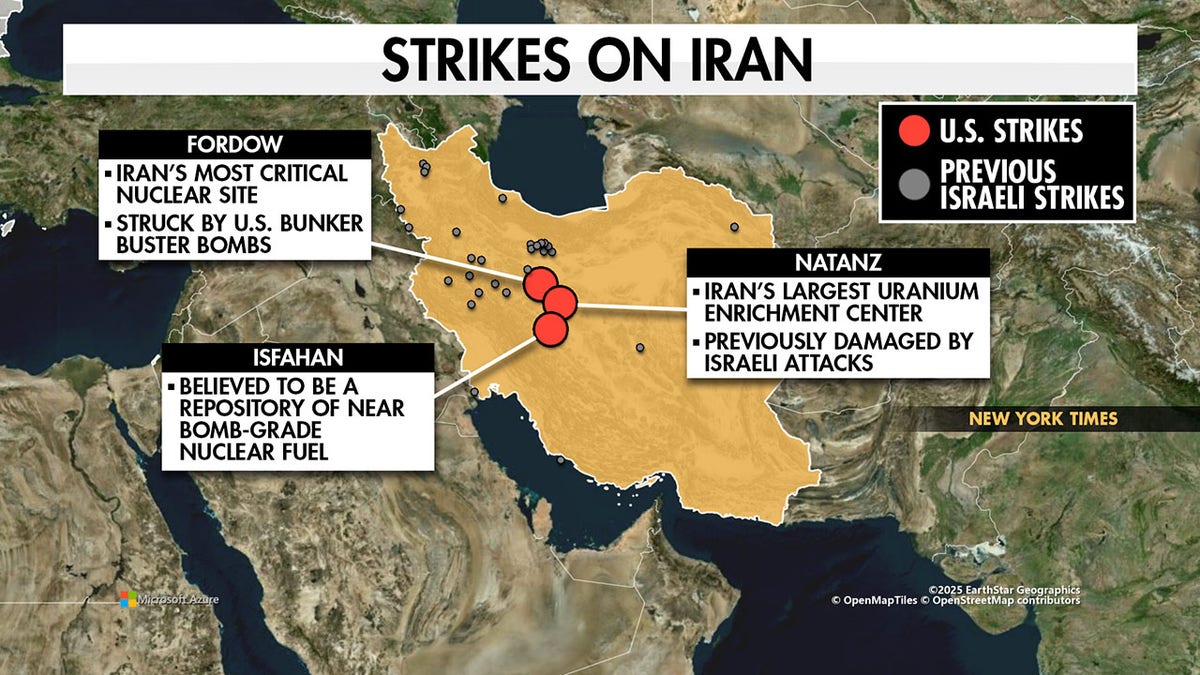
The fear that a hot war with Iran will send the world back to the 1970s is everywhere. You’ve seen the headlines. They predict $200 oil, a shuttered Strait of Hormuz, and a global economy in a tailspin. It sounds terrifying. But it’s mostly wrong. The global energy order isn't as fragile as the doomsday pundits suggest. While a conflict would certainly cause a massive price spike in the short term, the structural foundations of how the world gets its power have changed too much for Iran to hold the planet hostage for long.
We aren't in 1973 anymore. The math has shifted.
The Myth of the Hormuz Chokehold
Everyone points to the Strait of Hormuz. It’s the world’s most important oil artery. About 20% of the world’s liquid petroleum flows through that narrow strip of water. If Iran sinks a few tankers or litters the channel with mines, the logic goes, the world goes dark.
It’s a nightmare scenario, but it lacks staying power. First, the U.S. Fifth Fleet doesn't just sit in Bahrain to enjoy the weather. Clearing the Strait would be a violent, high-priority military operation that would likely take weeks, not months. More importantly, the world has built workarounds. Saudi Arabia and the UAE have invested billions in pipelines that bypass the Strait entirely. The East-West Pipeline in Saudi Arabia can move five million barrels a day to the Red Sea. The Abu Dhabi Crude Oil Pipeline can shunt 1.5 million barrels to the Gulf of Oman.
These aren't just backups. They’re insurance policies against Iranian leverage. If Tehran shuts the door, the room doesn't run out of air; it just breathes through a different straw.
America is the New Swing Producer
The biggest reason Iran can't reshape the energy order is because the U.S. stopped being a customer and became the manager. Thanks to the shale revolution, the United States is now the largest producer of crude oil in the world. It’s outstripping Saudi Arabia and Russia.
In the old days, a Middle East supply shock was a death sentence for the American economy. Now? It’s a balance sheet adjustment. When prices rise, shale drillers in the Permian Basin don't panic. They turn the taps on. U.S. production is incredibly elastic. Within months of a sustained price hike, American rigs can flood the market with enough supply to take the sting out of Iranian losses.
I’ve watched this play out in smaller cycles. Every time there’s a flicker of tension in the Gulf, the "fear premium" adds $10 to a barrel. Then, American production numbers come out, and the price retreats. Iran’s ability to dictate terms is being drowned in a sea of Texas crude.
China is the Real Wildcard
If you want to know who actually loses in an Iran war, look at Beijing. China is the largest buyer of Iranian oil, much of it purchased through "dark fleets" and "teapot" refineries to skirt sanctions. If that supply vanishes, China has to compete with Europe and Japan for barrels from the Atlantic basin.
This doesn't break the energy order; it accelerates the shift toward renewables and nuclear. China is already leading the world in EV adoption and solar installation. They aren't doing it just to be "green." They're doing it because they hate being dependent on a volatile Middle East. A war with Iran would likely force China to double down on domestic energy production and non-fossil alternatives. Ironically, an Iranian conflict might actually speed up the end of the oil era rather than prolonging Iran’s relevance within it.
The Death of the Petrodollar Panic
There’s a lot of talk about Iran and Russia teaming up to destroy the petrodollar. The idea is that a war would force oil trade into Yuan or Rubles. It’s a great story for YouTube thumbnails. It’s a bad story for actual bankers.
The global financial system relies on the liquidity and transparency of the U.S. dollar. Even if Iran tries to sell oil in other currencies, their partners—mostly China—still need a stable medium for the rest of their global trade. You can't run a global energy market on a currency that isn't freely convertible or transparent. A war might create a small, fractured "shadow market," but it won't topple the dollar's role as the primary unit of energy account. It’s too baked into the infrastructure of global finance.
Fragility in the Gas Markets
While oil is more resilient than people think, natural gas is the real point of pain. Iran sits on some of the world's largest gas reserves. More importantly, Qatar shares the massive North Dome/South Pars field with Iran.
If a war damages the infrastructure in the Persian Gulf, the global Liquefied Natural Gas (LNG) market would feel it instantly. Europe, which is still reeling from the loss of Russian piped gas, depends heavily on Qatari LNG. Unlike oil, which can be trucked or moved in various tankers, LNG requires hyper-specialized terminals and ships. You can't just "find" another LNG supplier overnight. This is where Iran actually has some teeth. They don't have to win a war; they just have to break a few loading docks in Qatar to cause a global heating crisis.
Why Price Spikes Don't Equal a New Order
We have to distinguish between a "shock" and a "reshaping." A war will cause a shock. You will pay more at the pump. Your heating bill will go up. But a reshaping implies a permanent change in who holds the power.
The reality? Power is moving away from the Middle East. It’s moving toward technology, battery minerals, and North American production. Iran is fighting for relevance in a world that is slowly learning to live without them. Their only move is to break things. But as we’ve seen with the Russian invasion of Ukraine, the global energy market is surprisingly good at healing itself. Within a year of the Nord Stream pipelines blowing up, Europe had reconfigured its entire energy grid. It was expensive, it was painful, but the "order" didn't collapse. It just evolved.
If you’re waiting for a war in Iran to flip the world upside down, you’re looking at the wrong map. The transition is already happening, and it’s being driven by Silicon Valley and Beijing, not the IRGC.
Don't panic about $200 oil. Focus on the fact that the next time this happens, your car might not even need oil at all. That’s the real reshape.
Check your portfolio for exposure to midstream energy companies with assets outside the Gulf. If you're worried about volatility, look at the Permian producers. They're the ones who win when the Middle East burns. Stop listening to the 1970s nostalgia and start looking at the 2026 data.



