Ali Khamenei is 86. That's the reality hanging over Tehran like a heavy fog. For decades, he’s been the ultimate arbiter of Iranian power, the man who balances the IRGC against the clerics and the street against the state. When he’s gone, the vacuum won’t just be a political shift. It’ll be an earthquake.
People keep asking what happens to the rhetoric of "crushing enemy bases" once the old guard passes. Iran’s President, currently acting within a rigid system, has signaled a fierce continuity. But don't let the loud threats fool you. This isn't just about external enemies. It's a calculated performance for an internal audience. The hardliners need to prove they won't go soft the moment the Supreme Leader’s heart stops beating.
The Myth of a Smooth Succession
Succession in a hyper-centralized autocracy is never clean. We saw this with the transition from Khomeini to Khamenei in 1989. Back then, Khamenei wasn't even a top-tier marja (religious authority). He was elevated because the system needed a survivor, not a scholar. Today, the stakes are higher. The Islamic Revolutionary Guard Corps (IRGC) has spent thirty years embedding itself into every sector of the Iranian economy. They aren't just soldiers anymore; they're CEOs, contractors, and shadow ministers.
The President’s recent vows to "forcefully crush" any threats are a signal to the IRGC. He's effectively saying that the executive branch remains a loyal partner in the military-industrial complex. If you think a new leader means a sudden pivot to Western-style diplomacy, you haven't been paying attention to how deep the roots of the "Resistance Economy" actually go.
Why the Rhetoric is Getting Louder
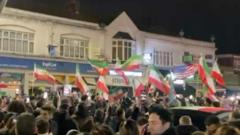
Why talk about crushing bases now? Because the Islamic Republic is facing a legitimacy crisis that no amount of ballistic missiles can fix. Inflation is rampant. The rial is a joke. The "Woman, Life, Freedom" protests proved that a massive chunk of the population has checked out of the revolutionary project.
When a regime feels weak at home, it shouts about its strength abroad. By focusing on "enemies"—usually a shorthand for the US and Israel—the leadership tries to trigger a nationalist rally-around-the-flag effect. It's a classic play. They need to convince the rank-and-file in the Basij militia that the path remains unchanged.
I’ve watched this cycle for years. The more fragile the internal consensus, the more aggressive the external posture. It’s a survival mechanism. If the President sounds like he’s spoiling for a fight, it’s because he can’t afford to look like he’s hesitating while the vultures circle the succession process.
The Assembly of Experts and the Shadow Candidates
The Assembly of Experts is the body officially tasked with picking the next leader. It's mostly a group of elderly clerics, but the real decisions happen in backrooms. For a long time, Ebrahim Raisi was the clear favorite. His sudden death in a helicopter crash threw the entire roadmap into the trash.
Now, the spotlight is on Mojtaba Khamenei, the Supreme Leader’s son. This is a massive gamble. The Islamic Republic was founded on the rejection of hereditary monarchy. Moving from a Shah to a "hereditary Imam" would be a bitter pill for many revolutionaries to swallow. This is why the President’s role is so vital right now. He provides the "republican" veneer to a system that is increasingly looking like a military junta with a religious coat of paint.
The Role of the IRGC in the Post-Khamenei Era
- Economic Control: They manage the ports, the telecommunications, and the construction.
- Internal Security: They are the primary force tasked with suppressing domestic dissent.
- Proxy Management: They handle the "Axis of Resistance" from Lebanon to Yemen.
The IRGC doesn't want a Supreme Leader who will micromanage them. They want a figurehead who provides ideological cover while they run the country. If the President promises to crush enemies, he’s auditioning for the job of "Chief Facilitator" for the Guard’s interests.
What This Means for Regional Security
Don't expect the "crush the bases" talk to result in a full-scale World War III tomorrow. Iran knows its limits. Their strategy is "strategic patience" and "gray zone warfare." They use proxies to bleed their opponents without ever triggering a direct hit on Tehran.
However, the period immediately following Khamenei’s death will be the most dangerous. In a power struggle, different factions might try to "out-revolution" each other. A mid-level commander might take a shot at a US base or an oil tanker just to prove his revolutionary credentials. That’s where the real risk of miscalculation lies. It’s not a grand plan for a global war; it’s a chaotic scramble for status in a new hierarchy.
The Economic Reality Check
You can’t run a "Resistance Economy" forever when your people can't buy eggs. The President’s tough talk ignores the fact that Iran’s infrastructure is crumbling. Their oil fields need billions in investment that isn't coming as long as they are a pariah state.
Eventually, the rhetoric hits a wall. The next leader, whoever they are, will inherit a country that is militarily capable but socially and economically exhausted. The "forceful crushing" of enemies doesn't put bread on the table. At some point, the regime will have to choose between its ideological purity and its basic survival.
They’ve made that "heroic flexibility" jump before, like when they ended the Iran-Iraq war or signed the JCPOA. But those moves were made by leaders with immense personal authority. A new, untested leader might not have the political capital to compromise without looking weak. That makes the transition period a massive wildcard for global oil markets and regional stability.
How to Track the Real Power Shifts
Stop listening to the televised speeches and start looking at the appointments within the IRGC and the bonyads (charitable foundations). If you see a shuffle in the leadership of the Quds Force or the Intelligence Ministry, that’s where the real story is.
Watch the currency markets in Dubai and Istanbul. They usually react to the reality of Iranian politics faster than the state-run news agencies. When the big money starts moving out of the rial at an accelerated rate, you know the insiders are nervous about the transition.
Keep an eye on the official mourning periods and the specific language used by the Assembly of Experts. If they start emphasizing "collective leadership" rather than a single successor, it means they couldn't reach a consensus. A divided leadership is a weak leadership, and a weak leadership in Tehran is often an unpredictable one on the international stage.
The transition is coming. It’s a matter of biology, not politics. The bravado you hear from the current administration is the sound of a system trying to convince itself it’s still in control. The reality is much more fragile.