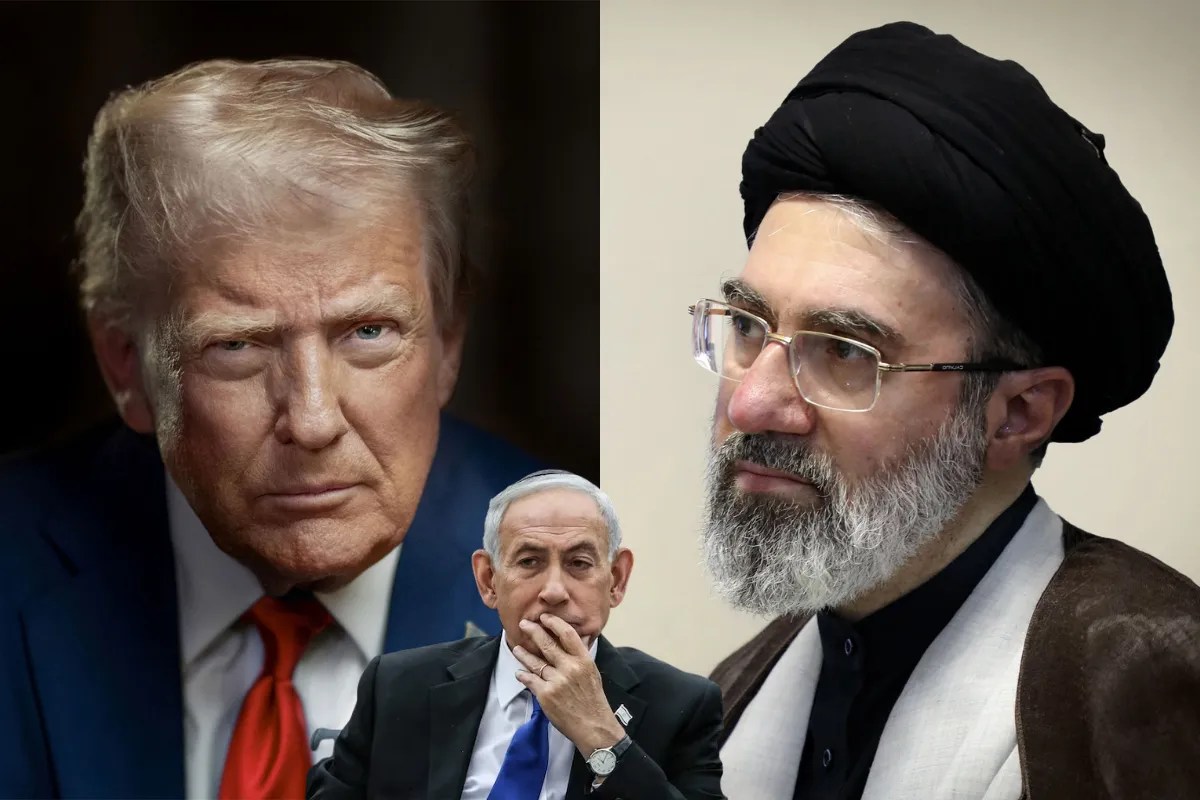
The Posturing of the Paper Tiger
The headlines are screaming with the usual apocalyptic fervor. "Iran Rejects Trump’s Proposals, Declares Readiness for War." Mainstream geopolitical analysts are having a field day, dusting off their old scripts about imminent regional escalation, catastrophic supply chain disruptions, and the inevitability of a kinetic conflict in the Middle East.
It is lazy journalism at best, and a fundamental misunderstanding of modern statecraft at worst.
When the Iranian regime beats its chest and announces to the world that it is "ready for war," they are not preparing to launch missiles at Washington or Tel Aviv. They are playing a high-stakes, highly predictable game of economic leverage. I have watched analysts blow decades of credibility predicting a conventional war between these two nations every time a headline like this drops. It has not happened, and it will not happen.
The mainstream media falls for the same trap every single time: they confuse rhetorical theater with strategic intent.
The Economics of a Controlled Crisis
Let us look at the raw mechanics of Iranian state survival. Iran does not operate on the logic of Western military doctrine, nor does it operate on pure religious fanaticism. It operates on cash flow, black-market logistics, and domestic regime preservation.
When Donald Trump floats potential negotiations or issues fresh warnings, the immediate reaction from Tehran must, by definition, be a public rejection. To agree immediately would be a sign of catastrophic weakness to their internal hardliners and regional proxies.
Consider the actual data of the Iranian economy:
| Economic Metric | Status Under Peak Sanctions | Strategic Function |
|---|---|---|
| Oil Exports | Shifted to shadow fleets, heavily discounted to illicit buyers | Funds the Islamic Revolutionary Guard Corps (IRGC) directly |
| Currency Value | Hyper-inflationary pressure on the Iranian Rial | Keeps the domestic population dependent on government subsidies |
| Proxy Funding | Maintained through asymmetric financial networks | Cheaper than running a conventional military navy or air force |
Iran cannot afford a conventional war. Their air force relies on heavily modified, decades-old American jets from the era of the Shah and a handful of aging Russian fighters. Their navy cannot hold the Persian Gulf against a single US carrier strike group in an open, sustained engagement.
Therefore, shouting "we are ready for war" is the cheapest deterrent money can buy. It spikes global oil anxiety, moves markets, and forces the West to calculate the cost of a theoretical disruption to the Strait of Hormuz. It is a leverage play designed to force a better seat at an eventual negotiating table, not a battle plan.
Dismantling the Premise of "Aggression"
Why Everyone Is Answering the Wrong Question
The public invariably asks: Will Iran attack US assets if sanctions tighten?
This is completely the wrong question to ask. The correct question is: How much economic pain can the Iranian leadership absorb before the risk of domestic collapse outweighs the benefit of defiance?
When people look at Iranian military maneuvers, they see a nation preparing to strike. What I see, having tracked regional resource allocation for years, is a regime terrified of its own population. The 2022 Mahsa Amini protests proved that the true threat to the Islamic Republic is not an American Tomahawk missile; it is the economic desperation of its own youth.
A conventional war with the United States would instantly unify a fractured populace under the banner of nationalism—but only temporarily. The subsequent, inevitable destruction of Iran's remaining industrial infrastructure would permanently end the regime’s grip on power. Tehran knows this. Washington knows this. The belligerent statements you read in the press are aimed entirely at an internal audience to project strength where there is profound structural vulnerability.
The Myth of the Asymmetric "Game-Over"
The conventional wisdom dictates that Iran will simply shut down the Strait of Hormuz, cutting off a massive chunk of the world's petroleum supply and tanking the global economy.
Let us run a thought experiment. Imagine a scenario where Iran actually attempts a hard blockade of the Strait. Within forty-eight hours, they would not just face American retaliation; they would alienate their primary economic lifelines—chief among them being China, which relies heavily on Middle Eastern crude passing through those very waters.
Iran's entire survival strategy depends on keeping its illicit oil flowing to Beijing through the dark fleet. Clogging the pipeline to their own biggest customer is economic suicide. The threat to close the Strait is infinitely more valuable than the actual act of closing it.
The Illusion of a Deadlock
Mainstream commentary insists that we are at a permanent impasse—that Trump's transactional approach to foreign policy and Iran's ideological rigidity cannot coexist.
This is fundamentally wrong. Transactional leaders and desperate regimes are actually perfectly matched for back-channel dealmaking.
Trump’s historical playbook has always been maximum pressure followed by a highly publicized photo-op deal. Tehran's playbook is fierce ideological resistance followed by pragmatic survival concessions when the treasury runs dry (as seen in the 2015 JCPOA negotiations under supreme economic duress).
The current escalation is not the prelude to World War III. It is the opening salvo of a brutal, ugly, highly theatrical negotiation process. The noise you are hearing is just the sound of both sides trying to fix their starting positions.
Stop reading the headlines as military warnings. Start reading them as corporate earnings reports from a highly volatile, heavily armed entity trying to avoid bankruptcy. The bravado is directly proportional to the desperation.