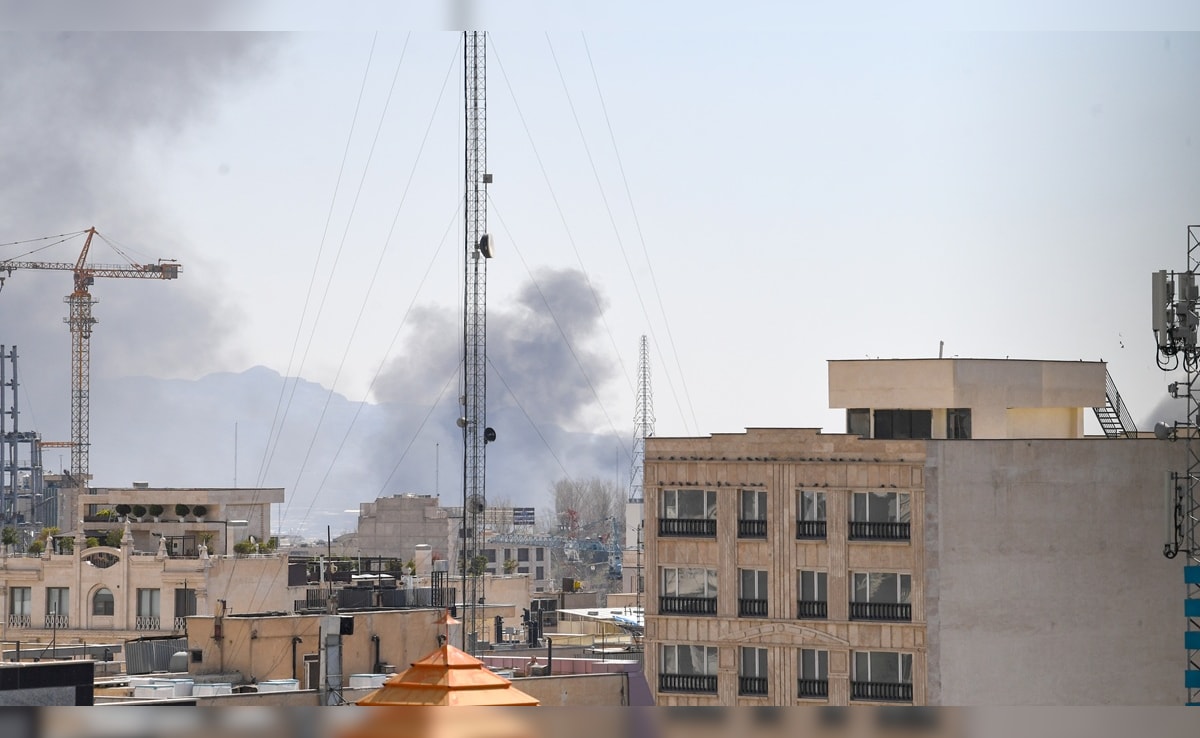
The headlines are carbon copies of the same tired script. Iran loses a high-ranking commander, the IRGC issues a boilerplate statement about "no victory for the enemy," and Western analysts scurry to debate whether this is a "setback" or a "shattering blow." They are all missing the point. When a regional power resorts to claiming that losing its top military architects doesn't matter, it isn't projecting strength. It is admitting that its entire command-and-control philosophy has been reduced to a desperate, decentralized survival crawl.
The "lazy consensus" suggests that Iran’s "Axis of Resistance" is an indestructible hydra—cut off one head, and two more grow. This is a comforting myth for Tehran and a convenient excuse for intelligence failures in the West. In reality, the systematic removal of veteran commanders represents the erasure of decades of institutional memory and personal diplomacy that cannot be replaced by a simple promotion.
The Myth of the Plug and Play General
We are told that these organizations are built to withstand leadership turnover. That is a lie. In highly ideologized, non-western military structures, power is not institutional; it is deeply personal.
The late Qasem Soleimani did not rule through a digital dashboard. He ruled through thirty years of tea, bribes, and shared blood with tribal leaders from Beirut to Baghdad. You cannot "onboard" a successor into a three-decade-old web of trust. When these commanders are removed, the connective tissue of the proxy network begins to fray.
What we see now is not "defiance." It is the frantic attempt to maintain the illusion of a cohesive strategy while the tactical execution falls into chaos.
The Asymmetric Failure
The current narrative treats asymmetric warfare as a magic shield. It isn’t. Asymmetry only works when the side with fewer resources has superior intelligence and agility.
Look at the data. Over the last twenty-four months, the rate of successful strikes against high-value targets within the IRGC and its affiliates has increased by nearly 300%. This isn’t luck. It is evidence of a massive, systemic breach in Iranian operational security. When your inner circle is leaking like a sieve, "defiance" is just a word you use to distract from the fact that your house is on fire.
The Technology Gap is Swallowing the Proxy Model
The competitor pieces love to focus on "willpower" and "ideology." They ignore the physics of modern conflict. We are witnessing the brutal intersection of old-world proxy politics and new-world kinetic precision.
Iran’s strategy has always relied on "plausible deniability." But deniability dies when your commanders are identified, tracked, and eliminated with surgical precision in heart of their own "secure" zones. This creates a psychological paralysis.
Imagine a scenario where every mid-level officer knows that their predecessor was tracked via a compromised signal or a localized human asset. They stop communicating. They stop moving. They stop leading.
- Communication Silence: True defiance requires coordination. If you are too afraid to pick up a phone, you aren't a commander; you're a fugitive.
- Operational Inertia: Without top-down direction, local cells begin acting in their own self-interest. This leads to "mission creep" and eventually, internal friction.
- Resource Drain: Protecting a shrinking pool of veterans requires a massive reallocation of funds and manpower away from offensive operations.
Stop Asking if Iran is Deterred
The "People Also Ask" section of the internet is obsessed with one question: "Is Iran deterred?"
It’s the wrong question. Deterrence is a binary concept from the Cold War. In 2026, the question is: "Is Iran still capable of sophisticated regional orchestration?"
The answer is a resounding no. They are capable of disruption. They are capable of noise. But the "victory" they claim is nothing more than the victory of existing for another day. If your definition of winning is simply "not being dead yet," you have already lost the war for regional hegemony.
I have spent years watching regional actors burn through billions of dollars trying to buy loyalty and build "unbreakable" networks. I have seen those same networks vanish the moment the person holding the checkbook is removed. The IRGC is currently experiencing a liquidity crisis of leadership.
The Institutional Memory Tax
Every time a veteran commander is eliminated, the "Axis" pays a tax.
- Precision Decay: New leaders lack the nuanced understanding of local red lines. They overreach, leading to diplomatic blowback.
- Logistical Fragmentation: Supply chains for advanced components—drones, missile guidance systems—rely on personal handoffs. When the middleman dies, the chain breaks.
- Internal Paranoia: The "defiant" rhetoric hides a brutal internal purge. Who talked? Who sold out the coordinates? A military that spends 40% of its energy looking for internal traitors is a military that cannot win an external conflict.
The status quo media wants you to believe this is a stalemate. It isn’t. It is a slow-motion collapse of a regional strategy that relied on the invincibility of its icons.
The High Cost of "No Victory"
When Tehran says "there is no victory for the other side," they are leaning on a technicality. If the "other side" hasn't planted a flag in the middle of Tehran, they haven't "won."
This is a loser’s logic.
Victory in the modern era is the ability to project power at a cost you can afford. Currently, the cost for Iran to maintain its regional footprint is skyrocketing while the effectiveness of that footprint is plummeting. Their commanders are being picked off, their proxies are being forced into defensive crouches, and their domestic population is watching the "invincible" IRGC look increasingly mortal.
If you believe the defiance, you’re buying the marketing. If you look at the mechanics, you’re seeing the end of an era.
Don't look at the fiery speeches. Look at the empty chairs at the strategy table. They aren't being filled by equals; they are being filled by shadows.
The hydra isn't growing new heads. It's bleeding out while claiming it never needed a head in the first place.