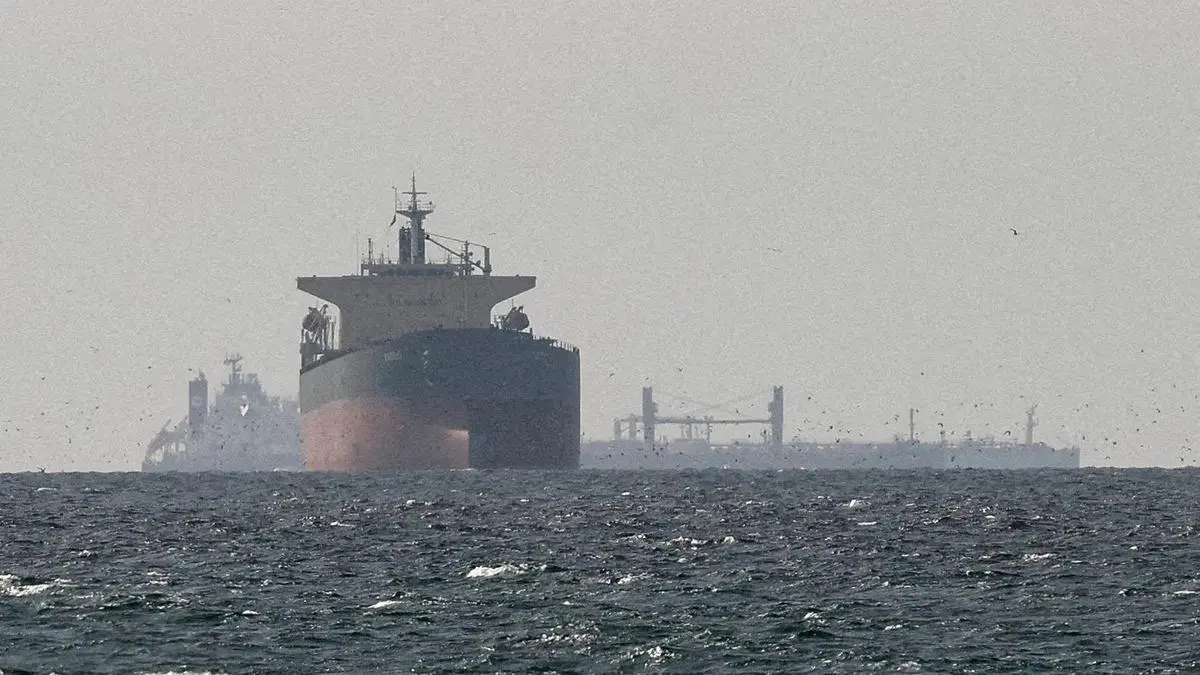
Tehran just turned one of the world's most critical maritime choke points into a private toll road. If you think the global supply chain has been stressed lately, what's happening right now in the Middle East is about to make things a whole lot more complicated.
Iranian Member of Parliament Ebrahim Azizi, who heads the national security committee, confirmed that Tehran is rolling out a formal traffic management mechanism for the Strait of Hormuz. Here's the short version: if you want your cargo ship to pass through, you have to play by Iran's rules, share your data, and pay a massive fee.
This isn't a vague threat for the distant future. It's happening right now. The newly minted Persian Gulf Strait Authority (PGSA) has already started sending out a "Vessel Information Declaration" from an official registry email. Shipping companies are faced with a brutal choice: shell out millions of dollars to an agency tied to the Islamic Revolutionary Guard Corps (IRGC) or find another way around.
For a global economy that relies on the Strait for roughly twenty percent of its daily petroleum liquids, the financial and logistical fallout is immense.
The Mechanics of the Tehran Toll Booth
How does a state suddenly decide to charge a toll on an international waterway? It starts with bureaucratic control.
The PGSA isn't just asking for a ship's name and flag. Their declaration form contains over 40 highly specific questions. They demand everything from the nationalities of your crew and the exact value of your cargo to your ultimate destination and ownership records. If you submit incomplete information, your ship doesn't move. Or worse, it risks getting detained.
Once the IRGC processes the paperwork and radioes a green light, the vessel is routed through a specific, protected corridor that snakes closer to the Iranian coast, bypassing traditional transit lanes. Then comes the bill.
The maritime intelligence group Lloyd's List reports that some ship operators have already paid up to $2 million per transit to secure safe passage. Think about that for a second. A single transit costing millions, paid out in non-Western currencies like Chinese yuan or cryptocurrency to bypass the traditional banking system.
It's an incredibly lucrative setup for Tehran, but it creates a compliance nightmare for everyone else.
The Absolute Nightmare for Shipowners
If you're running a major shipping line, this situation puts you in an impossible legal vice.
The primary issue is sanctions. Western nations, including the United States and the UK, have strict, far-reaching sanctions leveled against the IRGC. Maritime legal experts point out that paying a toll to an authority controlled by a sanctioned entity can easily be interpreted as financing terrorism under international law.
If a shipowner pays the fee to get a single tanker out of harm's way, they might save that specific cargo, but they risk getting their entire global fleet blacklisted by Western financial institutions. It's a lose-lose scenario.
Yet, the alternative is equally grim. Trying to run the strait without paying means navigating an area thick with geopolitical tension, maritime mines, and the constant threat of drone strikes or armed boarding parties.
Who Gets a Free Pass and Who Gets Blocked
The rules of this new transit regime aren't being applied equally. Iran has made it clear that only commercial vessels and countries deemed "non-hostile" will benefit from this structured arrangement.
- The Preferred Circle: Countries like China, Russia, Pakistan, and India have been actively communicating with Tehran to ensure their flagged vessels can secure safe passage. Because these nations maintain diplomatic or economic ties with Iran, their operators are finding ways to navigate the new system, sometimes receiving preferential treatment or smoother approval pipelines.
- The Blacklist: Vessels directly linked to the United States or Israel are entirely barred from using the mechanism.
This selective enforcement flies in the face of centuries of maritime tradition. Under the United Nations Convention on the Law of the Sea (UNCLOS), international straits enjoy a status known as transit passage, meaning coastal states cannot suspend or tax the peaceful movement of foreign ships.
But there's a catch. Iran signed UNCLOS back in 1982 but never actually ratified it. From Tehran's perspective, they aren't bound by those specific rules, and they view the waterway as an extension of their national sovereignty.
Oman, which sits directly across the strait, has ratified UNCLOS and strongly rejects Iran's toll framework. But on the water, might often trumps international treaties. There's no global maritime police force that can force Iran to dismantle its digital toll booths.
How the Shipping Industry Adapts
If you can't pay the toll safely and you can't risk the Western sanctions, what do you actually do?
The most direct option is rerouting. We're already seeing oil companies and freight forwarders opt for longer, more expensive journeys around the Cape of Good Hope or utilizing pipelines where possible. But avoiding the strait entirely adds weeks to travel times and sends fuel costs through the roof. Economists estimate that even if ships do pay the toll, it adds a direct premium of roughly $1 per barrel of oil, a cost that eventually trickles down to consumer energy prices and manufacturing supply chains.
If your business relies on moving goods through this corridor, you need to audit your compliance strategy immediately.
First, establish clear protocol firewalls regarding any communication with info@PGSA.ir. Ensure your legal counsel reviews any data requests before information is volunteered. Second, evaluate the specific jurisdiction of your vessel's insurance provider; many maritime insurers will void coverage if a ship enters a zone with uncoordinated transit or interacts with sanctioned entities. Finally, diversify your transit routes now, because this toll mechanism isn't a temporary blip. It's the new baseline for Middle Eastern maritime trade.