Look at your right hand. Flex your fingers. You can feel the subtle resistance of bone, the warmth of blood pumping through your veins, the solid reality of your skin. It feels local. It feels deeply, uniquely yours, confined to the brief span of years you walk this planet.
But it isn't. Not really.
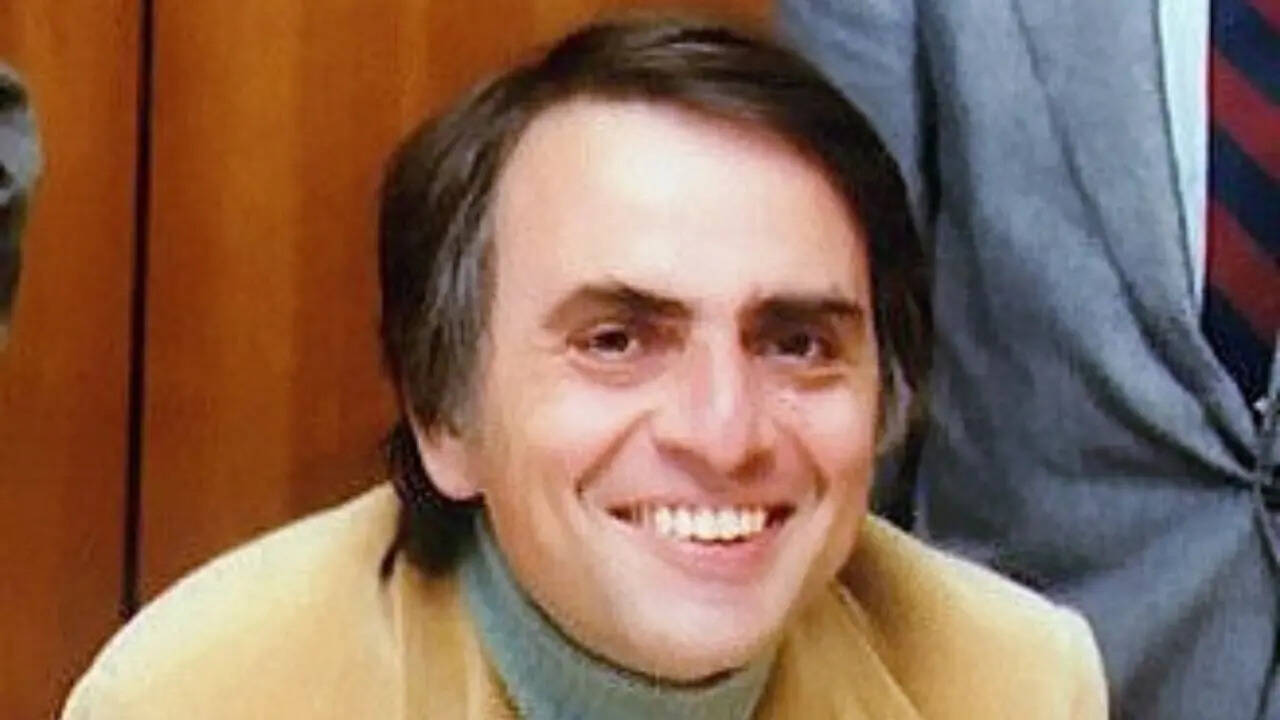
Every single atom making up that hand was forged in the blinding, chaotic furnace of a dying star billions of years ago. When American astronomer Carl Sagan famously remarked that the cosmos is within us and that we are made of star-stuff, it was treated as a beautiful piece of poetry. A comforting metaphor for a generation looking up at the night sky during the height of the Cold War.
The truth, however, is much more literal. And much more unsettling. We are not passengers on a rock floating through a cold, indifferent universe. We are the universe itself, fractured into billions of tiny, conscious pieces, looking back at where we came from.
To understand how a human being becomes a living mirror for the cosmos, we have to look at a process that makes our grandest industrial achievements look like child's play.
The Furnace at the Edge of Time
Consider a hypothetical atom of iron circulating through your bloodstream right now. It is currently binding to an oxygen molecule, keeping you alive while you read these words.
Before it was a part of you, that iron atom lived a far more violent existence.
Go back roughly five billion years. The solar system did not exist. Instead, a massive star, dozens of times larger than our sun, was nearing the end of its life. Stars are essentially cosmic tugs-of-war. Gravity wants to crush the star into a pinpoint. The immense heat and energy generated by nuclear fusion in the star's core push outward, keeping the structure stable.
For millions of years, this particular star fused hydrogen into helium. When the hydrogen ran out, gravity squeezed the core tighter, heating it up until it could fuse helium into carbon. Then carbon into oxygen. Then neon, magnesium, and silicon.
Each step required more pressure, more unimaginable heat. The star was building the periodic table from scratch. It was constructing the very ingredients needed for future oceans, mountains, and biologies.
Then, it hit a wall.
The star began fusing silicon into iron. Iron is the ultimate cosmic dead end. Fusing iron does not release energy; it consumes it. The moment the star's core turned to iron, the outward pressure died. The furnace shut off.
What happens next occurs in a matter of seconds. With no outward force to stop it, gravity wins. The outer layers of the star collapse inward at a quarter of the speed of light. They slam into the dense iron core and bounce off in a cataclysmic explosion known as a supernova.
In that brilliant, terrifying flash, temperatures spike to billions of degrees. The explosion forces extra neutrons into the existing elements, forging even heavier atoms like gold, platinum, and iodine. The star tears itself apart, scattering its guts across the dark expanse of space in a glowing cloud of dust and gas.
This is not a rare, isolated tragedy. It is the fundamental law of the universe. Death breeds complexity.
The Long Journey to the Human Heart
For billions of years, that dust drifted through the void. It was cold, dark, and utterly silent.
Slowly, gravity began its quiet work again. The cloud of stellar debris began to collapse, spinning faster and faster, flattening into a disc. At the center, a new, modest star ignited: our sun.
But the sun did not consume all the dust. The leftovers, the heavy elements cast off by long-dead supernovas, began to clump together. Iron, silicon, nickel, and magnesium collided, fused, and formed a rocky planet. Earth.
Now, imagine a young woman named Sarah. She is sitting in a cafe, sipping a hot cup of coffee, looking out the window at a rainstorm.
Sarah feels completely disconnected from the cold vacuum of space. She is thinking about her mortgage, a difficult conversation she needs to have with her brother, and the deadlines piling up at work. Her world feels small, immediate, and intensely human.
Yet, every breath Sarah takes connects her directly to that ancient stellar explosion.
- The oxygen filling her lungs was baked inside a red giant star.
- The calcium structuring her teeth and bones was blasted into space by a white dwarf companion star stealing matter from its neighbor.
- The iron carrying that oxygen to her brain was born in the final, dying seconds of a giant cosmic furnace.
If you could trace the history of every atom in Sarah's coffee cup, her body, and the rain falling outside, you would map a complex web of cosmic ancestry spanning thirteen billion years.
Scientists call this stellar nucleosynthesis. It is a dry, clinical term for a reality that should make us drop to our knees in awe. The exact same physics governing the rotation of galaxies is currently regulating the neural pathways in your brain that allow you to interpret these sentences.
The Mirror Turns Around
This brings us to the final, most profound element of Sagan's realization. We are a way for the cosmos to know itself.
For the vast majority of its existence, the universe was blind. It consisted of hydrogen gas, burning stars, and black holes drifting through the dark. There was no one to see the breathtaking beauty of a nebula. There was no one to measure the speed of light or marvel at the architecture of a spiral galaxy.
The universe was happening, but it was not being experienced.
Then, on a tiny, fragile blue dot, those cosmic elements arranged themselves in a highly peculiar way. Atoms became molecules. Molecules became cells. Cells became organisms. And eventually, those organisms developed brains complex enough to look back up at the sky and ask questions.
When a child looks through a telescope at Saturn's rings, it is not just a person looking at a planet. It is a collection of stardust that has evolved consciousness, looking at another collection of stardust.
The cosmos has spent billions of years organizing itself into a state where it can think, feel, love, and understand its own existence. You are not a separate entity that was placed into this universe. You grew out of it, the same way an apple grows out of an apple tree.
This realization changes the stakes of our daily existence. It strips away the illusion of isolation.
We often feel small when we look at the night sky. We see the trillions of miles of empty space, the billions of galaxies, and we feel like insignificant specks of dust. We succumb to a existential dread, believing that our thoughts, our pains, and our triumphs do not matter in the grand scheme of things.
But that is a profound misunderstanding of scale.
You are not insignificant because you are small compared to a galaxy. A galaxy is massive, but it cannot feel. A nebula is beautiful, but it cannot love. A black hole is powerful, but it cannot comprehend its own gravity.
You can.
The Weight of Awareness
This cosmic inheritance is not just a beautiful thought to hold onto when life gets difficult. It is a profound responsibility.
If we are the universe's way of knowing itself, then how we choose to know ourselves matters. When we indulge in cruelty, when we allow ourselves to be consumed by tribalism and petty hatreds, we are turning that hard-won cosmic consciousness inward to destroy itself. We are stardust wasting its rare, brief moment of awareness on bitterness.
Conversely, when we pursue knowledge, when we practice empathy, and when we create art, we are fulfilling the highest function of our design. We are allowing the cosmos to experience joy, curiosity, and wonder.
Consider what happens next time you feel completely overwhelmed by the chaos of modern life. The screens buzzing around us, the endless notifications, the societal pressures to produce and consume. It is easy to feel like a cog in a machine that we did not build and cannot control.
In those moments, pause. Hold your hand up to the light.
Remember that the iron in your blood was forged in a star that died before the earth was born. Remember that you are a walking, talking piece of the universe that has been given the extraordinary privilege of being awake.
The universe spent billions of years creating the precise conditions required for you to exist in this exact moment. Your life is not an accident, nor is it a meaningless blip in the void. It is the cutting edge of a thirteen-billion-year-old story.
The stars did not burn out and die just for us to live in a state of perpetual distraction. They died so that we could see.