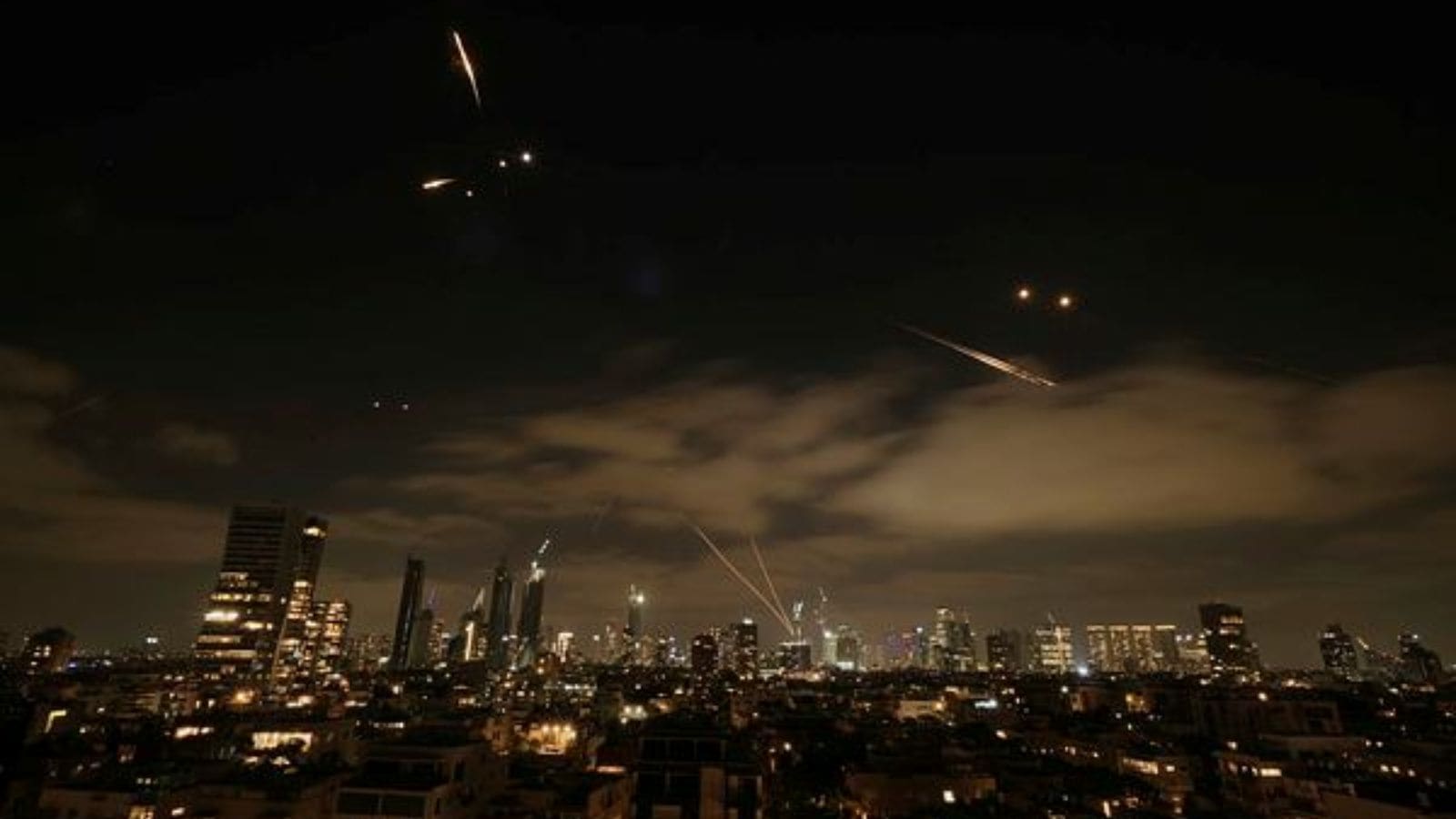
The headlines are vibrating with the "secret" revelation that Israel deployed Iron Dome batteries to the UAE. Pundits are tripping over themselves to frame this as a masterstroke of Abraham Accords diplomacy. They see a unified front against Tehran. They see a "game-changer" (to use their tired vocabulary) in regional stability.
They are dead wrong.
What the mainstream analysis misses is that exporting the Iron Dome to the Gulf isn’t an act of strength; it is a profound tactical gamble that likely weakens both the provider and the host. We are witnessing the "Maginot Line" of the 21st century—a high-tech security blanket that creates a false sense of invulnerability while inviting the very escalation it claims to deter.
The Myth of Interoperability
The first mistake armchair generals make is assuming you can just "plug and play" Israeli tech into a Gulf security architecture. It doesn't work that way.
The Iron Dome is an exquisite, hyper-specialized tool designed for a very specific geography. It was built to stop short-range, low-tech rockets fired from Gaza or Southern Lebanon. It is a masterpiece of $50,000 Tamir interceptors killing $500 pieces of flying pipe.
But the UAE isn't facing Hamas. It’s facing the sophisticated drone swarms and cruise missiles of the IRGC and Houthi rebels.
- Geometry Matters: Israel is a compact sliver of land. The UAE is a sprawling federation of urban hubs, critical desalination plants, and oil infrastructure separated by vast deserts.
- Saturation Limits: The Iron Dome’s secret sauce is its Battle Management & Control (BMC) unit. It ignores projectiles headed for empty sand. In the UAE, the "empty sand" is often the very place an adversary wants to hit to disrupt logistics or pipelines.
- The Tracking Gap: To make Iron Dome effective in the Gulf, it must be integrated into the wider "Middle East Air Defense" (MEAD) alliance. This requires sharing source code and radar frequencies that the Israeli Defense Ministry guards more closely than its nuclear ambiguity.
I have seen defense contractors burn through billions trying to sync disparate radar signatures. When you mix American Patriot systems, THAAD, and Israeli Iron Dome, you don't get a "shield." You get a cluttered electromagnetic environment where "friendly fire" against commercial aviation becomes a terrifyingly real math problem.
The Iron Dome is a Political Target Not a Military One
Deploying Israeli personnel to Emirati soil isn't just a logistics move; it's a giant neon sign for every proxy in the region.
The competitor's narrative suggests this move scares Iran. History suggests the opposite. By placing Israeli hardware and boots on the ground in the UAE, you give Tehran a "two-for-one" target. Every Houthi drone strike on Abu Dhabi now becomes a strike against the "Zionist entity."
You haven't increased the cost of an Iranian attack; you've increased the incentive for one.
The UAE is a federation built on the perception of being a safe, neutral harbor for global capital. The moment you turn Dubai into a forward operating base for Israeli missile defense, you puncture that bubble of neutrality. Capital is a coward. It doesn't care about the Abraham Accords; it cares about insurance premiums.
The Mathematical Fallacy of Attrition
Let's talk about the math that the "US envoy" types refuse to touch.
The Iron Dome relies on a supply chain that is currently under immense strain. Israel is firing interceptors at a record pace on its own northern and southern borders. There is no "infinite stockpile."
- Interceptor Scarcity: Every Tamir missile shipped to the UAE is one less available to defend Haifa or Tel Aviv.
- The Cost Curve: Iran’s proxies use Shahed drones that cost roughly $20,000. Using an Iron Dome interceptor to down one is a net loss. Doing it 1,000 times is a strategic bankruptcy.
Imagine a scenario where a coordinated swarm of 200 cheap drones is launched toward the Burj Khalifa. The Iron Dome might hit 90% of them. In the defense world, 90% is an "A" grade. In the real world, the 10% that get through—20 drones—destroying the world's tallest building is a catastrophic failure.
The Iron Dome creates a "Moral Hazard." It encourages political leaders to take risks they otherwise wouldn't, believing the "dome" will catch the fallout. But the dome is porous, and the math of attrition favors the attacker.
The Intelligence Leak Nobody is Talking About
When you export your most sensitive military hardware, you export your vulnerabilities.
The UAE is a global hub. It is crawling with intelligence agents from every nation on Earth—including those friendly to Tehran and Moscow. By placing Iron Dome batteries in the Gulf, Israel is essentially handing its electronic signatures to every signals intelligence ship in the Persian Gulf.
- Frequency Mapping: Adversaries can now map the radar frequencies and "handshake" protocols of the system in a live environment outside of Israel.
- Personnel Exploitation: Personnel on the ground are human. They are targets for recruitment, surveillance, or simple accidental leaks.
- Cyber Vulnerability: A system integrated into a foreign network is only as secure as that network’s weakest link.
The competitor's piece treats this deployment like a chess move. In reality, it’s like showing your poker hand to half the table because you want the person next to you to feel safe.
Stop Asking if it Works and Start Asking Who it Serves
The "People Also Ask" sections of the internet want to know if the Iron Dome can stop an Iranian ballistic missile. The answer is no—that’s what Arrow-3 and David’s Sling are for. But the real question should be: Why is this news being "leaked" now?
This isn't a military strategy; it’s a PR campaign.
It serves the political survival of the leaders involved more than the security of the citizens. It allows Washington to claim they are "fostering" (to use a word I despise) regional cooperation without actually committing more US troops. It allows Israel to flex its defense industry muscles for future export sales. It allows the UAE to look like it has a high-tech solution to a low-tech insurgency.
But "looking like" you have a solution is the most dangerous state a nation can be in.
The Actionable Truth for the Gulf
If the UAE wants true security, it shouldn't be buying more batteries; it should be diversifying its defensive philosophy.
Dependence on a single, foreign-made "silver bullet" system is a recipe for disaster. The real defense lies in decentralized, kinetic and non-kinetic electronic warfare—stuff that doesn't make for a sexy press release from a US envoy.
The deployment of the Iron Dome to the UAE is a signal of desperation, not a display of dominance. It signals that traditional diplomacy has failed so thoroughly that we are now relying on "leaked" military movements to provide a sense of stability.
Don't buy the hype. The "Shield" is made of glass, and the people holding the hammers are watching the clock.
If you're betting on the Iron Dome to keep the Gulf's economy soaring during a hot war with Iran, you aren't an analyst. You're a gambler who doesn't understand the house always wins.