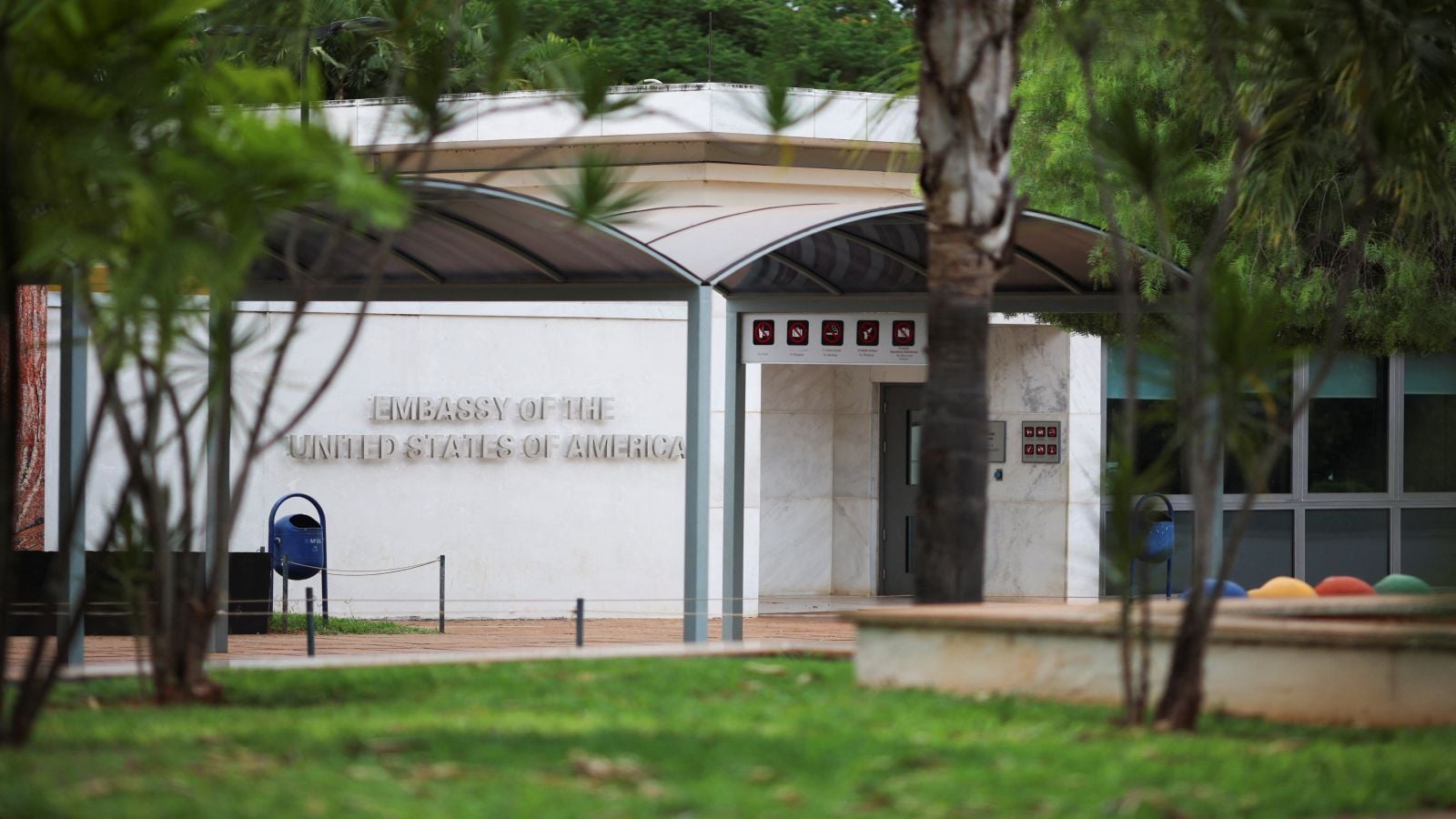
The heavy glass doors of the American consulate in Brasília did not click shut with a polite chime. They locked with a heavy, final thud. Outside, the tropical heat radiated off the concrete pavement, while inside, the lights dimmed over empty service windows.
It was Friday, October 2, 2026. Just forty-eight hours stood between the country and a high-stakes presidential election, an electoral showdown that had turned the streets into a mosaic of competing
The Locked Doors of Brasília and the Weight of Waiting
news
The heavy glass doors of the embassy did not slam. They simply locked.
For anyone who has ever stood in a foreign plaza waiting for a stamp, a signature, or a piece of paper that bends the trajectory of a life, that sound is absolute. It is the sound of an invisible wall sliding into place.
Weeks before the ballots were cast in Brazil, the embassy machinery ground to a halt. Consular services suspended. Passports frozen in trays. Appointments wiped from digital calendars with the quiet click of a remote server. The official justification was tidy, bureaucratic, and sharp-edged: security concerns. A heightened threat matrix ahead of a tense national election.
Yet, numbers and policy briefs miss the texture of what happens when a government pulls back its diplomatic footprint. They miss the student whose visa interview vanished overnight, leaving a semester-long scholarship dangling by a fiber. They miss the dual-citizen family trying to renew credentials before an emergency flight home.
Consider what happens when the iron curtain of administrative caution drops.
In a bustling neighborhood in São Paulo, Maria checks her phone for the fourth time in ten minutes. Her confirmation code—once a green beacon of certainty—now yields a pale error screen. She has spent months gathering bank statements, birth certificates, and employment letters, assembling a paper trail meant to prove she is worthy of crossing an ocean. Now, the entity meant to verify her existence has closed its windows and turned off the lights.
This is the hidden cost of geopolitical anxiety. When nations grow nervous, they pull inward. They fortify. The first casualty of political tension is almost always accessibility.
Diplomacy is built on the premise of open doors. Consular offices are meant to act as the human face of international relations—the tangible point where abstract treaties translate into individual lives. When those doors shutter, the message sent across the border is loud and clear, even if whispered in diplomatic code: Wait outside. It is too unpredictable inside.
Elections carry their own weather. They stir up currents of uncertainty, polarization, and flashpoints that security analysts monitor with cold calculus. When threat assessments spike, embassies operate under a strict doctrine of risk mitigation. Protecting personnel on foreign soil takes precedence over processing tourist visas or routine notarizations. That is the reality of statecraft.
But logic does not warm the cold stone of disappointment.
The suspension in Brazil highlights a fragile modern paradox. We live in an era where data moves at the speed of light, yet human movement is more heavily gated than ever by the physical architecture of embassies and consulates. A digital notification can erase a physical appointment in a millisecond, but rebuilding that lost time takes months.
The election will pass. The ballots will be counted, the victors declared, and the political temperature will slowly shift back to a simmer. Eventually, the heavy glass doors will unlock. The queues will reform on the sidewalk.
Until then, thousands of stories remain paused in mid-sentence, waiting for permission to turn the page.