Power smells like damp wool, expensive cologne, and the faint, metallic tang of private jet cabins.
I learned this years ago, standing outside a glass-fronted monolith in Switzerland while men in razor-sharp suits argued over the fate of a game played with a punctured sphere of leather. To them, the world is a chessboard of television rights, billion-dollar broadcast contracts, and quiet handshakes in luxury hotels. To the rest of us, it is a religion. We bleed for the crest on the shirt. We cry when the final whistle blows on a dream. We carry the history of our neighborhoods on our backs.
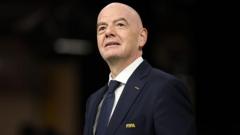
And then there is Gianni Infantino.
He sits at the apex of global sport, presiding over an empire that stretches from the dusty pitches of rural Paraguay to the neon-drenched stadiums of the Gulf. He is a man who knows how to smile for the cameras, how to work a room, and, most importantly, how to survive.
Consider what happens next in the high-stakes theater of modern sports governance.
A storm gathers. Whispers turn into headlines. Investigators dig into emails, meetings, and confidential transcripts. The cracks in the facade widen until the public can see right through the polished marble lobby into the machinery of power. For ordinary mortals, a scandal of that magnitude is a career-ending catastrophe.
Not here.
In the world of global administration, accountability is a fluid concept. It bends. It stretches. It absorbs the blow and bounces back with a practiced apology.
Infantino stood before the assembly. The air in the room was thick with tension, heavy with the weight of expectations from delegates representing every corner of the earth. There were mistakes made, he conceded. There were procedural errors. There were lapses in judgment that he regretted.
Regret is cheap. Power is absolute.
As a journalist who has spent decades watching men in high offices stumble and somehow land on their feet, the choreography is always the same. First, you acknowledge the storm. You lower your head just enough to let the wind pass over you. You utter the magic words of contrition. You express sorrow for the noise, the distraction, the friction.
Then, you stay put.
Because when you control the architecture of the game, you also control the exit doors. Who is going to push him out? The local federations who rely on development funds distributed from Zurich? The regional bodies whose survival depends on the largesse of the global calendar? The political alliances forged over decades of backroom diplomacy?
No one.
That is the invisible reality of modern institutions. They are built not to serve the public trust, but to endure. Scandals are weathered like bad weather. They pass. The headlines fade. The next tournament begins. The floodlights click on, the pyrotechnics explode into the night sky, and fifty thousand screaming fans drown out the memory of last week's investigations.
We want heroes. We look to sports for purity, for a meritocracy where the best win and the corrupt are cast out into the cold. We forget that the people running the show do not play the game. They manage the ledger.
Infantino knows this ledger by heart. He knows that as long as the expansion of tournaments brings in rivers of cash, and as long as the member associations hold their voting cards tight to their chests, a public apology is nothing more than a toll fee on the highway to longevity.
He didn't fall. He adjusted his tie, steadied his gaze, and doubled down on his mandate.
The stadium lights hum overhead. The roar of the crowd vibrates through the concrete floor, shaking the foundations of the building. Somewhere in the VIP suite, a glass of champagne is poured. The game goes on, and the man at the top watches it unfold from the very same seat he occupied before the storm began.