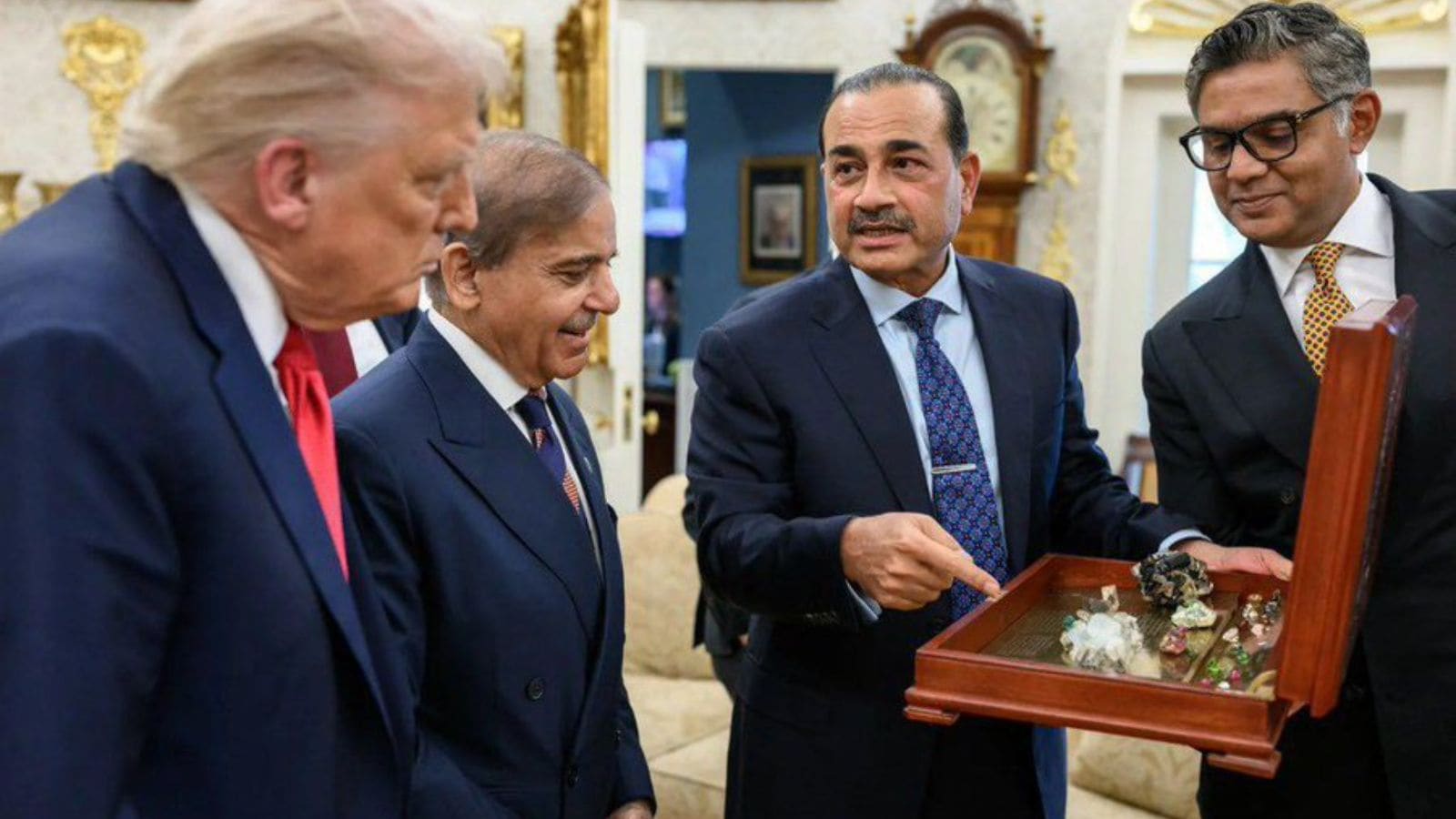
Hours before American bombers were scheduled to strike military targets deep inside Iran, the White House abruptly shifted from the brink of total regional war to an unexpected diplomatic pause. President Donald Trump announced the sudden cancellation of the strikes, revealing that he had granted a break at the request of Pakistan. While Washington political circles spun the decision as a sudden whim of executive hesitation, the reality on the ground points to a highly calculated, months-long diplomatic maneuver orchestrated by Islamabad and backed by cash-rich Gulf monarchies.
The public credit given to Pakistani Prime Minister Shehbaz Sharif and Chief of Defense Staff Field Marshal Asim Munir exposes a shifting dynamic in Middle Eastern geopolitics. Pakistan, a state frequently crippled by domestic economic chaos and internal political gridlock, managed to position itself as the sole credible intermediary between a volatile Trump administration and an increasingly cornered Iranian leadership under Supreme Leader Mojtaba Khamenei.
This backchannel diplomacy succeeded not because of shared ideological values, but because of raw, pragmatic survival instincts.
The Mechanics of the Islamabad Backchannel
The conventional view of global mediation usually involves neutral European capitals or Swiss diplomatic couriers. The current crisis, however, required an actor with deep military ties and structural proximity to both combatants. Pakistan shares a volatile, nearly 1,000-kilometer border with Iran, yet it maintains deep, structural security dependencies with Saudi Arabia and the United Arab Emirates. When US-Israeli strikes hit Tehran, triggering an immediate maritime chokehold on the Strait of Hormuz, the economic fallout threatened to bankrupt South Asia while exposing Gulf oil infrastructure to catastrophic missile strikes.
The breakthrough did not happen over official diplomatic cables. It was shaped through direct military-to-military channels. Field Marshal Munir utilized Pakistan's historic intelligence linkages with the Islamic Revolutionary Guard Corps to establish a reliable point of contact that bypassed traditional bureaucratic bottlenecks.
By aggressively condemning the initial Western strikes, Islamabad secured the trust of Tehran's hardliners, who were deeply suspicious of other regional mediators hosting American military assets.
[Washington] <--- (Leverage & Deadlines) ---> [Islamabad] <--- (Border Security & Trust) ---> [Tehran]
     ^                                             ^                                            ^
     |                                             |                                            |
     +----------------------------------- [Gulf Monarchies] ------------------------------------+
                                      (Financial Backing & Air Defenses)
Once that baseline of trust was established, the Pakistani leadership acted as a strategic editor rather than a passive messenger. They carefully sequenced the concessions, pushing Iran to offer a workable ten-point peace framework that included the immediate, safe reopening of the Strait of Hormuz. They then presented this framework to Washington as a major concession, allowing the Trump administration to claim total victory while offering a face-saving exit from an imminent ground war.
The Hidden Hand of the Gulf Cooperation Council
While Pakistan provided the diplomatic infrastructure, Saudi Arabia and the UAE provided the underlying economic architecture. The Gulf states found themselves in an unsustainable security dilemma. They were caught between hosting the American military bases launching the operations and enduring the retaliatory Iranian drone strikes targeting their critical infrastructure.
- Saudi Arabia persistently pressured all regional factions to return to the Pakistan-sponsored framework, leveraging its recent defense pacts to keep the coalition aligned.
- The UAE engaged in quiet, direct bilateral talks with Iranian national security officials to ensure any proposed terms had the explicit backing of Iran’s newest leadership tier.
- Qatar maintained its traditional role as an auxiliary communications node, with Emir Sheikh Tamim bin Hamad Al Thani coordinating directly with Washington to synchronize the timing of the announcements.
This coordinated push created a unified front that left the White House with an alternative to a costly military campaign. The economic reality was stark. With global oil markets swinging wildly and three Indian sailors already killed in commercial tanker crossfire, the risk of a prolonged maritime blockade outweighed the tactical benefits of a single night of heavy bombing.
The Limits of a Fragile Peace
The cancellation of the strikes preserves a temporary status quo, but the underlying structural triggers of the war remain entirely unresolved. A naval blockade is a slow act of war, and the American fleet remains deployed in full force outside Iran's primary ports. The economic strangulation of Tehran continues unabated, meaning the temptation for Iran to disrupt shipping lanes as a tool of leverage has not disappeared.
Furthermore, any initial memorandum of understanding face-to-face in Islamabad will immediately run into the three core issues that broke the previous truces:
- The Nuclear Program: Iranian negotiators have repeatedly stated that nuclear developments are outside the scope of current conflict-termination talks, a stance that remains completely unacceptable to both Washington and Jerusalem.
- Sanctions Relief: Tehran views the immediate, verifiable lifting of economic sanctions as a non-negotiable prerequisite for a permanent treaty, while the US administration continues to introduce fresh sanctions packages against networks funding the Revolutionary Guards.
- Regional Proxies: The status of Hezbollah in Lebanon and various militia networks across Iraq and Yemen remains detached from the maritime agreements, leaving open multiple avenues for sudden escalation by third parties.
The current pause is an exercise in crisis management, not a comprehensive peace treaty. It represents a tactical calculation by an American president who prefers the theater of a massive transactional victory over the muddy realities of an endless foreign quagmire. By utilizing Pakistan to extract a workable proposal, the White House achieved its stated goal of forcing Tehran to negotiate under the threat of immediate destruction.
Yet, as the diplomatic focus moves toward a formal signing ceremony, the fundamental incompatibility of the two sides' long-term strategic goals ensures that this Pakistani-brokered peace will remain highly volatile. The bombers have turned back, but the engines are still running on the tarmac.


