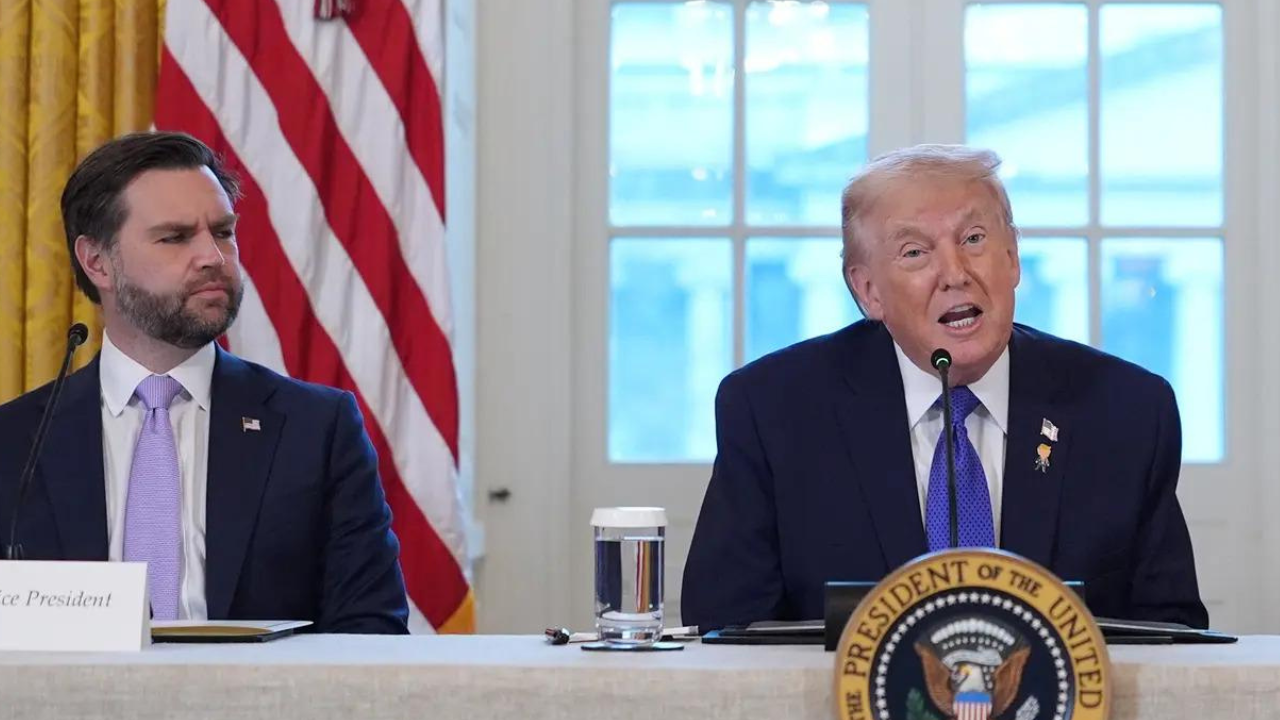
The ultimatum delivered to Tehran this week did not come through a formal diplomatic cable or a neutral European capital. Instead, it arrived via a high-stakes telephone relay involving the Pakistani Army Chief, General Asim Munir, acting as the unwilling switchboard for a president who prefers to negotiate at the edge of a cliff. As a second high-level American delegation led by Vice President JD Vance touches down in Islamabad, the objective is no longer just a ceasefire. The United States is now demanding an unconditional surrender of Iran's regional influence and maritime leverage under the threat of total infrastructure collapse.
For the past eight weeks, the global economy has been held hostage by a naval blockade and the closure of the Strait of Hormuz. What began on February 28 with a devastating joint US-Israeli strike that decapitated the Iranian leadership has devolved into a grinding war of attrition. Washington’s strategy is simple and brutal: starve the Iranian regime of its ability to export oil and import essentials until the remaining leadership signs a ten-point "peace agreement" that effectively dismantles the Islamic Republic’s military autonomy. Expanding on this theme, you can also read: Why the Iran and Pakistan peace talks just hit a massive wall.
The Pakistan Conduit
Islamabad has found itself in the most precarious position in its seventy-nine-year history. While Prime Minister Shehbaz Sharif attempts to maintain a veneer of neutrality, the reality is far more transactional. The Trump administration is utilizing Pakistan’s long-standing security ties with Iran to bypass the traditional, slower diplomatic channels. By using General Munir as a primary intermediary, Washington is banking on the Pakistani military's unique ability to speak directly to the Iranian security establishment—the ones who actually hold the keys to the Hormuz gates.
However, this reliance on Islamabad is not without significant domestic risk for the Pakistani government. Large-scale protests have already rocked Karachi and Islamabad, with the public increasingly viewing their leadership as a proxy for American interests. The 900-kilometer border between Pakistan and Iran is now a tinderbox. If the talks in Islamabad fail, the spillover of refugees and sectarian violence into Balochistan could destabilize Pakistan just as surely as the American bombs are destabilizing Iran. Observers at The Washington Post have shared their thoughts on this matter.
The Blockade and the Brink
The immediate catalyst for this week’s "last chance" talks was Iran’s decision to reimpose shipping restrictions in the Strait of Hormuz. After a brief reopening orchestrated during General Munir's visit to Tehran, the Iranian Revolutionary Guard Corps (IRGC) slammed the door shut again when it became clear that the US naval blockade of Iranian ports would remain in place regardless of the truce.
This maritime deadlock is costing the world billions of dollars every day. For Donald Trump, the blockade is his primary piece of leverage. He has moved away from the "maximum pressure" of his first term toward a policy of "maximum disruption." By cutting off the flow of oil, he isn't just targeting Tehran; he is forcing China and other global powers to choose between their energy security and their support for the Iranian regime.
The " Islamabad talks" are the 2026 version of a poker game where one player has his hand on a detonator. The US delegation, which includes Kushner and Witkoff, is pushing for a phased deal:
- Phase One: A permanent reopening of the Strait of Hormuz in exchange for limited sanctions relief.
- Phase Two: A 45-day window to negotiate the complete dismantling of Iran's nuclear and missile programs.
Tehran, however, views this sequence as a death sentence. Their counter-proposal demands a simultaneous lifting of all sanctions and a complete withdrawal of US naval forces from the Gulf before a single tanker moves.
The Shadow of China
While the headlines focus on the drama in Islamabad, the real counter-weight is being felt in Beijing. China has moved from passive observer to indirect participant, providing Tehran with intelligence and logistics assistance to help bypass the blockade. This has transformed a regional conflict into a two-front strategic challenge for the United States.
Washington’s calculation is that it can outpace Chinese intervention by moving rapidly toward a decisive military or diplomatic outcome. But the Iranian leadership, led by figures like Parliament Speaker Mohammad Bagher Qalibaf, is betting on time. They believe the global economic pain caused by the Hormuz closure will eventually force the international community to turn against the American strategy.
The gap between the two sides is not just ideological; it is existential. Trump’s "unconditional surrender" rhetoric leaves no room for the face-saving maneuvers that usually define Middle Eastern diplomacy. If the Wednesday ceasefire deadline passes without a signature in Islamabad, the White House has already signaled that the next phase of the war will target Iran’s power plants and desalination facilities—a move that would transition the conflict from a military campaign to a humanitarian catastrophe.
The outcome of the next forty-eight hours depends entirely on whether the Iranian security council believes Trump is bluffing. History suggests he usually isn't when he's already pulled the trigger. The world is now watching a small conference room in Islamabad, where the future of global energy and regional stability is being bartered for a peace that looks increasingly like a conquest.