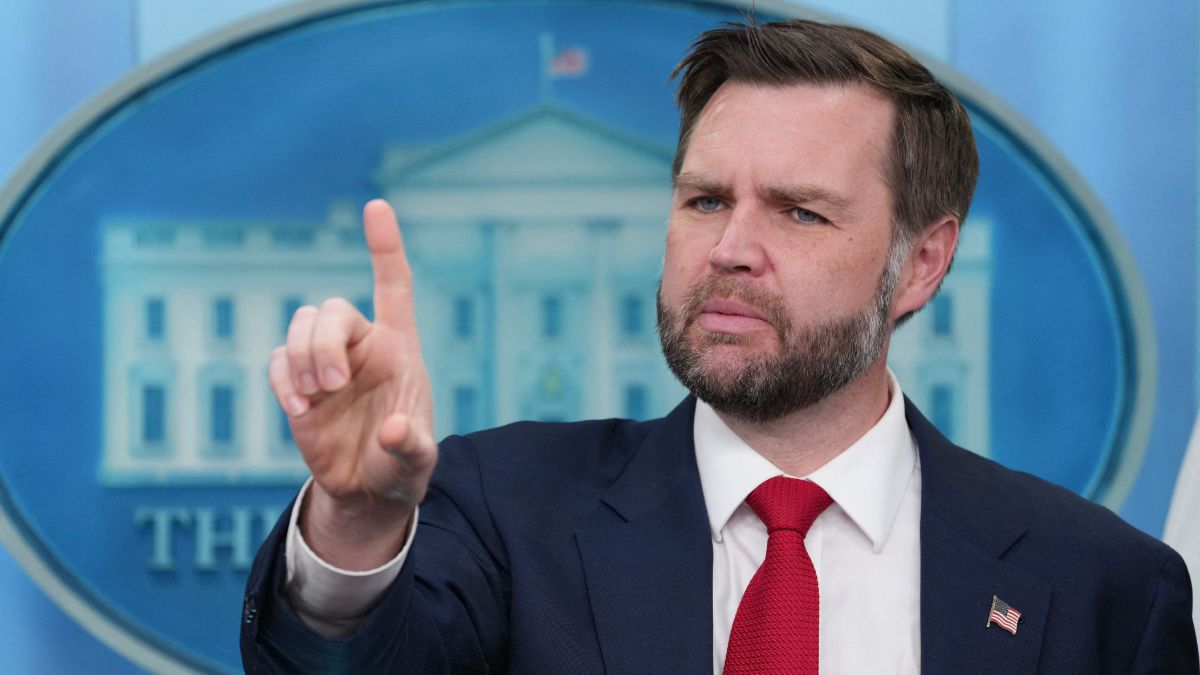
The mainstream media is treating US Vice President JD Vance's recent comments on Interesting Times with Ross Douthat like a standard diplomatic gaffe. When asked why the full 14-point text of the "Islamabad Memorandum of Understanding" between Washington and Tehran was delayed by two days, Vance took a sharp swipe at the mediators. He claimed that the systems in Pakistan and Qatar lack the First Amendment, meaning they do not share the American expectation that the public should immediately interrogate and analyze text.
The immediate commentary followed a lazy, predictable script. Western journalists nodded along, using the moment to highlight Pakistan's low standing on the World Press Freedom Index. Foreign policy analysts wrung their hands over the "misalignment of political cultures."
It is a comforting narrative for Washington. It is also an absolute lie.
The two-day delay in publishing the Islamabad MoU had nothing to do with Pakistan’s domestic media environment or a fundamental misunderstanding of free speech. To believe that a nuclear-armed state acting as a backchannel mediator forgot how the American press works is an insult to intelligence. I have seen administrations waste weeks trying to spin simple trade agreements; when it comes to a high-stakes geopolitical truce that temporarily halts a hot war in West Asia, every single word is weaponized.
The press freedom narrative is a convenient shield. It hides a much more cynical reality: the text was withheld because both Washington and Islamabad needed time to manage the immediate blowback from an incredibly fragile, high-risk diplomatic gamble.
The Mirage of "Cultural Misalignment"
Let’s dismantle the premise that Pakistan or Qatar requested confidentiality because they "don't quite have the First Amendment."
In international diplomacy, confidentiality is not a cultural quirk; it is a structural necessity. When two bitter adversaries like the United States and Iran negotiate an interim ceasefire after months of active combat, the initial text is highly volatile.
The Islamabad MoU includes massive concessions. Iran agreed to eliminate and dilute its enriched uranium stockpile, reversing gains made after the previous administration tore up the 2015 JCPOA. In return, the current administration backed a framework that allows Iran to resume unrestricted oil exports, reopens the Strait of Hormuz, and envisions a massive $300 billion reconstruction and economic development plan funded by international investments.
Imagine a scenario where the raw, unedited draft of that agreement leaked an hour after President Trump's June 15 digital signing.
- In Washington, domestic critics would have instantly weaponized the $300 billion figure, accusing the administration of funding a state sponsor of terrorism before the ink was dry. Vance was already forced to go on defense, explicitly clarifying that "not a cent" of American taxpayer money goes to Tehran.
- In Tehran, hardliners would have rioted over the destruction of the uranium stockpile, viewing it as an unconditional surrender under military pressure.
- In Islamabad, Prime Minister Shehbaz Sharif’s government was already facing extreme domestic instability. The cancellation of the formal signing ceremony in Switzerland—shelved at the last minute because the deal was signed electronically—left the Pakistani delegation deeply exposed to domestic accusations that they were used as a mere postal service by Washington.
The delay was never about a lack of appreciation for the American free press. It was a calculated, bilateral stall to ensure that both governments could align their domestic propaganda machines before the public could read the actual terms. Blaming Pakistan’s lack of press freedom allowed Vance to sound like a defender of American values while covering up a standard, messy backroom deal.
The Real Power Mechanics Behind the Stalled Talks
While the media focuses on Vance's rhetorical sideshow, the entire Islamabad MoU is already collapsing under the weight of reality. The agreement called for an immediate 60-day cessation of military operations across all fronts to allow permanent peace negotiations to begin in Switzerland.
It is completely failing because Washington treated regional proxies as variables that could be turned off with an electronic signature.
The memorandum specifically demands a halt to hostilities in southern Lebanon. Yet, even as the digital signatures were validated, Israeli strikes and Hezbollah rocket salvos continued. Iranian officials subsequently declined to travel to Switzerland, asserting that no broader talks can occur while violence rages in Lebanon. Simultaneously, Pakistan’s Interior Minister Mohsin Naqvi had to fly directly to Tehran to keep the backchannel from collapsing entirely.
This reveals the core flaw of the administration's current strategy: assuming that economic levers alone can override entrenched regional security dilemmas.
| MoU Provision | The Declared Strategy | The Ground Reality |
|---|---|---|
| Uranium Stockpile Elimination | Iran dilutes its enriched material under IAEA supervision. | Tehran holds execution of the clause until regional ceasefires stabilize. |
| Strait of Hormuz Reopening | Immediate restoration of commercial shipping to lower global oil prices. | Shippers remain hesitant due to unresolved drone and missile risks from non-state actors. |
| $300B Reconstruction Plan | Funded by third-party international investments, contingent on Iranian transformation. | Capital remains frozen as long as the Swiss political negotiations are stalled. |
Stop Evaluating Diplomacy Through a First Amendment Lens
The lesson here is simple, yet ignored by every major network covering this crisis: stop evaluating high-stakes international security frameworks through the lens of domestic political talking points.
When a Vice President blames a foreign mediator's domestic laws for a delay in text disclosure, it is an act of political displacement. The administration needed forty-eight hours to brief Congress, manage oil market expectations, and ensure that the narrative on the $300 billion reconstruction package was tightly controlled before the public could "interrogate" it.
Pakistan's dismal press freedom record is a documented fact, but using it as an explanation for why a bilateral wartime MoU text was delayed is pure theater. It is a sophisticated way of saying nothing while pointing fingers at the facilitator. If you want to understand why the Islamabad MoU is faltering, look at the rocket artillery crossing the Lebanese border, not the status of journalists in Islamabad. Diplomacy is driven by leverage, survival, and cold calculation—never by a sudden misunderstanding of the First Amendment.