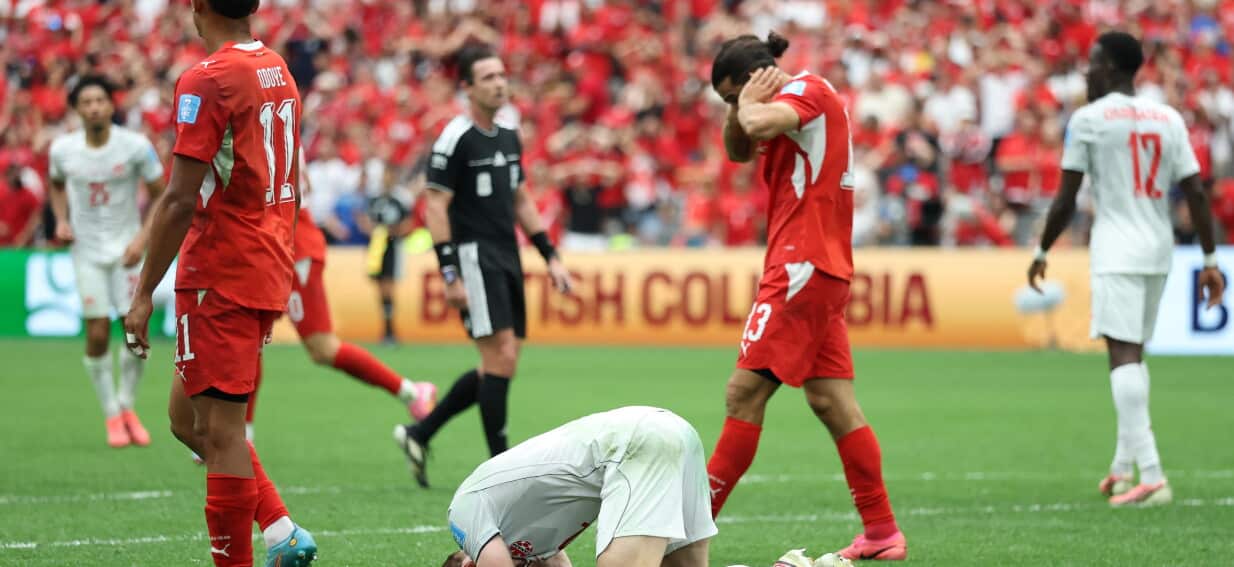
When Ismael Saibari struck a crucial equalizer just before the halftime whistle, it did more than alter the scoreline of a single match. It exposed a fundamental shift in how North African football handles structural transitions under intense pressure. Most superficial match reports fixate on the raw timing of the goal, treating a late-first-half equalizer as a mere stroke of dramatic luck. That reading misses the entire point. Saibari’s positioning, his spatial awareness, and his mechanical execution are the direct results of a deliberate tactical overhaul within the Moroccan national setup.
The standard narrative surrounding Moroccan football often leans heavily on defensive organization and explosive counter-attacks, a reputation cemented during their historic 2022 World Cup run. But relying strictly on a low block and transitional speed is a finite strategy. Teams adapt. Spaces shrink. Opponents stop overcommitting. To maintain their position among the global elite, Morocco had to evolve a sophisticated middle-third possession game capable of breaking down low-tier defensive blocks.
The Anatomy of the Late First Half Breakthrough
Football matches are rarely won through continuous, unyielding dominance. They are decided in the micro-moments when an opponent's cognitive load peaks, leading to structural fatigue. The final five minutes of a first half are notoriously dangerous for defending teams. Mental exhaustion sets in, communication breaks down, and lines of recovery begin to sag.
Saibari excels in these specific windows of vulnerability.
Instead of occupying a fixed zone in the attacking third, he operates as a functional nomad. His movement patterns during the buildup phase purposefully drag opposing defensive midfielders out of alignment. When the opposition shifts focus to the traditional threats on the wings, Saibari exploits the half-spaces—those vertical corridors between the opponent’s full-backs and center-backs.
Exploiting the Half Space
During the specific sequence leading to his equalizer, the opposition defense committed a fatal tactical error. They over-indexed on stopping wide penetration, dropping their defensive line too deep, too quickly. This frantic retreat created a pocket of unmonitored space roughly twenty yards from goal.
Saibari did not rush his entry into the box. He delayed his run by two crucial seconds, ghosting into the vacant zone just as the cut-back delivery arrived. It was a masterclass in spatial manipulation. By understanding that the defense was in a state of high-velocity retreat, he used their own momentum against them. His first touch neutralized the closing defender, and his finish was clinical, exploiting a keeper caught flat-footed by the sudden change in ball trajectory.
The Eredivisie Education and Tactical Versatility
To understand why Saibari possesses this level of tactical maturity, one must look at his club development. The Dutch Eredivisie serves as a rigorous finishing school for midfielders who rely on cognitive speed rather than sheer physical imposition. At PSV Eindhoven, player development prioritizes the concept of Positiespel—positional play aimed at creating numerical overloads.
Traditional Midfielder:   [Receives Ball] -> [Looks for Option] -> [Executes Pass]
Saibari's Sequence:       [Scans Space] -> [Manipulates Defender] -> [Receives to Attack]
This education instills a high level of press resistance. When a player is comfortable receiving the ball with an opponent on their back, it alters the geometry of the entire pitch for the attacking team.
- Press Resistance: The ability to retain possession under immediate, high-intensity physical pressure.
- Decoupled Scanning: Looking away from the ball frequently to map the positions of teammates and opponents before receiving a pass.
- Body Orientation: Receiving the ball with an open stance, allowing for immediate forward progression rather than playing safe, backward passes.
Many modern midfielders are systemic components; they function effectively only within a rigid, pre-defined structure. Saibari offers a different profile. He can anchor a midfield three, operate as a traditional box-to-box engine, or push high into the advanced creative metrics as a shadow striker. This flexibility gives national team selectors a tactical Swiss Army knife, allowing for mid-game formation adjustments without making substitutions.
Beyond the Highlight Reel
The temptation in modern sports journalism is to reduce a player's contribution to a single viral clip or a crucial goal. This lazy analysis ignores the grueling, invisible work that makes the goal possible in the first place. Throughout the first forty minutes of the match, Saibari was systematically probing the opposition's defensive block, sacrificing his own statistics to gather real-time data on their tracking tendencies.
He spent the early phases of the game making decoy runs that were never intended to find him the ball. Each run served a purpose. He wanted to see how quickly the opposition’s central defenders communicated with their defensive midfielders. He noticed a persistent lag in their hand-offs during lateral ball shifts.
When the opportunity presented itself at the end of the half, he knew exactly how much time he would have before a recovering defender could close down his shooting angle. It was not a random occurrence. It was the calculated execution of a plan formulated through forty minutes of deliberate on-pitch reconnaissance.
The Macro Challenge for North African Football
Morocco's broader footballing challenge is managing the transition from continental power to genuine global heavyweight. Winning matches through defensive resilience works well in tournament knockout stages, but sustaining success requires a proactive footballing philosophy. Teams must be comfortable dictating the tempo of a match for ninety full minutes.
This requires midfielders who do not panic when possession metrics climb above sixty percent. In games where the opponent refuses to come out of their shell, the responsibility falls squarely on internal creators to manufacture passing lanes where none exist.
[Deep Defensive Block]
       ↓ (Requires)
[Lateral Ball Circulation] -> [Vertical Penetration via Half-Spaces] -> [Decoupling the Low Block]
The old guard of Moroccan football relied heavily on individual brilliance on the flanks to break deadlocks. While effective, it made the team predictable. If an opponent managed to double-team the wingers, the entire offensive engine stalled.
Players like Saibari represent the antidote to this predictability. By anchoring the creative output in the central corridors of the pitch, Morocco forces opponents to defend the entire width and depth of the field simultaneously. If the opposition pinches inward to choke off the central passing lanes, they leave themselves vulnerable to wide overloads. If they stay wide, the center belongs to Saibari.
The Cost of Tactical Imbalance
There is a distinct risk inherent in this progressive approach. When a midfield asset pushes high into the half-spaces to exploit defensive lapses, they leave huge vacuums behind them. If the attacking phase breaks down prematurely due to a misplaced pass or a technical error, the team is highly susceptible to a counter-attack.
During the match, this vulnerability was on display several times before the equalizer materialized. The defensive midfielders were forced to cover immense lateral distances to plug the gaps left by the advancing interior players. It is a high-wire act. The tactical framework relies on absolute technical precision; a single breakdown in the chain can lead to a catastrophic defensive emergency at the other end of the pitch.
To mitigate this, the coaching staff must implement a strict rest-defense structure. The full-backs cannot advance simultaneously when Saibari is hunting for space in the final third. One must tuck inside to form a temporary back three, providing a structural safety net against the counter-attack. It is a balancing act between offensive ambition and defensive prudence, and the margin for error is razor-thin.
Redefining the Midfield Metric
The obsession with raw goal and assist tallies skews the public perception of midfield performance. A player can have an extraordinary impact on the outcome of a match without ever touching the ball in the penalty area. They do this by dictating the speed of the game, breaking lines with progressive passes, and organizing the team's counter-press the second possession is lost.
Saibari’s performance showed that he is moving past the stage of being a young prospect with potential. He is turning into a functional regulator of international matches. The goal at the end of the first half was a tangible reward for a performance defined by discipline, intelligence, and a deep understanding of structural kinetics.
As international tournament cycles shorten and the physical demands on elite players increase, the value of intelligent, versatile midfielders will only rise. The teams that dominate the next decade will not be those with the fastest sprinters or the most physically imposing athletes. They will be the teams that possess players capable of processing spatial data faster than the opposition can react. Morocco has found one of those players, and his development will directly dictate the ceiling of the national team's ambitions on the global stage.