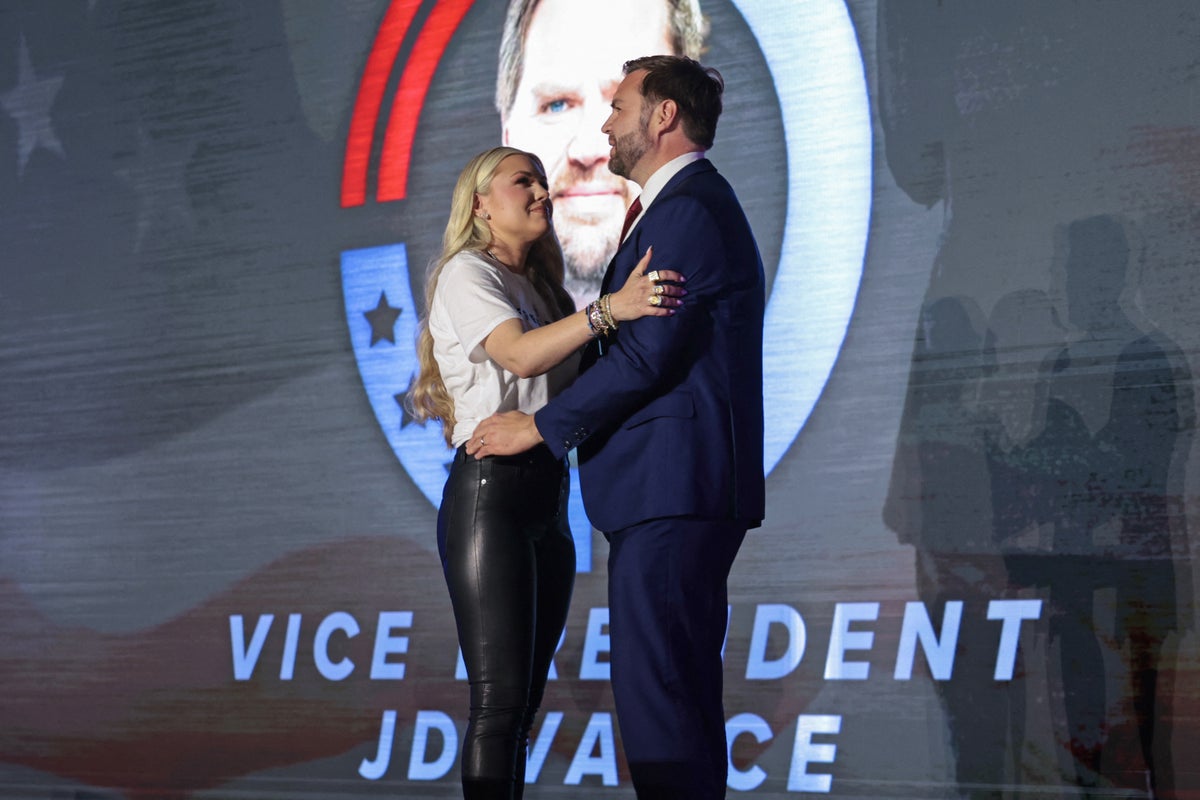
Politics isn't just about policy. It's about optics. When JD Vance pulled out of the Turning Point Action event in Georgia, people noticed. This wasn't a scheduling conflict. It felt like a message. Politics at this level is often a high-stakes soap opera where every stage exit carries a heavy meaning. You don't just ditch a major conservative rally unless something is fundamentally broken behind the scenes.
The backdrop is messy. Just a few weeks ago, Erika Kirk was on stage in Georgia. She was introducing the Vice Presidential candidate. Then, she walked off. Vance was left standing there. He was alone. It was awkward. It looked amateur. For a campaign trying to project strength and unity, that kind of visual is a nightmare. Now, Vance is skipping the follow-up. It's a classic power move. If you can't guarantee a smooth production, you don't show up.
The Georgia Stage Incident and the Fallout
Visuals matter in the 2026 political cycle. Voters aren't just reading white papers. They're watching clips on social media. When Erika Kirk left Vance alone on that stage, it became a viral moment for all the wrong reasons. It suggested a lack of coordination. It looked like the right hand didn't know what the left hand was doing.
In a high-pressure environment like a battleground state, these errors are amplified. Georgia is a must-win. Every event there needs to be perfect. When things go sideways, blame gets tossed around. Vance’s team likely saw the initial incident as a slight. Or maybe just a sign of incompetence. Either way, pulling out of the subsequent TPUSA event suggests the bridge hasn't been mended.
You can't have a Vice Presidential candidate looking confused on camera. That's the bottom line. The decision to skip the event with Kirk isn't just a snub. It’s a tactical retreat to protect the candidate’s image. If the organizers can’t get the blocking right, the candidate won’t provide the star power.
Turning Point USA and the New Guard of the GOP
TPUSA has become a juggernaut. Charlie Kirk’s organization basically runs the youth outreach for the Republican party. They have money. They have data. They have an army of activists. But with that power comes friction. When you have a massive organization operating somewhat independently of the official campaign, wires get crossed.
The Erika Kirk situation is a symptom of this friction. She’s a prominent figure within that circle. Vance is the face of the national ticket. When those two worlds collide and sparks fly, it creates a headline that neither side wants. Usually, these groups work in lockstep. This public distancing is rare. It’s also loud.
Why Georgia is the Flashpoint
Everything in 2026 comes back to Georgia. The margins there are razor-thin. Both parties are poured into the state. Ground operations are everything. TPUSA has spent millions building a infrastructure in the Peach State to get out the vote.
If there’s a rift between the top of the ticket and the ground crew, the whole machine slows down. Vance needs the energy that TPUSA provides. TPUSA needs the legitimacy that Vance provides. Right now, they’re in a standoff. It’s a game of chicken that nobody can afford to lose.
The Risk of Public Disunity
Voters hate chaos. They want to see a team that’s ready to lead. When top-tier surrogates and candidates are seemingly at odds, it gives the opposition easy ammunition. The narrative writes itself. "If they can't manage a stage introduction, how can they manage the country?"
It’s a fair question. Campaigns are effectively massive corporations built in months. They require incredible discipline. This Vance-Kirk drama suggests a crack in that discipline. It’s a distraction. Every minute spent talking about who snubbed whom is a minute not spent talking about the economy or the border.
Vance is known for being a fighter. He doesn’t back down. But sometimes, fighting your own side is a losing strategy. His team is clearly prioritizing his "stature." They want him framed as a serious statesman. Getting caught up in influencer-style drama with Erika Kirk doesn't fit that brand.
Navigating the Influencer Era of Politics
We’re in a weird spot. Political figures are now influencers. Influencers are now political figures. Erika Kirk has a following. She has a brand. Vance is a Senator and a VP pick. These two roles don't always mesh well.
The "stage-gate" incident was a clash of styles. One side is used to the loose, high-energy world of digital activism. The other side is used to the rigid, controlled world of federal campaigns. When these cultures hit each other, mistakes happen.
The problem is that in the digital age, a mistake lives forever. That clip of Vance alone on stage is a permanent part of the digital record. You can see why his staff would be hesitant to put him back in that position. They're shielding him. It's a smart play for the short term. For the long term? They need to fix the relationship.
The Practical Reality of Campaign Logistics
People think these events just happen. They don't. They're planned down to the second. There's a script. There are cues. There's a teleprompter. When Kirk exited early, she broke the script.
- The Cue: A candidate expects a hand-off.
- The Transition: It's the moment of maximum energy.
- The Failure: If the transition fails, the energy dies.
Vance stood there for several seconds. He had to fill the silence. He's good at it, but he shouldn't have to be. His job is to deliver the message, not fix the production. If the TPUSA team can't guarantee a professional hand-off, Vance's team is going to book him elsewhere. There are plenty of other stages in Georgia.
What Happens When the Cameras Turn Off
Behind the scenes, there are phone calls. Heated ones. Campaign managers are talking to organization directors. They're trying to figure out how to avoid a repeat. The fact that Vance pulled out suggests those calls didn't go well.
Maybe there wasn't an apology. Maybe there wasn't a guarantee of change. Or maybe the campaign decided Kirk is too much of a liability right now. Whatever the reason, the gap is wide.
This isn't just about two people. It's about two institutions. The GOP is a big tent, but that tent is currently full of people who don't necessarily like each other. They’re united by a common goal, but the ego clashes are real. This is a visible manifestation of that internal struggle.
The Voter Perspective
Does the average voter care about Erika Kirk? Probably not. Do they care about JD Vance? Absolutely.
But voters feel the vibe. If an event feels "off," it leaves a bad taste. They might not know why it felt awkward, but they’ll remember the feeling. Vance skipping this event is an attempt to reset the vibe. He’d rather be absent than be part of another awkward viral clip.
Moving Forward Without the Noise
The campaign needs to tighten up. This is a wake-up call. If you're running a national race, you can't have "oops" moments on the trail. You need pros at every level.
Vance is doing his part by drawing a line. He's signaling that his time and his image are valuable. If you want him at your event, you have to meet his standards. It’s a tough love approach to campaign management.
For TPUSA, it's a moment of reflection. They're great at mobilization. They're great at media. But they need to prove they can play in the big leagues of presidential politics without causing distractions. They need to be the support system, not the story.
The Immediate Strategy for the GOP
The focus has to return to the swing voters. They don't care about stage exits. They care about their grocery bills. The campaign needs to get Vance back on message and off the "awkward moment" beat.
- Strict Coordination: Every joint event needs a dry run. No exceptions.
- Surrogate Training: Anyone introducing a principal needs to know the exact timing.
- Unified Messaging: Stop the internal leaks about who is mad at whom.
- Targeted Events: Focus on smaller, controlled environments until the trust is rebuilt.
The drama will fade. New headlines will take its place. But the lesson remains. In politics, your stage presence is your power. If you lose control of the stage, you lose control of the narrative. Vance is trying to take that control back. It's a bold move, and it's probably the right one.
If you’re watching the 2026 race, keep an eye on these internal dynamics. They tell you more about the health of a campaign than any poll ever could. Watch the stages. Watch the hand-offs. That’s where the real story is.
Get involved at the local level. Don't just watch the clips. Check out the official campaign schedules. See who is appearing where. If you want to see how a professional operation runs, go to a town hall. Compare it to the big rallies. You’ll see the difference in discipline immediately. Focus on the candidates who respect your time and the process. That's who's ready to lead.