Family dinners do not fix broken labor laws.
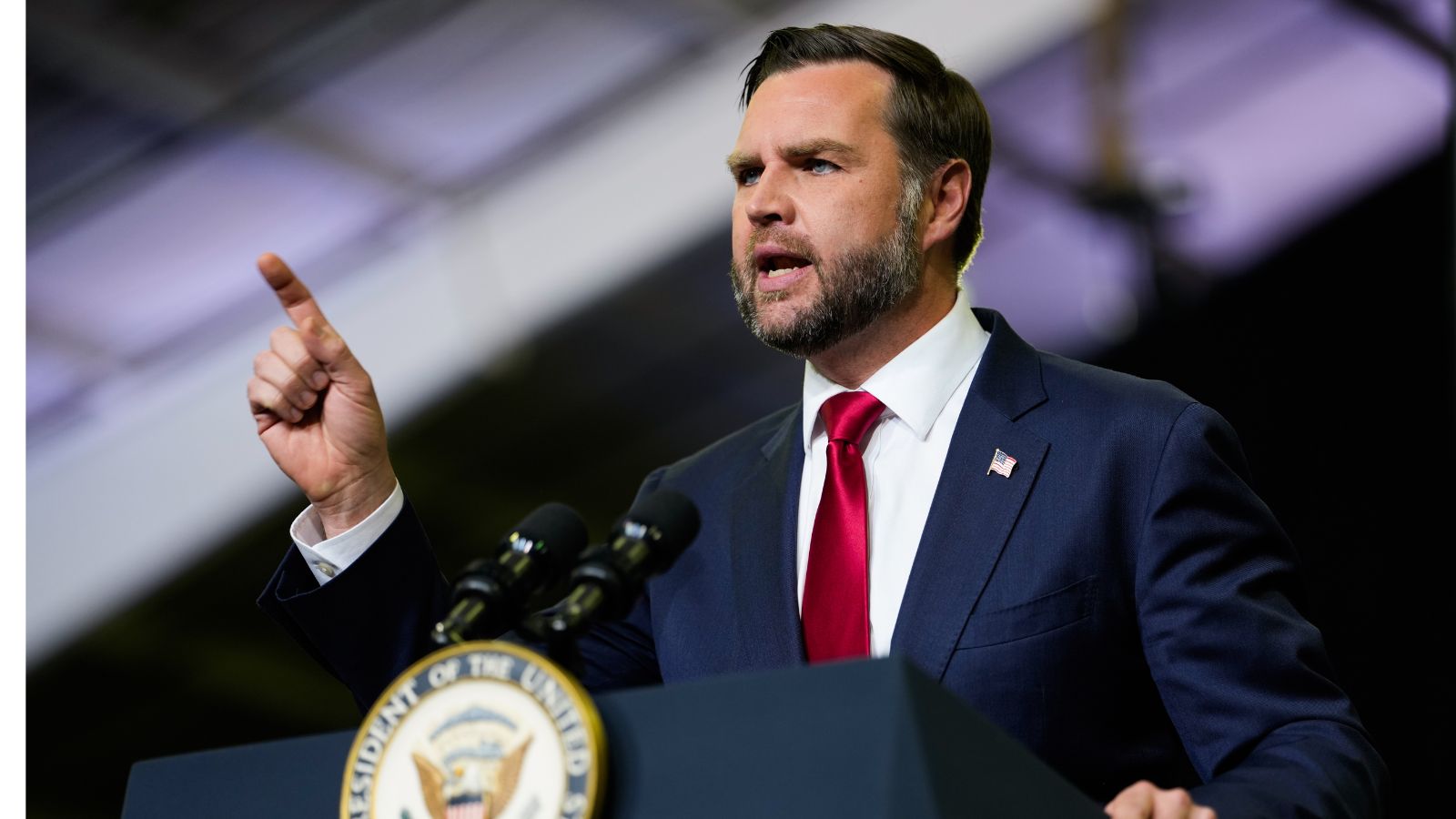
When Vice President JD Vance tells the press he loves his South Indian in-laws and calls his wife Usha a proud American while defending aggressive H-1B curbs, standard headlines treat it like a soap opera. The lazy consensus reads this as a contradiction. Either Vance is a hypocrite attacking the community his family comes from, or his family warmth proves he is not anti-immigrant.
Both readings miss the point.
Talking about in-laws is great television. It turns an ugly structural fight over corporate labor arbitrage into a feel-good family portrait. Meanwhile, the real machinery distorting American tech and engineering wages keeps humming right behind the curtain.
The Lazy Consensus Around Vance and the H-1B Row
Standard coverage frames the clash between Washington, New Delhi, and Silicon Valley around two tired poles: nativist restrictionism versus open-door innovation. When Vance calls H-1B workers "foreign indentured servants" and moves to suspend major firms like Microsoft, Adobe, and big Indian IT outsourcers from permanent labor certification pipelines, critics cry xenophobia and diplomatic blowback. Then Vance brings up his mother-in-law and father-in-law from South India, and commentators act like he just pulled a rabbit out of a hat.
That framing is shallow. A personal marriage or loving relationship with immigrants does not contradict a critique of how corporations use temporary work visas. Those are two separate buckets.
More importantly, the H-1B visa program has never been a pure meritocracy bringing only rare Einstein-level geniuses into the country. Under federal law, the visa applies to "specialty occupations" requiring a bachelor's degree or equivalent—a bar broad enough to cover millions of routine software, QA, and IT roles. Calling a visa system broken is not the same thing as hating the engineers who use it.
Why Both Sides Are Asking the Wrong Question
Most debates over the H-1B visa ask whether foreign workers steal American jobs or drive American innovation. That binary traps smart people in bad arguments.
The better question is this: Why did U.S. employers build a hiring pipeline that makes skilled workers functionally immobile until a green card arrives?
A worker on an H-1B tied to a single sponsor—especially one stuck in multi-year employment-based green card backlogs that hit Indian nationals hardest—has far less leverage to walk across the street for higher pay or better conditions than a citizen or permanent resident. That structural friction is what makes the "indentured" label sting. Not because of South Indian heritage, and not because every H-1B holder is underpaid, but because tying legal residency status to employer sponsorship creates asymmetric bargaining power.
What People Actually Get Wrong About H-1B Mechanics
Let's clear up three myths that pollute almost every panel discussion on this topic:
- Myth 1: H-1B workers are always dirt-cheap labor. Not always. At top Big Tech firms, senior engineers on H-1Bs often earn market-rate compensation. The distortion shows up heavily in entry-to-mid-level tiers and high-volume IT outsourcing models, where Department of Labor wage levels (Levels I through IV) let employers pay below local median wages for comparable roles.
- Myth 2: Ending or curbing the H-1B lottery automatically frees up jobs for Americans. Often, companies do not simply hire a local worker at double the cost if margins tighten. Instead, they route the work offshore to Bengaluru, Hyderabad, Guadalajara, or Warsaw. You lose the tax base and the team footprint inside the U.S. without creating a domestic seat.
- Myth 3: Executive proclamations and fiery speeches change immigration statutes overnight. Even when the White House pushes aggressive measures—like the $100,000 fee push on certain petitions or wage-weighted selection rules—federal courts frequently step in over administrative procedure and statutory limits, while underlying law still requires Congressional action to overhaul cap structures.
| Policy Lever | What Supporters Expect | What Actually Happens in Practice |
|---|---|---|
| Wage-weighted lottery selection | Prioritizes higher-paid roles over lower-wage slots | Helps well-funded big firms; squeezes smaller startups, regional employers, and entry-level pipelines |
| Heavy fees or sponsor suspensions | Forces companies to hire domestic staff | Accelerates offshoring centers and pushes compliance legal bills up without fixing backlog queues |
| Personal family appeals ("in-laws") | Softens political backlash across diaspora voters | Shifts attention to identity and tone while leaving wage floors and green card queues untouched |
Battle Scars From Inside the Hiring Machine
I have watched engineering leaders and talent teams burn millions of dollars trying to outsmart immigration bottlenecks.
Years ago, I saw a mid-sized software company spend over a million dollars in legal fees, relocation packages, and lost sprint velocity because two critical engineers missed the spring H-1B lottery. The company tried to bridge the gap with contractors, burned out its remaining staff, delayed a flagship product release by two quarters, and still ended up opening a satellite office abroad just to keep shipping code.
I have also seen the opposite side: IT consulting shops treating visa sponsorship as a volume game, filing waves of registrations for routine support roles while billing clients steep rates. When USCIS tightened registration rules and cracked down on multi-registration gaming—driving registrations down from 780,884 in FY 2024 to 479,953 in FY 2025 and 358,737 in FY 2026—the volume game got much harder.
Imagine a scenario where Washington stops treating visa holders as pawns in culture-war speeches and instead sets a clean statutory rule: any employer sponsoring an H-1B must pay at least the local median wage for that occupation, with zero exceptions for entry-level wage tiers, paired with portable visa transfers and uncapped green cards for U.S.-trained STEM PhDs. Suddenly, nobody can undercut domestic wages on paper, top talent still enters the country, and talent moves freely based on merit rather than fear of deportation.
Where This Contrarian Play Can Backfire
Honesty requires naming the flaws in taking a hard line against cheap-labor visa abuse.
If policymakers slam the brakes on H-1B intake without fixing domestic STEM pipelines or university funding, America risks ceding leadership in artificial intelligence, chip design, and advanced manufacturing to rival hubs. Indian and global engineers have founded, scaled, and staffed essential parts of the U.S. tech economy for decades. Punishing high-skill mobility out of spite is economic self-harm.
There is also a diplomatic cost. India is a vital strategic counterweight in the Indo-Pacific, and Indian professionals are deeply woven into U.S. business and families. Sloppy rhetoric that echoes colonial-era abuses alienates allies who actually want orderly, fair rules.
What Smart Operators Should Do Right Now
Stop waiting for Washington to produce a neat, permanent fix. Political whiplash is the only guarantee.
- Audit your compensation bands today. If you sponsor foreign talent, pay at or above the true market median—not the minimum legal floor. Wage-weighted selection and labor audits punish low-balling first.
- Build distributed engineering pods intentionally. Do not treat remote hubs as accidental fallback plans after a visa denial. Design clear ownership boundaries, time-zone overlap, and security rules from day one.
- Document real domestic recruiting efforts. Whenever layoffs or hiring freezes happen near visa filings, keep clean, objective records showing why roles exist and why no qualified domestic candidate was passed over improperly.
- Separate family politics from labor economics. Do not let viral clips about Vance's in-laws fool you into ignoring balance sheets, wage tables, and court dockets.
The real scandal of the H-1B fight isn't a politician invoking his in-laws on a Sunday broadcast. It's letting cheap-labor loopholes and broken green card queues run for thirty years while everyone argues about the wrong thing.