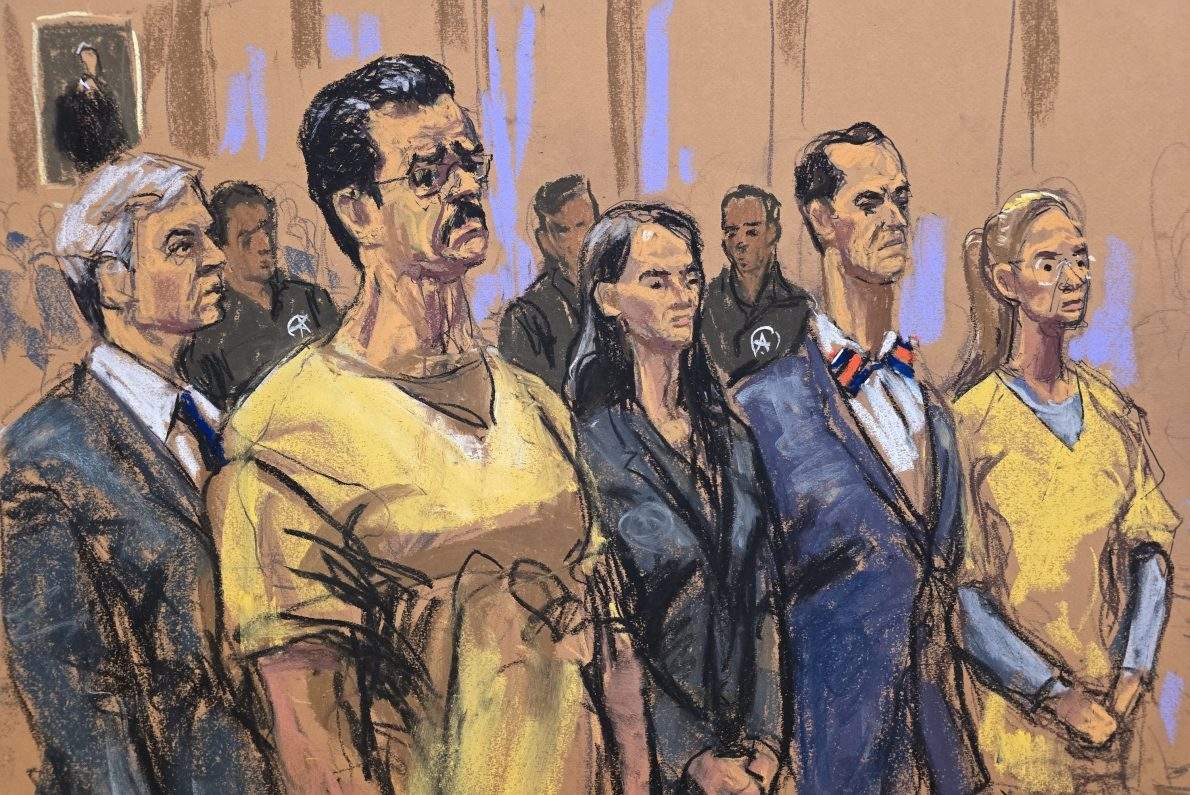
Federal District Judge Alvin Hellerstein set the official trial date for ousted Venezuelan leader Nicolas Maduro and his wife, Cilia Flores, for June 1, 2027.
If you're wondering why a trial involving a deposed head of state caught in a high-stakes military raid takes almost eighteen months to start, you aren't alone. High-profile federal indictments move at a glacial pace, especially when they involve classified intelligence, sovereign immunity fights, and allegations of state-sponsored drug trafficking. Meanwhile, you can find other stories here: Inside the Iranian Execution Surge Designed to Crush Internal Dissent.
Maduro and Flores sit in the Metropolitan Detention Center in Brooklyn after U.S. forces snatched them from their Caracas compound in early January. Both faced federal charges for years—specifically narcoterrorism, cocaine importation conspiracy, and weapons offenses. Both pleaded not guilty.
While news headlines focus heavily on the court dates, the actual legal mechanics beneath this case carry massive geopolitical consequences. Here is what is really going on behind the Manhattan courtroom doors and why the timeline stretches so far out. To explore the complete picture, we recommend the detailed article by NBC News.
The Legal Strategy Behind the 2027 Start Date
Eighteen months sounds like a stall tactic, but in complex federal prosecutions, it's actually a fast-tracked schedule.
Defense attorney Barry Pollack and federal prosecutors jointly requested the June 2027 date. Judge Hellerstein, who oversees the case in the Southern District of New York, agreed to the proposed calendar while openly expressing doubts that the schedule won't slip due to classified information review.
The pre-trial roadmap breaks down into distinct tactical phases:
- September 2, 2026: Deadline for the defense to file its initial motion to dismiss the charges.
- November 17, 2026: Oral arguments before Judge Hellerstein on the initial dismissal motions.
- January 11, 2027: Deadline for secondary defense motions following the government's mandatory disclosure of evidentiary materials, including sensitive classified data.
- June 1, 2027: Jury selection and trial commencement.
This lengthy window isn't lazy maneuvering. Defense attorneys must comb through decades of intelligence filings, wiretaps, and financial ledgers amassed by the U.S. Department of Justice.
The Sovereign Immunity Gamble
The core defense argument doesn't center on whether drugs moved through Venezuela. Instead, it hits a foundational principle of international law: sovereign immunity.
Barry Pollack explicitly stated that the defense team will move to throw out the indictment on the grounds that Maduro was a sitting head of state when the alleged crimes took place. Under customary international law and U.S. doctrine, foreign heads of state usually enjoy immunity from domestic prosecution in foreign courts.
       [U.S. Government Position]                      [Maduro Defense Position]
                  │                                               │
  Maduro lost legitimacy in 2018;                Claimed constitutional president;
   Operated a criminal cartel,                    Captured via "military abduction";
   Not a legitimate sovereign.                   Protected by Sovereign Immunity.
                  │                                               │
                  └───────────────► [COURT RULING] ◄──────────────┘
                                  (Nov 17 Hearing)
The U.S. government counters this easily: Washington stopped recognizing Maduro as Venezuela's legitimate president following the fraudulent 2018 elections. Furthermore, prosecutors argue that running a narco-trafficking syndicate—allegedly aiding the Cartel de los Soles—doesn't constitute an official act protected by presidential status.
If Judge Hellerstein rejects the immunity claim during the November 17 hearing, Maduro's team will likely attempt an interlocutory appeal. That alone could stall proceedings further, though federal courts notoriously dislike delaying criminal trials for piecemeal appeals.
Challenging the Military Raid in Court
The second major attack point for the defense focuses on how Maduro got into a New York courtroom in the first place.
Maduro's legal team openly characterizes the January military raid on Caracas as an illegal "military abduction" and a breach of international sovereignty. Maduro previously declared himself a "prisoner of war" in court proceedings.
American judges generally operate under the Ker-Frisbie doctrine. This long-standing legal precedent establishes that U.S. courts hold jurisdiction to try a criminal defendant regardless of how the defendant was brought before the court—even if forcibly abducted from another country by federal agents. Unless the defense can prove federal agents engaged in conduct so egregious it violates constitutional due process standards, U.S. courts rarely throw out indictments over extradition or capture methods.
What Happens to Venezuela in the Meantime
While Maduro jots down notes in his tan Brooklyn prison uniform, Venezuela's political map is shifting rapidly.
Delcy Rodríguez, formerly Maduro's Vice President, assumed executive leadership in Caracas following the raid. Rather than digging in for total war with Washington, Rodríguez pivoted. She reshuffled military command structures and agreed to key American demands regarding energy production and security cooperation.
In response, Washington began rolling back heavy economic sanctions on Venezuela's oil and gas sectors. Chevron and other international oil firms expanded operations across Venezuelan fields to boost global supply.
This geopolitical shift creates an awkward dynamic for Maduro's defense. The current government in Caracas isn't cutting diplomatic ties or severing oil deals to demand his release; it's doing business with the country prosecuting him. Washington even loosened financial restrictions specifically to allow the Venezuelan state treasury to fund Maduro's private defense lawyers, clearing away a major procedural hurdle that previously threatened to delay proceedings.
Key Takeaways for Following the Trial
To keep track of how this legal saga unfolds over the next year, watch these specific developments closely:
- Monitor the September 2 Motion: Read the public filings to see whether Maduro's team relies strictly on head-of-state immunity or expands into challenging the statutory authority of U.S. drug laws abroad.
- Track the November 17 Hearing: Judge Hellerstein's ruling on sovereign immunity will reveal whether this case heads straight to a jury or gets tangled in appellate court stays.
- Watch CIPA Procedures: Pay attention to Classifiable Information Procedures Act (CIPA) filings in early 2027. Fights over what intelligence data can be shown to a public jury usually delay high-profile national security trials.
- Observe Oil Concessions: Watch how much cooperation Delcy Rodríguez offers federal prosecutors who need historical state records and witness testimony from inside Caracas.
Set a calendar reminder for November 17, 2026. That oral argument on head-of-state immunity will tell us whether Maduro ever actually faces a NYC jury in June 2027 or forces a high-stakes constitutional showdown in the supreme court.