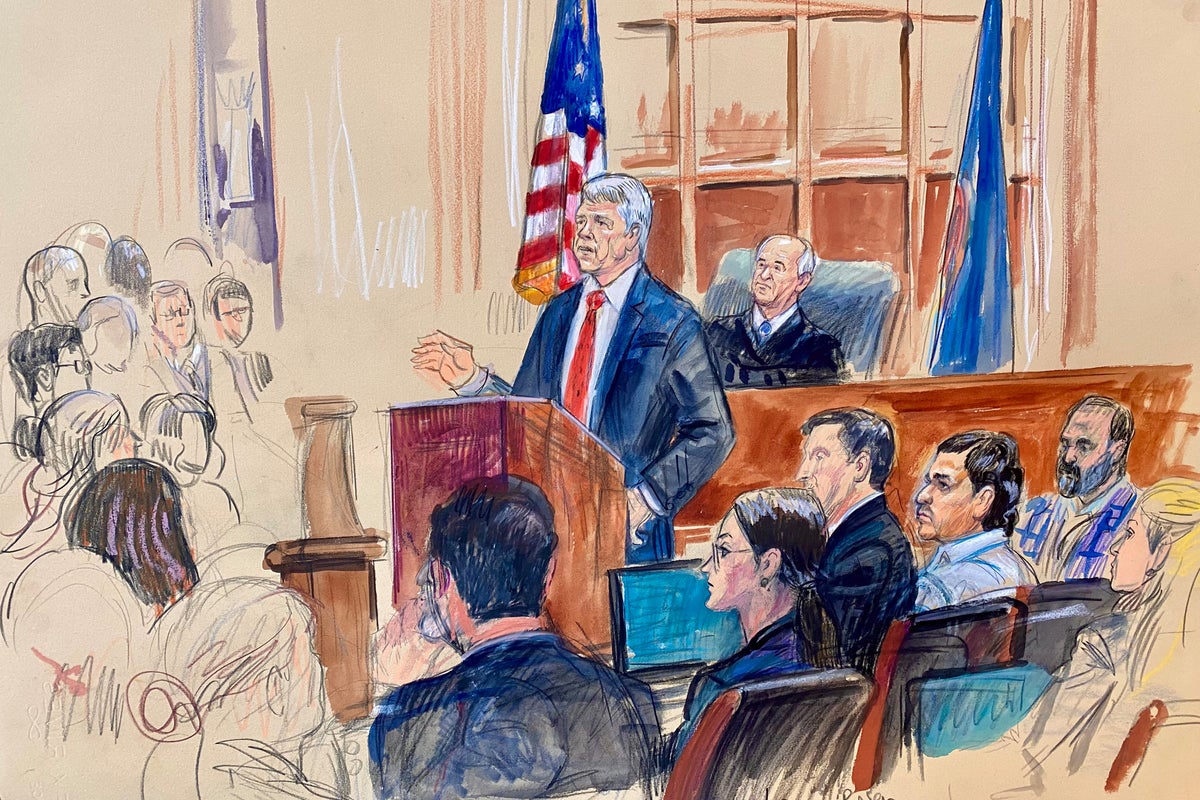
A federal jury in Virginia is now deciding the fate of an alleged ISIS-K operative, but the trial reveals a much darker reality than the guilt or innocence of a single man. This case represents the first major criminal prosecution linked to the August 26, 2021, suicide bombing at Abbey Gate. That blast killed 13 U.S. service members and roughly 170 Afghan civilians during the chaotic final days of the American withdrawal. While prosecutors aim for a conviction, the testimony has pulled back the curtain on a series of systemic intelligence failures, missed signals, and the brutal friction of a retreat that left the U.S. military vulnerable to a predictable enemy.
The trial centers on whether the defendant provided the material support and logistical path for the suicide bomber to reach the perimeter of Hamid Karzai International Airport. For the families of the fallen, it is a pursuit of justice. For the military and intelligence community, it is a public accounting of how the most sophisticated surveillance apparatus on earth failed to stop a lone vest-wearer in a crowd of thousands.
The Mechanics of a Massacre
To understand the trial, one must understand the environment of Kabul in late August. The city had fallen to the Taliban with terrifying speed. The U.S. military was compressed into a single airfield, surrounded by a hostile force they were suddenly forced to coordinate with for security. ISIS-K, the Afghan affiliate of the Islamic State, saw this as the ultimate opportunity. They didn't just want to kill Americans; they wanted to humiliate the departing superpower and the Taliban simultaneously.
The bombing was not a random act of violence. It was a calculated strike that exploited the exact point where U.S. control ended and chaos began. Abbey Gate was a bottleneck. Thousands of desperate people were packed into a narrow corridor, knee-deep in sewage, waving papers at Marines who were standing on short walls or in the crowd itself. The perpetrator didn't need a complex plan. He needed a gap.
Evidence presented during the proceedings suggests that the network supporting the bomber relied on the very chaos the U.S. withdrawal created. When the Bagram Airfield was shuttered months earlier, thousands of hardened militants were released from its prison by the advancing Taliban. Among them were the foot soldiers and planners who would eventually coordinate the Abbey Gate strike. The trial highlights a specific chain of custody for the explosives and the radicalization path that led the bomber to that specific gate at that specific hour.
The Intelligence Blind Spot
The most damning aspect of the testimony involves what the U.S. knew before the blast. We now know that intelligence "chatter" regarding an imminent ISIS-K threat was at a fever pitch. Marines on the ground were told to look for specific descriptions of a bomber. Some snipers even reported seeing individuals who matched those descriptions, yet they were denied permission to engage because of the convoluted rules of engagement and the fragile "deconfliction" agreement with the Taliban.
This wasn't just a failure of data collection. It was a failure of command. The military was trying to balance a humanitarian evacuation with a tactical withdrawal while navigating a diplomatic minefield with an insurgent group they had been fighting for twenty years. In that friction, the specific, actionable intelligence about the ISIS-K threat became noise.
Critics of the withdrawal often point to the closing of Bagram as the original sin. Without Bagram, the U.S. lost its primary counter-terrorism hub and its most secure prison. The defendant in this trial is allegedly a product of that vacuum. If the jury finds that he played a role in moving the bomber through the Taliban-controlled city, it proves that the "over-the-horizon" capability promised by the administration was more of a slogan than a strategy at the time of the exit.
The Taliban Paradox
A recurring theme in the trial is the role of the Taliban. The U.S. was essentially outsourcing the outer perimeter security of the airport to the very people who had been planting IEDs against them for two decades. The prosecution argues that the defendant managed to slip through these cracks, or perhaps exploited the Taliban’s own inability to secure the capital.
There is a bitter irony here. The Taliban and ISIS-K are mortal enemies. The Taliban had every incentive to prevent an ISIS attack that would make them look incompetent as a new government. Yet, the bomber got through. The trial suggests that the "security" provided by the Taliban was porous at best and complicit at worst, as low-level fighters often shared the same radical ideologies as the men they were supposed to be searching.
Defense attorneys have seized on this ambiguity. They argue that in the maelstrom of a collapsing state, attributing specific logistical support to one individual is a reach for the prosecution. They paint a picture of a city where everyone was moving, everyone was armed, and the lines between civilian, insurgent, and terrorist were blurred beyond recognition.
The Human Cost of Policy Decisions
Behind the legal arguments are the accounts of the survivors. Marines who were standing feet away from the blast have testified about the sensory overload of the moment—the smell of ozone and burnt flesh, the sudden silence followed by the screaming, and the agonizing task of triaging friends in the dark.
These testimonies serve a dual purpose. Legally, they establish the "harm" caused by the defendant’s alleged actions. Journalistically, they remind us that policy failures in Washington translate into trauma on the ground. The decision to maintain a single exit point at Abbey Gate, despite the known risks, is a ghost that haunts this trial.
Key Factors in the Prosecution’s Case
- Digital Footprints: Encrypted messages allegedly linking the defendant to ISIS-K handlers.
- Witness Testimony: Former associates who claim the defendant bragged about his role in the "lions' operation."
- Forensic Evidence: Analysis of the explosive composition which mirrors devices used by the specific cell the defendant is tied to.
Why This Verdict Matters
If the jury returns a guilty verdict, it will be hailed as a victory for the Rule of Law. It will be framed as a message that the U.S. has a long memory and a long reach. However, a conviction does not fill the intelligence gaps that remain in Afghanistan. Since the withdrawal, the "black hole" of information coming out of the region has only deepened.
The U.S. currently relies on remote sensing and occasional signals intelligence to monitor groups like ISIS-K and Al-Qaeda. This trial proves that human intelligence—the kind of boots-on-the-ground knowledge that might have identified the defendant before the bomb was built—is nearly impossible to replicate from a drone thousands of miles away.
The defense’s strategy is to highlight the lack of direct physical evidence. In a war zone that has been bulldozed and built over, there is no pristine crime scene. There are no fingerprints on the trigger. There is only a trail of digital breadcrumbs and the word of informants who may have their own motives for talking.
The Lingering Questions of Abbey Gate
Even as the jury deliberates, several questions remain unanswered by the government. Why was the gate kept open when the threat was known to be "imminent and specific"? Why were the snipers told to hold their fire? And most importantly, how many other facilitators like the defendant are still operating within the region, emboldened by the success of the August 26 strike?
This trial is an attempt to put a face on a tragedy that many in the political establishment would rather forget. It forces a confrontation with the reality that the war in Afghanistan didn't end with a treaty; it ended with a blast that is still echoing through a Virginia courtroom.
The jury's decision will provide a sense of closure for some, but for the broader military community, it is a reminder of the cost of a rushed exit. The defendant is just one man. The ideology and the tactical failures that allowed him to succeed remain largely unaddressed. As the U.S. shifts its focus to peer competitors in Europe and the Pacific, the lessons of the Kabul airport bombing risk being archived rather than learned.
The evidence is in. The arguments are finished. Now, twelve citizens must decide if the man in front of them is a mastermind of terror or a convenient scapegoat for a catastrophe that had many fathers. Regardless of the outcome, the transcript of this trial will stand as a definitive record of the day the American era in Afghanistan ended in fire and failure.
Hold the line on the facts: the bombing was a predictable outcome of a tactical bottleneck created by a strategic collapse.