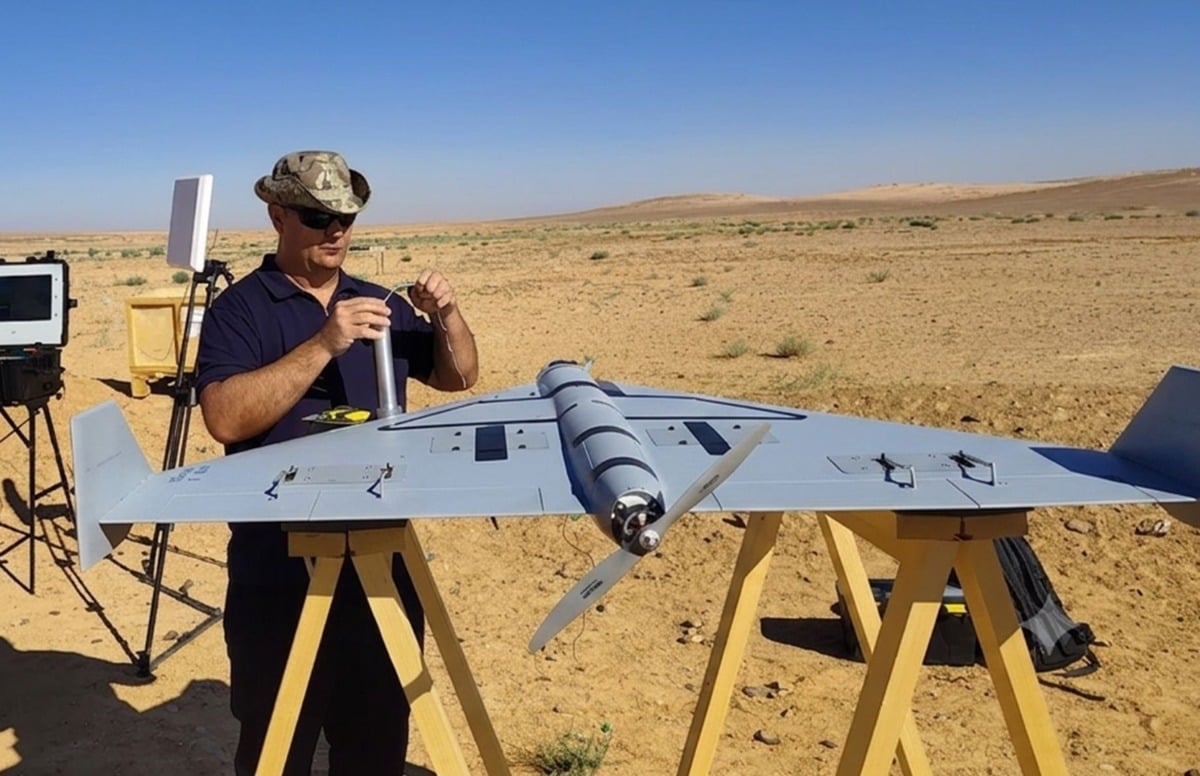
Defense contractors are chasing a ghost in the desert.
The recent rush by Eastern European arms manufacturers, specifically Bulgarian defense firms, to hawk loitering munitions—commonly known as kamikaze drones—to Middle Eastern buyers is a masterclass in fighting the last war. The defense trade press is buzzing with coverage of these export drives, framing them as a masterstroke of meeting regional demand.
They are wrong. They are selling hardware designed for the static trenches of Eastern Europe to a region that requires entirely different operational logic.
I have spent years evaluating defense procurement cycles and watch companies blow millions trying to export platforms that look great on a PowerPoint slide in Sofia but fail the brutal reality of regional asymmetric warfare. The lazy consensus states that because one-way attack drones changed the face of the Russo-Ukrainian conflict, they are automatically the definitive asset for the Persian Gulf and Levant.
This premise is deeply flawed. The Middle East does not need more cheap kamikaze drones. It needs to solve the systemic vulnerabilities that these drones create for the nations buying them.
The Geography Fallacy: Ukraine is Not the Gulf
The defense industry loves a copy-paste solution. When a Bulgarian firm markets a short-to-medium-range loitering munition to a Gulf state, they are ignoring the foundational laws of geography and radio frequency propagation.
Consider the baseline mechanics of a standard tactical kamikaze drone. Most rely on direct line-of-sight (LOS) data links or predictable satellite-guided coordinates. In the flat, heavily wooded, or highly segmented terrain of Eastern Europe, these systems find utility by masking their signature behind tree lines or operating within dense electronic warfare bubbles.
Now look at the primary operational environments in the Middle East:
- Vast, open desert terrain: Zero natural masking. Thermal signatures stand out like flares against cold desert nights or scorching day temperatures.
- Dense, vertical urban centers: Coastal metropolitan areas present severe multipath interference for control signals, rendering low-altitude tactical data links unstable.
- The maritime choke points: Littoral environments require immense salt-spray resilience and advanced optical tracking to handle glare and water reflection—features rarely found in budget-tier European exports.
Imagine a scenario where a procurement officer deploys a swarm of lightweight, composite-material loitering munitions across a flat desert border. Without a persistent, expensive airborne relay network, the control signal degrades rapidly at low altitudes due to the curvature of the earth and thermal ducting. You aren't buying a precision weapon; you are buying an expensive RC plane that is blind after fifteen kilometers.
The Asymmetry Paradox
The entire selling point of the low-cost kamikaze drone is its cost-to-kill ratio. Industry insiders love to quote the math: a $20,000 drone forces the adversary to fire a $1 million interceptor missile.
This argument works perfectly when you are the insurgent. It fails completely when you are the state actor.
The nations currently shopping for weapons in the Middle East are predominantly established states with critical, highly centralized infrastructure—desalination plants, oil refineries, and massive civilian airports. When a state buys a fleet of short-range kamikaze drones, they are purchasing an offensive asset that they cannot easily deploy without escalating a localized skirmish into a full-scale war.
Furthermore, these platforms do nothing to solve the defensive headache. If State A buys 500 Bulgarian loitering munitions, it does not deter State B from launching 50 cheap ballistic missiles or their own swarms of low-tier drones. The state actor ends up holding an offensive tool they are politically constrained from using, while remaining utterly exposed to the exact same technology.
True strategic asymmetry for a sovereign state doesn't look like copying the tactics of non-state actors. It looks like absolute denial.
The Supply Chain Trap
Let's look under the hood of these "locally customized" or "rapidly exportable" European drones. The defense market treats these systems as independent triumphs of domestic engineering. The reality is far less prestigious.
Nearly every mid-tier loitering munition marketed today relies on a fragile, globalized supply chain for its most critical components:
- Brushless Electric Motors: Sourced predominantly from commercial hobbyist supply lines in East Asia.
- Optronics and Micro-Gimbals: High-end uncooled thermal sensors that are heavily restricted by ITAR or European dual-use export laws, leading manufacturers to substitute them with lower-grade commercial components that fail under intense desert heat.
- GNSS Antennas: Standard multi-constellation receivers that possess zero resilience against sophisticated, localized GPS spoofing and jamming.
When a Middle Eastern buyer signs a contract with a mid-tier European firm, they aren’t just buying hardware; they are marrying that firm’s supply chain bottlenecks. If a diplomatic rift occurs, or if a major East Asian supplier decides to choke the export of high-KV motors, that fleet of kamikaze drones becomes an expensive pile of static carbon fiber.
What the Market Actually Demands (And Nobody is Selling)
If you want to dominate the defense tech space in the region, stop building one-way explosive darts. The market is saturated, the margins are collapsing, and the operational utility is overstated for state defense forces.
Instead, the focus must shift to three unglamorous, highly complex domains:
1. Active Electronic Suppression and Counter-Swarm Architecture
The real money is not in making the drone; it is in making the drone irrelevant. Buyers need distributed, passive RF detection networks paired with high-power microwave (HPM) effectors. If you can disable a swarm at a cost of pennies per shot using directed energy, you win the economic war of attrition.
2. Autonomous, Non-GNSS Navigation
Any drone that relies on GPS, GLONASS, or Galileo to find its target in a modern conflict zone is dead on arrival. The future belongs to platforms executing pure optical terrain mapping and visual inertial odometry. If your platform cannot navigate accurately while totally disconnected from the electromagnetic spectrum, do not bother bringing it to market.
3. Persistent, Reusable ISR
A weapon you can only use once is a luxury for well-funded militaries with massive logistical tails. Regional security forces need long-endurance, low-observable intelligence, surveillance, and reconnaissance assets that can loiter for 24 hours, identify a threat, and return to base without requiring a multi-million dollar runway infrastructure.
The current rush to buy Bulgarian kamikaze drones is a symptom of procurement panic. Decision-makers are watching video clips from foreign battlefields and letting emotion dictate strategy. They are buying the headline, not the utility.
Stop purchasing single-use novelties designed for muddy fields and gray skies. Invest the capital into systemic electromagnetic dominance, resilient localized manufacturing, and autonomous denial systems. Anything less is just funding the retirement funds of European defense executives.