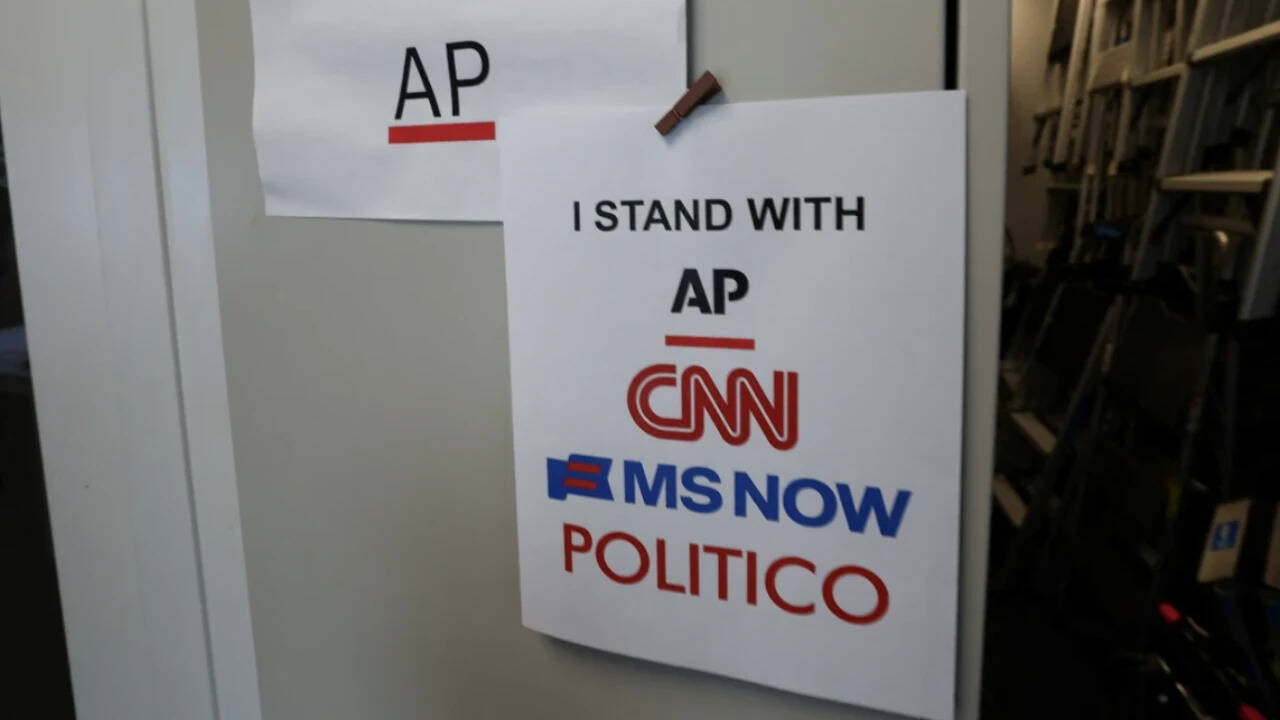
Celebrations over a federal judge preserving White House press passes for CNN, MS NOW, and Politico miss the real story. Press credentials are not oxygen. They are often a leash.
Read the standard coverage of these court rulings and you will hear the same tired refrain. A judge steps in. Legacy outlets keep their seats in the briefing room. Democracy breathes a sigh of relief. First Amendment champions pop metaphorical champagne.
That consensus is lazy. Worse, it is comforting. It lets newsrooms pat themselves on the back for winning a procedural skirmish while ignoring a structural rot that has been hollowing out political reporting for decades.
A press badge gets you into a tightly choreographed room. It does not guarantee truth, accountability, or even useful information. In fact, the fight to keep inside access routinely distracts outlets from doing the harder, less glamorous work that actually holds power to account.
The Access Trap Nobody Wants to Admit
Access journalism operates on a quiet, unspoken transaction. Power grants proximity. Proximity grants status, scoops, and airtime. In return, reporters learn which lines not to cross if they want to stay in the room tomorrow.
Even when a court blocks the government from revoking credentials, the underlying incentives do not magically flip. A judge can stop an official from pulling a pass. A judge cannot force an administration to answer a real question, release unredacted records, or abandon talking points designed for cable clips.
Consider what happens inside that room on a typical day. Briefings have long functioned as theater rather than interrogation. Spokespeople read prepared remarks, deflect pointed follow-ups, and reward predictable framing. Meanwhile, producers back at headquarters build segments around whatever morsel fell off the podium.
I have watched newsrooms pour fortunes into maintaining physical proximity to power while starving investigative desks, public-records litigation, and local reporting bureaus. Outlets spend years cultivating relationships with press aides only to get frozen out the moment a story turns genuinely dangerous to the administration. When access is your primary currency, losing it feels like an existential crisis. That fear shapes coverage long before any ban is ever signed.
To understand the mechanics clearly, we have to separate two distinct concepts that pundits routinely mash together:
- Physical access is the ability to stand in a designated space, attend briefings, or travel on a press pool.
- Accountability journalism is the verified exposure of power, policy outcomes, and hidden decisions regardless of who is smiling at you in the hallway.
Courts protect constitutional boundaries against arbitrary executive retaliation, which matters legally. Precedent from cases like Sherrill v. Knight established that press pass denials cannot rest on vague, unguided standards without due process. That legal principle is sound. Treating a courtroom win as a journalistic triumph, however, is a category error.
Why "Who Gets the Pass" Is the Wrong Question
Whenever a press pass dispute hits the docket, search queries spike with predictable questions. Can the White House revoke press credentials? Why does White House press access matter? What happens to reporters who lose access?
Those questions assume that the briefing room is the nerve center of accountability. It is not. It is a stage set.
Think about how modern information actually moves. Policy memos leak through encrypted channels. Contracts sit in procurement databases. Financial conflicts show up in disclosures, court filings, and state registries—not in a forty-five-minute televised sparring match.
Imagine a scenario where a major news organization loses its White House credential tomorrow, yet triples its budget for public-records lawsuits, forensic accounting, and beat reporting across federal agencies and state capitals. Which outlet would an administration fear more: the correspondent waving for a call-on in the briefing room, or the team dissecting agency rulemaking and subpoenaed emails for six months straight?
The answer is obvious to anyone who has spent real time watching how power reacts to scrutiny. Officials can survive a tough question on live television. They hate paper trails they cannot spin.
Classic press critics understood this dynamic long before cable news existed. Walter Lippmann warned that news is not a mirror of reality; it is the result of selection, routine, and institutional lens. A.J. Liebling skewered the herd instinct of the press corps, noting how easily pack journalism confuses proximity with insight. Those warnings have aged better than most press-room orthodoxy.
Still, there is a real downside to going rogue or losing credentials outright. A contrarian posture is easy to preach from the sidelines and harder to execute when a competitor gets a direct quote from a president on camera. Pool access still matters for breaking moments, travel logistics, and shared visual records. Pretending physical presence has zero value would be just as foolish as pretending it solves everything.
The mistake is worshiping the badge instead of treating it as a minor tool in a much larger kit.
What Newsrooms Should Do Instead of Celebrating
Winning a court order to keep credentials for CNN, MS NOW, and Politico is fine as a legal floor. It should never be treated as a ceiling. If news executives treat yesterday's ruling as mission accomplished, they are setting themselves up for irrelevance.
Here is what serious editorial leaders ought to do right now:
- Audit your coverage for "access tax." Review a month of White House stories and ask a blunt question: did proximity to officials improve the reader's understanding, or did it force the reporter to soften language and center official framing? Cut stories that exist solely to feed the daily cycle without new facts.
- Shift resources from stagecraft to primary records. Move money out of ceremonial event coverage and into FOIA litigation, regulatory tracking, and long-lead investigative reporting. Build beats around money, enforcement, and implementation—where promises collide with reality.
- Stop treating press-room drama as a proxy for democracy. When officials play games with credentials or briefings, report the legal and institutional facts plainly without turning the press corps into the main character. Audiences tune out self-referential media fights faster than almost anything else.
- Reward reporters for tough off-platform reporting. Measure correspondents by original documentation, cross-agency sourcing, and durable scoops rather than sheer airtime or proximity to press secretaries.
Courts can police viewpoint discrimination and due process. They cannot manufacture journalistic spine. That part is entirely up to the newsrooms holding the pens.