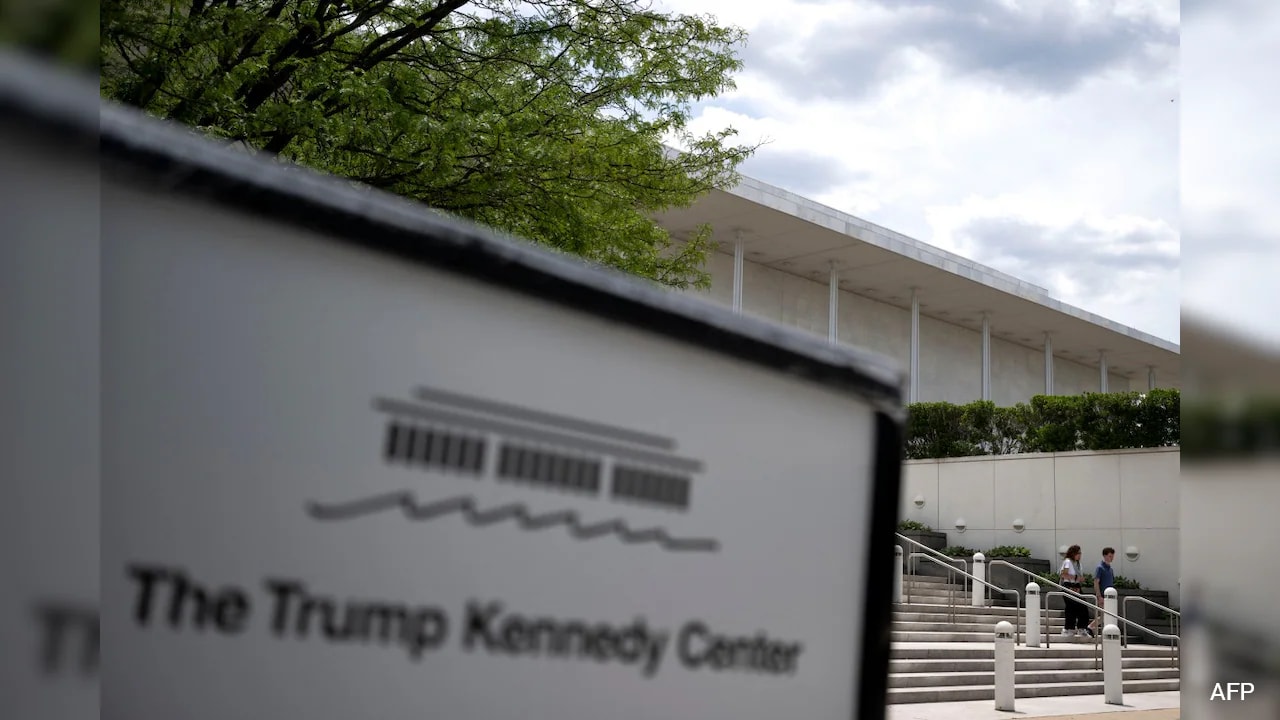
The media is currently hyperventilating over a California lawsuit alleging that the Trump-run Kennedy Center accepted a $2 million donation from a "fake CIA operative."
The chattering class is shocked. They are outraged. They are treating this like an unprecedented breach of institutional purity. You might also find this related coverage interesting: Sovereign Risk in the Anthropocene: Quantifying the Fiscal Transmission Channels of Biodiversity Loss.
They are entirely missing the point.
The mainstream press wants you to look at Gaurav Srivastava—the college dropout accused of posing as a non-official cover intelligence asset—and see a bizarre anomaly. They want you to stare at Richard Grenell and Donald Trump and see a localized infection of Washington cronyism. They focus on the salacious details: the deepfake audio recordings, the rebranded lounges, and the $2 million ticket price to sit in a box seat with the president. As highlighted in recent articles by CNBC, the effects are notable.
This lazy consensus assumes that arts philanthropy is normally a pristine, merit-based system designed to elevate human culture.
That is a fiction.
I have spent decades watching billionaires, grifters, and corporate entities cycle money through elite cultural institutions. The reality is brutal: arts funding has never been about art. It is a high-end influence laundering system. The only difference between this case and a standard museum donation is that this particular donor allegedly forgot to use a legitimate hedge fund as his front.
The Myth of the Pure Philanthropist
Let us dismantle the premise of the public outrage. The media asks: How could an institution as prestigious as the Kennedy Center fail to vet a man who claimed to be a spy?
They are asking the wrong question. The real question is: Why would they care?
Elite cultural institutions operate on a simple economic model. They have massive overhead, bloated administrative staffs, and endless real estate footprints. They do not look at a $10 million pledge and see a moral dilemma. They see the next fiscal quarter’s operational budget.
Imagine a scenario where a prominent cultural institution rejects every dollar tied to geopolitical maneuvering, reputational laundering, or corporate misdeeds. The institution would close its doors by Tuesday afternoon.
Consider the mechanics of high-level philanthropy. For a century, the playbook has remained unchanged:
- Step 1: Amass capital through aggressive, often predatory market behavior.
- Step 2: Siphon a fraction of that capital into a high-profile cultural monument (a wing at the Met, a lounge at the Kennedy Center).
- Step 3: Use that physical space to entertain lawmakers, secure regulatory favors, and project unassailable social legitimacy.
Srivastava allegedly giving $2 million to sponsor the Africa Lounge to curry favor with the White House during a dispute with a sanctioned Dutch oil trader isn't a corruption of the system. It is the system. It is the exact same utility model used by every pharmaceutical company, defense contractor, and Wall Street titan who ever bought their name onto a marble wall. The only error here was the lack of subtlety.
The Rebranding Commodity Market
The media treats the renaming of spaces—like transforming the Russia Lounge into the SyberJet Lounge after a donation from Trevor Milton—as a unique sacrilege.
This is standard commercial real estate dressed up in evening wear.
Nomenclature is a liquid asset. The Kennedy Center under Grenell understood this perfectly. When you treat naming rights as a volatile commodity, you maximize revenue. Is it unseemly to sell a cultural monument's naming rights to a executive who received a presidential pardon after an investor fraud conviction? Sure, if you view the arts through a romantic lens. But if you view it as an asset manager, it is simply extracting maximum value from underutilized square footage.
The mainstream press laments that these maneuvers degrade the monumental core of Washington and compromise the memorial purpose of John F. Kennedy.
Let’s be brutally honest: the memorial purpose of these buildings was compromised the moment they became playgrounds for the political donor class. The current administration merely stripped away the polite euphemisms. They treated the venue like a casino floor because, economically, that is exactly how it functions.
The Broken Premise of Institutional Vetting
Every compliance officer in the nonprofit sector knows the dark truth about vetting: it is an exercise in plausible deniability.
When a multi-million-dollar pledge arrives, the compliance team is not tasked with finding a reason to say no. They are tasked with assembling a file thick enough to protect the board if things blow up later.
If a donor's wire transfers clear the compliance checks required by the banking system, the cultural institution has all the cover it needs. They do not run counter-intelligence operations on their patrons. They do not cross-reference donor claims with Langley. If a man claims he is a covert operative and promises eight figures to renovate a concert hall, the institutional response isn't to call the FBI. It is to hand him a champagne flute and point him toward the photographer.
The downside to this pragmatic approach is obvious. Every so often, you get caught holding a bag of money from a man whose business partner sues him for a $43 million fraud. You get dragged into federal court, and a judge orders you to scrub a president's name off the facade after a bruising legal battle with historic preservation groups and jazz musicians.
But to the institutional machine, that isn't a systemic failure. It is just the cost of doing business. It is a line-item risk in the pursuit of capital.
Stop Trying to Save Elite Cultural Institutions
The standard progressive response to this scandal is a naive call for reform. They want tighter regulations, stricter ethical guidelines for board members, and a return to "public accountability."
This intervention is fundamentally flawed. You cannot regulate the hypocrisy out of a system that relies on vanity for its survival.
If you want to actually fix arts funding, you must stop treating these massive, centralized cultural hubs as public trusts. They are private clubs funded by oligarchs for the benefit of oligarchs. If a fake spy wants to buy a lounge to impress an oil trader, let them trade their millions in an open, unregulated market. Just stop pretending the transaction has anything to do with the preservation of American culture.
The federal court ruling that blocked the two-year renovation and forced the removal of the "Trump Kennedy" name isn't a victory for the arts. It is a temporary aesthetic reset. The names on the walls will change, the current administration's allies will rotate out, and a new regime of elite donors will step in to buy the exact same influence.
The grift will simply become quieter again. The next set of donors will have better lawyers, cleaner public relations firms, and more convincing backstories. The money will flow, the champagne will pour, and the public will go back to sleep, convinced that the institution has been cleansed.
But the architecture remains identical. The lounges are always for sale.