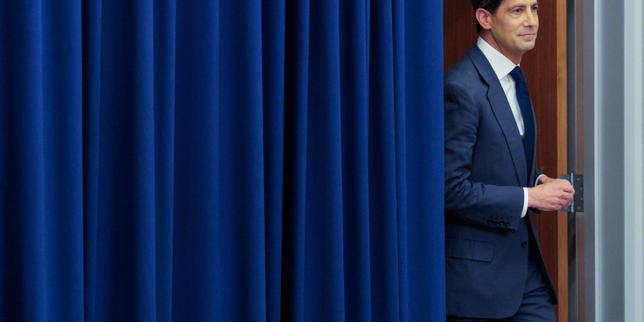
The financial press is predictable. Donald Trump nominates Kevin Warsh to lead the Federal Reserve, and right on cue, the mainstream commentary falls into a lazy consensus. The narrative is set: Warsh is the ultimate disruptor, an outsider who will break the bureaucratic mold, reshape monetary policy, and bend the central bank to the will of economic populism.
It is a comforting story for critics of the status quo. It is also entirely wrong.
The belief that a single chairman can single-handedly overhaul the deeply entrenched mechanics of the world’s most powerful financial institution ignores the gravity of central banking. I have spent decades analyzing institutional policy and watching market reactions to political appointments. Wall Street loves a savior narrative. But the institutional machinery of the Federal Reserve is designed to chew up and spit out ideological disruptors.
Warsh is not the radical outsider the media claims he is. He is an institutional chameleon, and his appointment represents a continuation of the same structural flaws that have plagued monetary policy for decades.
The Illusion of the Outsider Disruption
The core argument driving the current hype is that Warsh brings a fresh, market-driven perspective that will demolish the Fed’s academic groupthink. Critics point to the existing board as a collection of ivory-tower economists obsessed with flawed models like the Phillips Curve—the idea that inflation and unemployment share a predictable, inverse relationship.
The media claims Warsh will replace this academic myopia with real-world market signals. This premise is deeply flawed.
First, let us look at the actual resume. Warsh is a former Morgan Stanley investment banker who served on the Fed Board of Governors from 2006 to 2011. He was there during the peak of the 2008 financial crisis. He voted in lockstep with Ben Bernanke for unprecedented bailouts and the initial rounds of quantitative easing (QE). To paint him as an anti-establishment rebel is a factual absurdity. He is a creature of the system he now promises to remodel.
Second, the idea that a Fed Chair can simply dictate policy by fiat misunderstands how the Federal Open Market Committee (FOMC) functions. The FOMC consists of twelve voting members, including regional bank presidents who hold deeply entrenched views on inflation and employment.
A Lesson from History: In the late 1940s, President Harry Truman attempted to force the Federal Reserve to maintain artificially low interest rates to fund post-war debt. The result? Total institutional rebellion, culminating in the Accord of 1951, which legally separated the Fed from the Treasury.
The Fed’s bureaucracy is a supertanker, not a speedboat. A new captain cannot make it do a handbrake turn.
The Flawed Premise of Market-Driven Monetary Policy
The crowd expects Warsh to pivot the Fed away from lagging economic indicators toward real-time market data. They ask: "Shouldn't the Fed listen to the markets instead of stale government statistics?"
This sounds reasonable on paper. In practice, it creates a dangerous feedback loop.
When a central bank relies primarily on market signals—such as bond yields, stock indices, and credit spreads—to determine interest rates, it ceases to be a regulator. It becomes a follower. The market prices in what it thinks the Fed will do; the Fed looks at the market to decide what to do.
Imagine a scenario where a pilot determines the plane's altitude solely by looking at where the passengers think the ground is.
[Fed Looks at Market Signals] ---> [Market Prices in Fed Actions]
             ^                                     |
             |_____________________________________|
                    (The Dangerous Feedback Loop)
This dynamic is exactly how asset bubbles form and inflate. If Warsh shifts the institution toward prioritizing short-term market sentiment to appease political handlers, he will not be fixing the Fed. He will be institutionalizing the "Fed Put"—the implicit guarantee that the central bank will always rescue investors when markets drop.
The Real Power Mechanics Everyone Is Missing
The media focus is entirely on interest rate decisions. Will he cut? Will he hike? This is amateur hour analysis. The real battleground for the future of the financial system is not the federal funds rate. It is the balance sheet and bank regulation.
1. The Quantitative Tightening Trap
The Federal Reserve's balance sheet remains bloated with trillions of dollars in government debt and mortgage-backed securities. The consensus view is that Warsh will aggressively unwind this portfolio to restore market discipline.
He cannot. If the Fed dumps assets too quickly, it risks spiking long-term borrowing costs, tanking the housing market, and rendering the US banking system illiquid. I have seen institutions try to rapidly deleverage in volatile environments; it invariably ends in a liquidity freeze.
2. The Weaponization of Bank Capital Requirements
This is where the real policy shift will happen, and it will not look like the free-market paradise his supporters expect. The true consensus among the incoming administration is not deregulation for its own sake, but the redirection of credit.
Expect Warsh to use regulatory frameworks like the Basel III endgame negotiations to favor domestic industrial policy. Instead of lowering capital requirements across the board, the policy will likely favor banks that lend to specific, politically favored sectors like domestic manufacturing and infrastructure, while penalizing those exposed to international markets. This is not deregulation. It is state-directed capitalism.
Dismantling the Common Questions
Let us tackle the standard questions filling the financial columns right now, using blunt reality instead of academic spin.
- Will Warsh end the Fed's independence?
Independence is a myth. The Fed has always been politically reactive. Arthur Burns capitulated to Richard Nixon in the 1970s, keeping rates low to aid reelection, which directly caused the Great Inflation. Warsh will not need to be ordered around; his policy alignment with the executive branch is already baked into his worldview. - Can a change in leadership fix inflation permanently?
No. Inflation is structurally driven by fiscal policy—deficit spending and government debt. The Fed can manipulate the price of money, but it cannot control how much money the Treasury prints to fund legislative agendas. Blaming or praising the Fed Chair for structural inflation is like blaming the thermometer for the weather. - Will this appointment stabilize the US Dollar?
The dollar's status as the global reserve currency relies on institutional stability and liquid capital markets, not the personality of the central bank chief. If the market perceives that the Fed has become a tool of short-term political expedience, capital will begin to seek alternatives, undermining the very currency hegemony the administration seeks to protect.
The Bitter Truth for Investors
If you are altering your investment strategy based on the belief that a Kevin Warsh chairmanship will usher in an era of predictable, market-friendly stability, stop.
The contrarian reality is that his tenure will likely introduce higher volatility. By attempting to merge populist political goals with complex monetary mechanics, the Fed will become less predictable, not more. The risk of policy errors increases exponentially when the decision-making framework shifts from flawed economic models to fluid political objectives.
The downside to this perspective is obvious: betting against the consensus means sitting out the initial wave of market optimism. Wall Street will celebrate the appointment. Markets will likely rally on the promise of a pro-growth, pro-market chair. But do not confuse a temporary sentiment shift with structural reform.
The institutional inertia of the Federal Reserve always wins. The system does not adapt to the man; the man adapts to the system. Stop looking for a savior in Washington to fix a broken monetary framework. Protect your capital against the volatility that their inevitable friction will create.